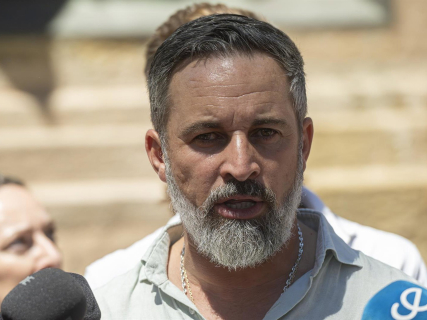
General elections survey: after Ceuta, Abascal gains 4 seats, Feijóo yields 1 and Sánchez loses 3 while PP and Vox reach 212, according to Hamalgama

The new survey from Hamalgama Métrica for Vozpópuli allows measuring the change compared to its last poll before the Ceuta crisis: Vox goes from 63 to 67 seats, the PSOE drops from 104 to 101 and the PP gives up one, from 146 to 145. Sumar continues with seven deputies and Podemos with three. The sum PP-Vox increases from 209 to 212 representatives and, compared to the 23J, would be 42 seats above, while PSOE, Sumar, and Podemos would collectively lose 41.

7 minutes

fotonoticia 20260902202719 1920

fotonoticia 20260902202719 1920

Add DEMÓCRATA to Google

Ask FREN

Published

Last updated

7 minutes

Most read

The Ceuta crisis does not change who would win a general election according to Hamalgama Métrica, but it does modify the distribution of forces that existed before the summer. The PP remains in first position practically at the same level, while Vox expands its representation and the PSOE loses three deputies compared to the last survey by the same company conducted before July 30.

The new Hamalgama barometer for Vozpópuli, conducted between September 1 and 8 through 1,000 interviews, places the PP at 33.6% and 145 deputies, the PSOE at 25.1% and 101, and Vox at 19.3% and 67 seats. Sumar would obtain 5.6% and seven representatives and Podemos, 3.8% and three. Thus, PP and Vox would total 212 deputies, 36 above the 176 that mark the absolute majority.

The relevant comparison to measure the Ceuta period is in the Hamalgama survey published on July 12, whose fieldwork was conducted between June 30 and July 6. At that time, the PP was at 33.8% and 146 seats, the PSOE at 25.9% and 104, Vox at 18.8% and 63, Sumar at 5.9% and seven, and Podemos at 3.8% and three. It is, therefore, a clean reference of the scenario immediately prior to the crisis.

The cost in seats since before Ceuta: Vox +4, PSOE -3 and PP -1

If that July survey is taken as a starting point, Vox is the party that shows the greatest advance during the period marked by Ceuta.

The formation of Santiago Abascal goes from 63 to 67 deputies. That is four more in just over two months. In percentage of vote, the growth is half a point, from 18.8% to 19.3%.

The PSOE registers the main setback. It goes from 104 to 101 seats and from 25.9% to 25.1%. That is three deputies and eight tenths less than before the summer.

The PP remains practically motionless. It drops from 33.8% to 33.6% and from 146 to 145 deputies. The loss is two tenths and one representative.

Sumar also does not experience a parliamentary change: it maintains its seven deputies, although it drops from 5.9% to 5.6%. Podemos exactly repeats its three seats and 3.8%.

The picture is, therefore, much more nuanced than a simple movement from left to right. The PP does not capitalize on the crisis in this series and even slightly yields. The growth is concentrated in Vox, while the deterioration within the left occurs fundamentally in the PSOE and, in percentage of vote, also in Sumar.

PP and Vox go from 209 to 212 seats

The effect is better appreciated when observing the blocks.

Before Ceuta, Hamalgama granted the PP 146 deputies and Vox 63. Together they were 209.

Now the PP obtains 145 and Vox 67. The sum reaches 212.

That is, the loss of one deputy from the PP is more than compensated by the four that Vox incorporates and the joint majority grows by three representatives.

In percentage, the movement seems much smaller: PP and Vox go from 52.6% to 52.9%, only three tenths more.

It is a good demonstration of how the Spanish electoral system works. Relatively small variations in national percentage can have a greater effect on Congress depending on where they occur and who takes the last provincial seats.

The state left loses three deputies since July

The opposite movement occurs in PSOE, Sumar, and Podemos.

In July they had 114 seats: 104 from PSOE, seven from Sumar, and three from Podemos.

Now they would total 111: 101, seven, and three, respectively.

In percentage, the overall setback is somewhat greater. The three parties went from 35.6% in July to the current 34.5%, a loss of 1.1 points.

The distance from PP and Vox thus increases from 17 points in July to 18.4 now.

In Congress, the difference between both groups goes from 95 to 101 seats.

This is probably the clearest measure of the change that occurred during the period: the PP-Vox majority does not arise with Ceuta, because it was already very broad before the crisis, but since then its advantage increases by another six deputies over PSOE, Sumar, and Podemos.

Vox is the one who really alters the arithmetic

The PP would continue to win the elections, but its result barely changes.

In July it had 146 seats and now 145. Against the 23J it improves from 137 to 145, but in percentage the movement is small: from the 33.1% obtained at the polls to the current 33.6%.

Vox presents a completely different evolution.

It obtained 33 deputies in the 2023 general elections. In July, Hamalgama already placed it at 63. Now it reaches 67.

Since the 23J it has gained 34 deputies.

In percentage it goes from 12.4% to 19.3%, an increase of 6.9 points. Compared to the previous survey, it adds half a point and four representatives.

That is why the new majority of 212 seats does not come from a great expansion of the PP. The structural change of the legislature is that Vox practically doubles its parliamentary weight while Feijóo remains close to its electoral result of 2023.

PSOE loses 20 seats since the 23J

The socialist evolution offers the reverse image.

The PSOE obtained 31.7% of the votes and 121 deputies in the last general elections. Hamalgama now places it at 25.1% and 101.

That is 6.6 points and 20 seats less.

But it is advisable to separate that accumulated deterioration from the specific movement observed during the summer.

Before Ceuta, the PSOE was already at 25.9% and 104 deputies. That is to say, a good part of the decline since 2023 had already occurred.

What happens afterwards is an additional deterioration: eight tenths and three seats.

This nuance allows counting the effect of Ceuta without attributing losses that are prior to the crisis. The PSOE loses fidelity and increases abstention among its former voters.

The transfer matrix helps to better understand those three lost seats.

In July, the PSOE retained 72.5% of those who had voted for it in 2023. Now fidelity drops to 70.5%.

That is two points less.

The transfer to the PP remains practically stable: it was 10.8% and now it is 10.5%.

In contrast, the flight to Vox slightly increases, from 4.2% to 4.7%.

And the demobilization grows more clearly. In July, 8.2% of former socialist voters were going to abstention. Now 9.6% do.

The comparison suggests that the recent deterioration of the PSOE does not fundamentally come from a new massive transfer to the PP. There are two more visible movements: a small increase in the transfer to Vox and, above all, greater demobilization.

In the new survey, 45% of those who voted in 2023 but now say they would abstain come from the PSOE. Another 36.6% had voted for Sumar.

Vox retains 93% of its voters and also receives from the PP and the PSOE

Vox presents the most solid electoral structure in the survey.

93.1% of those who voted for the party in the general elections of 2023 say they would repeat now.

In addition, it receives 12.2% of former PP voters and 4.7% of PSOE voters.

The PP also maintains high fidelity, at 85.2%, and attracts 10.5% of the socialist electorate.

The difference is that the PP-Vox exchange clearly favors Abascal's party, while the popular party compensates part of that flight by capturing votes from the PSOE.

It is that double movement that allows the PP to remain practically stable and that, at the same time, Vox continues to grow.

Sumar retains seven deputies, but its base remains very fragmented

Sumar does not lose seats compared to July. It had seven and maintains seven.

In percentage, it does retreat three tenths, from 5.9% to 5.6%.

The problem lies more in the structure of its electorate than in the last monthly movement. Only 32.8% of those who voted for the Sumar candidacy in 2023 claim they would do so again.

25.9% would now opt for Podemos, 20% would abstain, and 13.3% would vote for the PSOE.

Podemos, for its part, maintains 3.8% and three seats compared to July.

Between Sumar and Podemos, they would currently obtain 10 deputies.

In 2023, they ran together and achieved 31.

The accumulated loss is, therefore, 21 seats, although it cannot be directly attributed to Sumar alone because Podemos was then part of the same candidacy.

From 23J to now: the right gains 42 seats and the state left loses 41

The complete comparison with the last elections shows the size of the transformation.

PP and Vox obtained 170 deputies in 2023: 137 and 33.

Now they would have 212: 145 and 67.

That's 42 more seats.

PSOE and the unitary candidacy of Sumar achieved 152: 121 and 31.

Now PSOE, Sumar, and Podemos would total 111.

That's 41 deputies less.

The difference between both groups was 18 seats after 23J.

Now it would be 101.

Abstention is part of the explanation

Hamalgama estimates a participation of 64.7%.

In the general elections of 2023, it was approximately 66.6%.

The difference is around two points and would equate to nearly a million additional voters who would not go to the polls, according to the calculation published by Vozpópuli.

But abstention does not affect symmetrically.

The survey indicates that 45% of the voters from 2023 who would now abstain come from the PSOE and 36.6% from Sumar. Former voters of the PP represent 9.8% of that pool and those of Vox only 2.5%.

This helps explain why the right increases its advantage even when the PP hardly grows.

Hamalgama Survey: current result, before Ceuta and comparison with 23J

The comparison with the last Hamalgama survey prior to the Ceuta crisis shows that Vox gains four seats, the PSOE loses three, and the PP gives up one. PP and Vox go from 209 to 212 deputies.

Party September July, before Ceuta Change after Ceuta 23J Change vs. 23J
PP 33.6% · 145 33.8% · 146 -0.2 points · -1 seat 33.1% · 137 +0.5 points · +8 seats
PSOE 25.1% · 101 25.9% · 104 -0.8 points · -3 seats 31.7% · 121 -6.6 points · -20 seats
Vox 19.3% · 67 18.8% · 63 +0.5 points · +4 seats 12.4% · 33 +6.9 points · +34 seats
Sumar 5.6% · 7 5.9% · 7 -0.3 points · no changes 12.3% · 31 together with Podemos See note
Podemos 3.8% · 3 3.8% · 3 No changes Integrated in Sumar See note

In 2023 Podemos participated integrated in Sumar. Comparing both forces together, they go from 12.3% and 31 deputies from 23J to 9.4% and 10 current seats: 2.9 points and 21 deputies less.

Published in VozPopuli on 13/09/2026

More key points, information and questions with FREN

AI-GENERATED CONTENT

What are the parliamentary procedures required to call general elections in Spain?

In Spain, there is no "specific parliamentary procedure" to call general elections in the sense that the Congress or the Senate directly vote to "call elections." The Constitution grants the power to dissolve the Cortes Generales to the King, at the proposal of the Prime Minister, and it is this dissolution that triggers the election call.

However, there are a series of steps and parliamentary conditions that frame when and how this decision can be made. Two main routes can be distinguished:

1. Early dissolution by political decision of the Prime Minister

The most common way to reach early elections is through the early dissolution of the Cortes Generales. The milestones are:

  • Exclusive initiative of the Prime Minister: the Prime Minister, exercising his political authority, decides to propose to the King the dissolution of the Congress, the Senate, or both Chambers. No prior authorization from the Congress or formal Plenary agreement is needed.
  • Requirements and time limits: dissolution cannot be proposed when a motion of censure is underway, nor before a year has passed since the previous dissolution. It is also not allowed in exceptional situations such as the state of siege.
  • Consultation with the Council of Ministers: the Prime Minister submits the proposal to the Council of Ministers for deliberation. This is a political-governmental procedure, not parliamentary, but it is part of the prior process.
  • Signing of the decree of dissolution and call: the King, at the proposal of the Prime Minister and after deliberation of the Council of Ministers, signs the Royal Decree that:
    • dissolves the Congress, the Senate, or both Chambers, and
    • calls general elections setting the date of the vote.
    This decree is published in the Official State Gazette (BOE), at which point the dissolution and the call take effect.

In this route, the Parliament's role is more of a political context (support, stability, approval of key laws, etc.), but there is no specific parliamentary vote or agreement that authorizes the call.

2. Automatic dissolution after a failed investiture

The second route is directly linked to the parliamentary procedures of investiture of the Prime Minister:

  • After the new Congress is constituted, the King proposes a candidate for the Presidency of the Government, following a round of consultations with the representatives of the parliamentary groups.
  • The Congress holds one or more investiture debates in which it votes on whether the candidate obtains the confidence of the Chamber (first vote by absolute majority; second, 48 hours later, by simple majority).
  • If no candidate is invested within two months from the first failed investiture vote, the Constitution establishes that the King will dissolve both Chambers and call new elections automatically.

Here one can speak of “necessary parliamentary procedures”: the succession of failed investiture debates and votes, during two months without anyone gaining the confidence of Congress, necessarily leads to dissolution and the election call.

3. Other relevant parliamentary elements

Although they are not procedures that "activate" the call by themselves, they influence the political decision to bring forward elections:

  • The possibility that the Congress approves a motion of censure, which can change the Government without the need for elections if it succeeds. Its mere existence conditions the timing, because during its processing the Chamber cannot be dissolved.
  • The approval or blocking of key laws (budgets, major reforms) in Parliament, which may lead the Government to consider the legislature unviable and opt to request dissolution.

In summary, from the strict point of view of “necessary parliamentary procedures,” only in the case of failed investiture during two months does parliamentary activity itself necessarily trigger dissolution and the election call. In most cases, however, the call for general elections is based on a political decision of the Prime Minister, taken in a certain parliamentary context, but formally executed through a Royal Decree of dissolution and call signed by the King, without a prior specific vote in the Cortes.

What powers do the Prime Minister and the Congress have in the dissolution of the Cortes?

In the Spanish constitutional system, the dissolution of the Cortes Generales is a power of enormous political relevance, distributed differently between the Prime Minister and the Congress of Deputies. The former generally has the initiative and decision to dissolve; the latter is the body affected by the dissolution but also has instruments to indirectly condition it and, in a specific case, activates an automatic dissolution when investiture fails.

1. Dissolution by decision of the Prime Minister

Ordinarily, the dissolution of the Cortes is carried out by a decree signed by the King at the exclusive proposal of the Prime Minister, after deliberation of the Council of Ministers. In practice:

  • Only the Prime Minister can propose the early dissolution of the Chambers. Neither the Congress, the Senate, nor their presidents can "vote" themselves dissolution.
  • The dissolution decree usually affects both Chambers simultaneously (Congress and Senate) and sets the election date.
  • The King acts in a non-discretionary manner: his role is formal, as the political decision corresponds to the Prime Minister, who assumes responsibility.

This presidential power is not absolute: the Constitution establishes clear limits to dissolution by decree of the Prime Minister:

  • Minimum interval between dissolutions: the Prime Minister cannot dissolve the Cortes again until a certain time has passed since the previous dissolution (one year). This aims to prevent abusive and repeated use of election calls.
  • Prohibition during a pending motion of censure: if a motion of censure has been presented and is pending a vote, the Prime Minister temporarily loses the power to dissolve. This ensures that the Congress can first decide whether to maintain or replace the Government.
  • Exceptional states: during states of exception and siege, declared in situations of serious constitutional order disruption, dissolution by the Prime Minister's initiative is also not allowed. This aims to preserve Parliament's continuity in critical moments.

Furthermore, dissolution by presidential decree is not subject to subsequent "validation" by the Congress, unlike other Government decisions (e.g., decree-laws). The control is essentially political: the electorate judges the decision at the polls and, if the Prime Minister's calculation was wrong, it may result in loss of support or even a change of majority.

2. Role of the Congress regarding presidential dissolution

Although the Congress does not decide early dissolution, it has several ways to influence its use:

  • Through the motion of censure, which temporarily blocks the power to dissolve while pending and can replace the Prime Minister before he decides to call elections.
  • Through ordinary parliamentary control (questions, interpellations, debates, appearances), which allows criticizing and scrutinizing the timing of calling early elections.
  • With its future composition: a dissolution decided by the Prime Minister means "returning the word" to the electorate, but the result radically conditions the outgoing Government, and the Congress elected can reward or punish that decision.

3. Automatic dissolution by expiration of the term

Regardless of the Government's will, the Cortes are automatically dissolved when the four-year term from their election expires. In this case:

  • Dissolution is not a discretionary act of the Prime Minister but the consequence of the maximum legislative term.
  • The Government has a technical margin to set the exact election date within the temporal limits for the call and holding provided by the Constitution and electoral law.

4. Dissolution due to investiture failure: prominence of the Congress

There is a very relevant case in which the initiative for dissolution does not lie with the Government but with the Congress itself. If, after the first investiture vote, two months pass without any candidate obtaining the confidence of the Chamber:

  • The King automatically dissolves both Chambers and calls new elections.
  • The act is carried out with the countersignature of the President of the Congress, not the Prime Minister. That is, the political and legal responsibility of the act lies with the highest authority of the Lower House.

In this scenario, the Government (even in caretaker mode) lacks decision-making capacity: it is the parliamentary deadlock that leads, in a regulated manner, to dissolution and repeat elections. From the perspective of powers, the Congress:

  • Decides with its votes who can be invested or not.
  • If it insists on the deadlock for two months, it activates the constitutional obligation to dissolve the Cortes, formalized through its own president.

5. Summary: distribution of powers

In summary, the Prime Minister controls discretionary early dissolution, within very clear temporal and political limits, such as not being able to use it to avoid a motion of censure or during exceptional states. The Congress, for its part, has the final word on the political survival of the Government (motion of censure, confidence) and, in case of investiture deadlock, is the one who, through its president, endorses the automatic dissolution of the Cortes. The Constitution thus balances the Executive's capacity to go to the electorate with the Parliament's power to make and unmake majorities and, if necessary, force a new electoral date.

What were the exact results of the 2023 general elections for PP, PSOE, Vox, and Sumar?

With the sources consulted in this iteration, I do not have the exact numerical data (total votes, national vote percentage, and seats per party) of the 2023 general elections for PP, PSOE, Vox, and Sumar. The documents found do not include a detailed table of results broken down by party, so I cannot provide those figures without risking inventing them, which I must not do.

The research conducted has specifically searched the archive of the newspaper Demócrata and other related news, expressly looking for combinations such as “2023 general election results 23J votes percentage seats PP PSOE Vox Sumar” and references to the official scrutiny by the Ministry of the Interior. However, the texts found focus on:

  • Post-election poll analyses , which compare 2024 polls with what happened on 23-J, but without reproducing a complete table of results by party.
  • Parliamentary analysis articles about the arithmetic of the Congress in the XV Legislature, mentioning the composition of blocks (e.g., the combined weight of Government and opposition parties), but not offering an official breakdown of votes and percentages for PP, PSOE, Vox, and Sumar.
  • Other pieces focused on the constitution of groups, formation of commissions, or parliamentary organization issues, also without electoral results tables.

From these texts, some contextual information about the Chamber's configuration resulting from the July 2023 elections can be extracted, though not the detail you request. For example, one of Demócrata's analyses indicates that in the XV Legislature:

  • The parties in opposition to the Government (PP, Vox, and UPN) sum around 171 deputies in the Congress.
  • The block formed by the parties supporting the Government (PSOE and Sumar, along with other parliamentary partners) starts from a numerical disadvantage compared to that opposition block, which conditions the negotiation of each relevant vote.

These data illustrate the balance of forces in the Chamber after the elections but do not replace the official party-by-party figures you are looking for (votes, exact percentages, and specific seats of PP, PSOE, Vox, and Sumar). To obtain those results precisely, the canonical reference is the definitive scrutiny published by the Electoral Administration through the Ministry of the Interior.

I recommend following these steps to see the exact and complete data:

  • Access the official electoral results portal of the Ministry of the Interior (section for General Elections to the Cortes Generales).
  • Select the general elections of July 23, 2023 and, within them, the section of results for the Congress of Deputies.
  • In the national general results view, you will find a table detailing, for each candidacy:
    • Total number of votes obtained nationwide.
    • Percentage of votes over the total valid votes cast.
    • Number of seats assigned in the Congress.
  • In that table, the People's Party (PP), the Spanish Socialist Workers' Party (PSOE), Vox, and the coalition Sumar (under the official name registered in each constituency) will appear separately.

Additionally, the Ministry usually offers the option to download the complete data in open formats (CSV, Excel, or others), allowing you to work with vote and seat figures in more detail, by autonomous community or even by province, if needed.

I regret not being able to provide here the exact table with votes, percentages, and seats for PP, PSOE, Vox, and Sumar. With the documents available in this specific search, that numerical breakdown does not appear, and I must strictly adhere to what the sources provide. If you want, in a subsequent query you can ask me to help interpret or compare those data once you have them (for example, to analyze vote transfers, differences compared to 2019, or the relative weight of each party in different territories).

Play

Test your knowledge with FREN!

How much do you know about this topic? Answer the following 3 questions.

Which party experiences the greatest gain in seats according to the Hamalgama Métrica survey after the Ceuta crisis?

Question 1 of 3

How many seats would the PSOE obtain according to the Hamalgama barometer conducted between September 1 and 8?

Question 2 of 3

What is the total number of deputies that PP and Vox would reach according to the survey after the Ceuta crisis?

Question 3 of 3