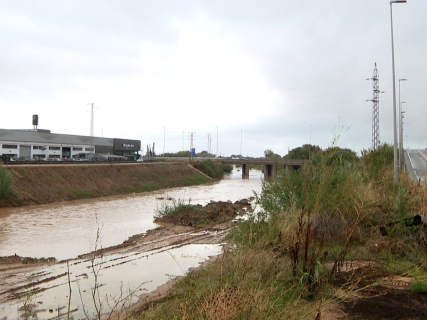

A journalist from the À Punt network has testified before the judge investigating the management of the devastating dana of October 29, 2024, which caused 231 deaths in the province of Valencia, stating that that afternoon they traveled to Catarroja (Valencia) to take images and that, when they received the Es Alert, "the water was already reaching three meters high."
The professional, who worked as a camera operator, appeared as a witness in the proceedings in which the former Minister of Justice and Interior, Salomé Pradas, and her former second-in-command, Emilio Argüeso, are under investigation. On the same day, the reporter who accompanied her also testified. With the material they both recorded, a report on the dana was later produced, broadcast on the first anniversary of the tragedy.
According to the camera operator's account, they arrived in Catarroja around 6:30 PM. Already at the first roundabout leading into the town, they encountered a person who warned them to turn back because the ravine had overflowed or was about to do so.
Within minutes, she narrated, they were completely soaked. "The water was rising, people were running," she stated, before explaining that a young man allowed them to go up to the balcony of his home to record the state of the ravine. They were unable to leave the area until 6:30 AM the following morning.
The witness indicated that, when she received the Es Alert at 8:11 PM, she thought, "Now?", and pointed out that they had already been recording from the rooftop for about an hour and that "the water had reached three meters high." At the time the alert came in, they had been without mobile coverage or electricity supply "for some time."
On the other hand, the reporter who was with her explained to the magistrate that, around 4:00 PM, it began to be discussed in the newsroom that there was a real risk of the ravines overflowing and that no team had been assigned to cover it. The deputy director then asked him if he could take charge of the assignment.
"It seemed obvious that the ravines were going to overflow in this area, especially in El Poyo. The weather colleague saw it very clearly," he remarked during his testimony.
The journalist added that its managers were "very scared" because they had never seen precipitation of that magnitude before, and specified that the warnings for residents to go to the garages began practically from his arrival in Catarroja, that is, before the Es Alert was issued.