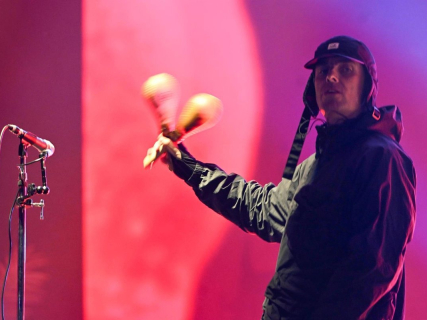
How much do Oasis tickets cost in Barcelona 2027: prices and types of tickets

The published prices for the two Oasis concerts at the Estadi Olímpic Lluís Companys range between 85 and 255 euros, to which a charge of 2 euros per transaction is added.

WhatsApp Image 2026 09 14 at 18.23.02

WhatsApp Image 2026 09 14 at 18.23.02

Add DEMÓCRATA to Google

Ask FREN

Published

Last updated

1 minute

Most read

How much does it cost to see Oasis in Barcelona in 2027? The published prices for the concerts that Liam and Noel Gallagher will offer on July 10 and 11 at the Estadi Olímpic Lluís Companys range between 85 and 255 euros.

The final amount will depend on the type and location of the ticket. Additionally, there is a charge of 2 euros per Ticketmaster transaction.

Prices for Oasis in Barcelona

The announced range for the tickets in Barcelona starts at 85 euros and reaches 255 euros for the highest-priced seats.

Not all fans will be able to access the purchase directly. They must first participate in the registration system established for the Oasis Live '27 tour.

The deadline to register ends on September 17 at 5:00 PM.

The price won't be the only thing: first, you need to get a code

The main novelty compared to a conventional sale is that there will not be a general sale open to the public.

Among those who complete the registration correctly, fans will be selected to receive a unique and non-transferable code.

This code will allow access to a specific sales window, but does not guarantee that the user will ultimately obtain a ticket.

When tickets will be available for purchase

The sales windows will be distributed over the days September 25, 26, and 27.

Each selected fan will be informed of the specific date and time they will be able to access.

The measure aims to distribute the enormous demand expected for the return of Oasis and reduce the long virtual queues that accompanied previous sales processes of the band.

Oasis will give two concerts in Barcelona

Oasis will perform on July 10 and 11, 2027 at the Estadi Olímpic Lluís Companys as part of their new world tour.

The Gallagher brothers will thus return to play together in Spain as part of Oasis Live '27, a tour of 38 concerts that will also pass through cities like Glasgow, Manchester, Munich, Amsterdam, Paris, Rome, Boston, and Las Vegas.

More key points, information and questions with FREN

AI-GENERATED CONTENT

What legal requirements must be met to organize international concerts like Oasis in Spain?

The organization of large-scale international concerts in Spain (such as those by major bands in stadiums or open-air venues) is subject to a combination of state, regional, and municipal regulations. There is no "single concert law," but rather a framework of rules on public shows, safety, noise, civil protection, immigration, taxation, and copyright that the promoter must comply with simultaneously.

1. Basic framework of shows and competencies

At the state level, the General Regulation of Police of Public Shows and Recreational Activities, approved by Royal Decree 2816/1982, remains a reference, although it is partially repealed and supplemented by more recent regulations. Many regional show laws are based on it, such as:

  • Madrid: Law 17/1997, on Public Shows and Recreational Activities.
  • Catalonia: Law 11/2009, on administrative regulation of public shows and recreational activities.
  • Valencian Community: Law 14/2010, on public shows, recreational activities, and public establishments.
  • Andalusia, Galicia, Castilla y León, Castilla-La Mancha, Aragón, Navarra, Cantabria, Asturias, etc., with their own specific show laws.

These regional laws specify types of shows, authorization procedures, maximum capacities, organizer duties, and sanctioning regimes.

2. Licenses, authorizations, and local limitations

The key permit is usually municipal. According to notes from municipalities like Alicante or Barcelona, the following are normally required:

  • Activity license or permanent enabling title for the venue (pavilion, stadium, arena, bullring, etc.). If concert use is not included (as in football stadiums), each concert requires an individual extraordinary authorization.
  • Authorization for occasional or extraordinary shows, also regulated by specific regional rules (for example, Aragón has its own decree for occasional events).
  • Compliance with municipal ordinances on noise pollution and Acoustically Saturated Zones (ZAS): decibel limits, concert end times, requirement for sound limiters-recorders, and, if applicable, additional restrictions in sensitive neighborhoods.
  • Management of public road occupation and mobility (traffic cuts, parking, access, reinforced public transport), often included as a condition in the authorization.

3. Safety, capacity, and self-protection plans

Regarding public safety, Organic Law 4/2015 on citizen security and Law 19/2007 on violence and racism in sports set general obligations, but the technical core lies in:

  • The Basic Self-Protection Standard, approved by Royal Decree 393/2007 (partially repealed by Royal Decree 524/2023, which approves the new Basic Civil Protection Standard, but applicable temporarily). It requires certain venues and high-attendance events to have a Self-Protection Plan including:
    • Risk analysis and evacuation routes.
    • Organization of human and material emergency resources.
    • Coordination with Civil Protection and health services.
  • Technical standards such as the Low Voltage Electrotechnical Regulation (Royal Decree 842/2002), which condition temporary electrical installations for stages, lighting, and sound.

The Ministry of the Interior highlights, in educational materials about festivals, that safety is structured between:

  • Internal responsibility of the promoter (access control, private security, capacity compliance).
  • Deployments of National Police, Civil Guard, and local police in the external environment, coordinated with Civil Protection and emergency services.

4. Noise, schedules, and neighborhood coexistence

At the state level, Law 37/2003, on Noise, and its development by Royal Decree 1367/2007 set the framework for noise pollution (quality objectives, zoning, emission and immission limits). Communities and municipalities specify these limits in:

  • Noise ordinances and municipal noise pollution plans, which may impose decibel caps, maximum hours, and event frequency restrictions.
  • Special acoustic protection zones or ZAS, where new musical activities are limited or strict sound control conditions are imposed.

Experience with conflicts in stadiums (Metropolitano, Bernabéu) shows that if legal limits are exceeded or the license does not contemplate these uses, administrative and judicial actions may be initiated by neighbors or the public prosecutor's office.

5. Audience rights and consumer protection

Concerts are subject to consumer protection and defense regulations:

  • Rules on ticket sales (price transparency, prohibition of illicit surcharges, limits on street resale) that have prompted investigations by the Ministry of Consumption into major ticketing companies.
  • Obligation to accept cash payment up to the legal limit, reminded by regional consumer services in relation to festivals.
  • Refund regimes for cancellations, date changes, or substantial modifications of the show, according to general consumer rules and contractual conditions.

6. Foreign artists, copyright, and taxation

For international artists, three additional areas apply:

  • Immigration and visas: paid performances require that musicians and their staff have the corresponding visa or residence and work authorization. Current immigration regulations and, if applicable, specific agreements for artistic activities must be reviewed.
  • Copyright and related rights: it is essential to regulate the public communication of music (own and third-party repertoires), collection and settlement of rights with management entities, as well as ownership of recordings and broadcasts.
  • Taxation: non-resident artists pay taxes in Spain on income earned here, usually via the Non-Resident Income Tax, while the tax residence of major artists on international tours has been subject to complex litigation before the National Court. The contract structure (fee, production, rights assignments) directly impacts withholdings and reporting obligations.

In practice, organizing an international concert in Spain requires working simultaneously with the city council, the autonomous community, the Government Delegation, rights management entities, and advisors in immigration and taxation, always verifying the specific regulations of the territory and the chosen venue.

What are the competencies of the Barcelona City Council regarding public shows?

In Barcelona, competencies regarding public shows and recreational activities are framed within three regulatory levels: the basic state legislation on local regime, the Catalan regional legislation on shows, and the special regime of the municipality of Barcelona. Within this framework, the City Council assumes a central role in the authorization, control, and discipline of establishments and activities open to the public.

At the state level, Law 7/1985, on the Bases of the Local Regime recognizes municipalities' regulatory and self-organization powers, as well as their own competencies in matters directly linked to citizen coexistence, leisure, and safety in public spaces. Based on this, city councils can approve ordinances, exercise administrative police functions, inspection, and sanctioning, always respecting sectoral and regional legislation that specifies the distribution of functions.

In Catalonia, the key regulation is Law 11/2009, of July 6, on administrative regulation of public shows and recreational activities, later amended by other regional laws. This law establishes the legal regime of shows, recreational activities, and establishments and spaces open to the public where they take place, and explicitly defines the competencies of the Generalitat and the city councils.

The preamble of Law 11/2009 emphasizes its decentralizing vocation: it assigns to city councils “most of the control competencies, including inspection and sanctioning,” leaving to each municipality, through formal agreements, the effective assumption of certain functions, which in their absence are exercised by the Generalitat. It also creates the Commission of Public Shows and Recreational Activities as a coordination body between the Generalitat and city councils.

Regarding specific functions, the law provides that, generally, public shows and recreational activities, as well as the establishments open to the public where they are held, are subject to municipal license, and only exceptionally to authorization by the Generalitat. Based on this, city councils — including Barcelona’s — have, among others, the following typical competencies:

  • Local regulatory power: approval of specific municipal ordinances on shows and recreational activities, within the framework of Law 11/2009 and regional regulations. These ordinances may set additional requirements regarding schedules, operating conditions, capacities, safety measures, or noise limitations.
  • Urban and territorial planning: integration of criteria for location and safe accessibility of establishments and public spaces in urban planning. Planning may establish binding determinations on where certain leisure or show venues may be located.
  • Authorization and licenses: granting opening and operating licenses for establishments open to the public, as well as licenses for ordinary and extraordinary shows and recreational activities (e.g., street festivals, popular parties, or activities in open spaces), under the terms set by Law 11/2009 and its development.
  • Prior communication or responsible declaration regime: possibility to replace the license with prior communication in certain lower-impact cases, or even exempt low-impact or culturally special activities from licensing by ordinance, when allowed by regional regulations.
  • Inspection and control: inspection actions over establishments and activities subject to municipal license, verifying compliance with safety, capacity, schedules, accessibility, and other requirements. Law 11/2009 foresees that city councils may expressly assume these inspection and sanctioning competencies.
  • Sanctioning power and police measures: initiation and processing of sanctioning proceedings for minor infractions and, when foreseen by the distribution of competencies, also for serious or very serious infractions; adoption of precautionary or definitive measures such as suspension of shows, temporary closure of establishments, or capacity limitations, to protect people's safety and public order.
  • Ownership and organization of own activities: the city council may own establishments open to the public or directly organize municipal shows and recreational activities, also subject to the legal framework and its own ordinances.

On this general basis, Law 1/2006, on the special regime of the municipality of Barcelona strengthens the Barcelona City Council’s capacity to influence matters of coexistence, citizen security, leisure, and public space management, both through its own organization (districts, Urban Guard, inspection services) and through reinforced coordination mechanisms with the Generalitat.

In summary, the Barcelona City Council exercises, regarding public shows, a broad block of competencies of regulation (ordinances and planning), authorization (licenses and prior communications), control (inspection), and discipline (sanction and police measures), within the Catalan and state legal framework, and in permanent coordination with the Generalitat when the distribution of functions requires it.

Can you detail what types of infractions and sanctions the Barcelona City Council can impose regarding public shows? What margin does the Barcelona City Council have to regulate schedules and capacities of leisure venues by ordinance? How do the Barcelona City Council and the Generalitat coordinate in practice the authorization and control of large events?

What other large-scale international tours have recently taken place at the Estadi Olímpic Lluís Companys?

In recent years, the Estadi Olímpic Lluís Companys has established itself as one of the major European venues for “stadium pop” and large-scale international tours. Based on information from the Barcelona City Council and local press, several major recent tours have specifically passed through the Stadium, and others have at least stopped at the entire Olympic Ring (Palau Sant Jordi, Sant Jordi Club, and the stadium itself), reinforcing that profile as a major musical hub.

Recent international tours at the Estadi Olímpic

According to an official note from the Barcelona City Council in June 2024 about the start of the concert season at the Estadi Olímpic Lluís Companys, between 2023 and 2024 the venue has hosted some of the most powerful tours on the global circuit. Specifically, it states that:

  • Bruce Springsteen – The council highlights that, with his double dates on June 20 and 22, 2024, Bruce Springsteen becomes the artist who has performed the most times at the Estadi Olímpic, with a total of eight concerts. These are concerts within his major world tours, positioning the Barcelona venue as a fixed stop for “The Boss.” Source: municipal press release of 06/10/2024.
  • Beyoncé – The same municipal note highlights that, between 2023 and 2024, four of the five highest-grossing global tours according to Pollstar have passed through the Estadi Olímpic, explicitly citing Beyoncé. She is mentioned as one of the major global tours that have stopped at the stadium during that period.
  • Coldplay – The Coldplay tour is also cited as one of those four major world tours of the highest level that have made a stop at the Estadi Olímpic between 2023 and 2024.
  • Harry Styles – Completing the list of those “four of the five major tours of the moment by gross revenue” (according to the City Council) that have passed through the Estadi in 2023–2024: Bruce Springsteen, Beyoncé, Coldplay, and Harry Styles.
  • Rammstein – The same communication specifies that the 2024 concert season at the Estadi opens with Rammstein, performing in June 2024 at the “great space of Montjuïc.” It is a concert as part of their international tour, large-scale and with high capacity. Source: Barcelona City Council.

Besides these international tours, the same note and other municipal communications highlight milestones of national artists such as Estopa, who in July 2024 fill the Stadium for the first time as part of their 25th anniversary tour. Although your question focuses on international tours, this is relevant because the City Council itself presents it as a historic large-scale milestone within the stadium’s programming.

Other major tours in the Olympic Ring

If we slightly broaden the focus to the entire Olympic Ring (which includes Estadi Olímpic, Palau Sant Jordi, and Sant Jordi Club), an official 2024 activity report from the Barcelona City Council indicates that the international tours of:

  • Pearl Jam
  • Aventura
  • Rammstein (again cited as an example of a major international tour)
  • Luis Miguel

The statement does not break down venue by venue for each artist, but it clearly states that the Olympic Ring is an “indispensable stop” for these major national and international tours, and that much of this offer is concentrated among the Estadi Olímpic, Palau Sant Jordi, and Sant Jordi Club. Source: 2024 Olympic Ring activity report.

Overall reading

With the available information, it can be said that, in the recent period 2023–2024, the Estadi Olímpic Lluís Companys has hosted at least the large-scale tours of Bruce Springsteen, Beyoncé, Coldplay, Harry Styles, and Rammstein, in addition to national milestones such as Estopa. In parallel, the entire Olympic Ring has been a stop for international tours by Pearl Jam, Aventura, and Luis Miguel, among others.

All this fits with the idea repeated by both the City Council and specialized press: Barcelona, and particularly the Estadi Olímpic and its surroundings, have become a fixed venue for the biggest world tours, with several stadium dates each summer and attendance figures of hundreds of thousands of people.

Can you chronologically list the main international tours that have passed through the Estadi Olímpic since 2023, indicating date and approximate number of concerts for each? What economic and tourist impact do these large concerts have on Barcelona according to the most recent municipal data? What mobility and sustainability measures does the City Council apply to large-scale concerts at the Estadi Olímpic?

Play

Test your knowledge with FREN!

How much do you know about this topic? Answer the following 3 questions.

On what dates will Oasis perform in Barcelona in 2027?

Question 1 of 3

What is the minimum published price for Oasis tickets in Barcelona?

Question 2 of 3

What condition must fans meet to be eligible to purchase tickets?

Question 3 of 3