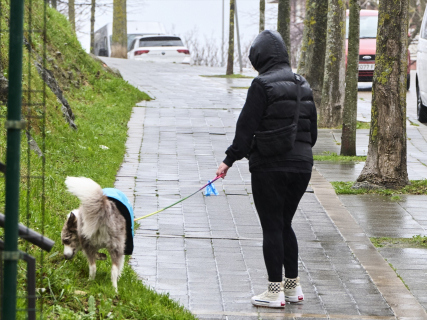
Intense rain alert: where Adam will affect this Saturday and when the greatest risk will arrive

The episode of rains associated with Adam begins this Saturday, October 17, in the Mediterranean and Balearic Islands, although its most adverse phase is expected between Sunday and Monday. Cartagena and its surroundings have a yellow alert scheduled from noon on Saturday.

EuropaPress 6487023 llegada temporal maritimo viento lluvia cantabria 30 enero 2025 santander

EuropaPress 6487023 llegada temporal maritimo viento lluvia cantabria 30 enero 2025 santander

Add DEMÓCRATA to Google

Ask FREN

Published

Last updated

2 minutes

Most read

Elecciones 29N · Encuestas

La media de las encuestas

Media a 13 de noviembre de 2026 · 15 institutos

  • PP31,4 %
  • PSOE26,8 %
  • Vox19,1 %
  • Frente Amplio6,3 %
  • ERC2,4 %
01020304050ene 2024jul 2024ene 2025jul 2025ene 2026jul 2026

Media del último estudio de cada instituto en 30 días y su evolución semanal desde el 23J. Partidos con al menos un 2 %.

Todas las encuestas

Elecciones generales del 29 de noviembre · Demócrata

The weekend starts with a worsening of the weather that requires attention to travel and outdoor activities. The evolution will not be the same in all areas: the rains may intensify at different times and continue after Sunday.

Aemet warns that some of the highest accumulations correspond to the entirety of the episode.

Saturday 17: the hours of greatest attention in Cartagena and the Mar Menor

The City Council of Cartagena places the orange alert between 12:00 on Saturday and 20:00 on Sunday. Its statement includes precipitation that could reach 50 liters per square meter in one hour and 100 liters in twelve hours, with the possibility of hail.

The indicated area includes Cartagena, Mazarrón, Fuente Álamo, Torre Pacheco, and the Mar Menor. The council particularly highlights the time frame from 12:00 to 18:00 on Saturday and the surroundings of Cabo de Palos.

The forecast has led to the suspension of municipal outdoor sports activities on Saturday. Before attending an event, it is advisable to check if the organizers have communicated changes in schedule, postponements, or cancellations.

Sunday 18: the risk increases in the Mediterranean

Aemet places the most adverse phase between Sunday and Monday. The area around Cabo de la Nao and the Pitiusas concentrates some of the highest forecasts, with the possibility of exceeding 150 liters per square meter in twelve hours.

Significant precipitation may also be recorded in eastern Catalonia and in areas of Alicante and Murcia. The distribution will be irregular: nearby municipalities may receive very different amounts.

Monday 19: the rains may continue

Instability may persist in the area around Cabo de la Nao and the Pitiusas and extend to the south and east of Catalonia and the rest of the Balearic Islands.

The accumulations of between 150 and 300 liters forecasted in some points refer to the entirety of the episode, not just to Saturday.

What to check before leaving home

The reference for planning a trip should be the current alert in each area, accompanied by municipal communications. An alert lasting several hours does not mean it will rain with the same intensity throughout that interval.

The City Council of Cartagena recommends avoiding dry riverbeds and flood-prone areas. Do not cross paths with water or streets with currents, even if you know the route, and avoid parking in places where flooding may occur.

More key points, information and questions with FREN

AI-GENERATED CONTENT

What is the procedure for the official declaration of orange weather warnings by Aemet and what administrative procedures does it involve?

AEMET issues orange weather warnings through a technical procedure of prediction, monitoring, and communication, established in the National Plan for Prediction and Monitoring of Adverse Meteorological Phenomena, known as Meteoalerta. Orange indicates a significant meteorological risk. Its issuance must be distinguished from the declaration of an emergency: the latter corresponds to Civil Protection authorities and may require additional administrative decisions.

1. Phenomenon evaluation and threshold application

Prediction services analyze weather models, observation stations, radars, and satellites. They compare the forecast intensity, probability, duration, and extent of the episode with the criteria of the Meteoalerta Plan.

The orange warning is issued when the threshold corresponding to the phenomenon and area is expected to be reached, or when it is observed that it has already been reached without being forecasted. There is no single value for all of Spain: the official thresholds vary territorially and depending on whether it concerns rain, wind, snow, temperatures, storms, or coastal phenomena.

2. Coordination and warning preparation

The Prediction and Monitoring Groups responsible for the territory carry out the operational evaluation, in coordination with the National Prediction Center. This coordination ensures consistency between areas and adjusts the forecast when the episode affects several autonomous communities.

The result is formalized in a bulletin that identifies:

  • The phenomenon and the orange level.
  • The affected area and the forecasted or observed values.
  • The start and end times.
  • The probability and necessary observations to interpret the episode.

The decision incorporates professional judgment and meteorological uncertainty; it does not consist solely of automatically transferring the result of a model. AEMET's documentation on adverse meteorological communication describes this operational organization.

3. Issuance, communication, and updating

Warnings usually cover the current day and the following two. There are preferred issuance periods, but they can be issued or modified outside those hours if the evolution requires it. They are updated when intensity, timing, territory, or duration change significantly; they can also be raised, lowered, or canceled.

Communication includes distribution to Civil Protection and other recipient organizations, along with public dissemination through AEMET's official channels. Orange and red warnings may be accompanied by reinforced telephone communications with emergency services, especially when the proximity or severity of the phenomenon advises it.

4. What administrative procedures does it involve?

For AEMET, the described actions are fundamentally to evaluate, prepare, issue, communicate, and update the warning. The consulted documentation presents this circuit as an operational action of the meteorological service, not as an emergency declaration that must be previously authorized by an autonomous administration.

After receiving it, the competent authorities assess the actions planned in their plans and protocols. These may include:

  • Declaring a pre-emergency phase or activating a civil protection plan.
  • Informing municipalities, essential services, and the population.
  • Reinforcing monitoring and response devices.
  • Agreeing on restrictions, suspensions of activities, or other protective measures.

These consequences are neither automatic nor identical throughout the territory. They depend on the applicable plan, the actual situation, and the competent authority. As explained by Demócrata, AEMET also does not activate ES-Alert messages: it provides meteorological information, while Civil Protection decides the alerts and instructions to the population.

What are the specific competencies of the Cartagena City Council in civil protection and emergency management for intense rainfall?

The Cartagena City Council has competencies to prevent local risks, organize the municipal response, and protect the population against intense rainfall. This includes mobilizing services, closing dangerous areas, assisting and sheltering affected people, and restoring municipal services. However, it does not have exclusive competence over the entire emergency: it must coordinate with the Region of Murcia and with the administrations responsible for watercourses and infrastructures.

1. Prevention and planning

The Law 17/2015, of the National Civil Protection System frames these actions in the phases of forecasting, prevention, planning, response, and recovery. At the municipal level, the relevant functions are:

  • Identify risks and vulnerable points: flood-prone areas, underpasses, roads, buildings, and especially exposed groups.
  • Organize means and procedures: inventory personnel, machinery, pumps, vehicles, and shelter spaces; establish communications, evacuations, and service continuity.
  • Maintain municipal facilities: review and clean drains, grates, collectors, and other drainage elements under its competence, as well as remove obstacles in municipal public spaces.
  • Reduce exposure: incorporate risk prevention into municipal decisions on urban planning, works, and activities, respecting the hydraulic competencies of other administrations.

Local planning must be integrated with the regional territorial plan and with INUNMUR, the autonomous special plan against floods. The consulted sources do not state the current name and approval of the specific municipal instrument for Cartagena; therefore, no unverified specific protocols can be attributed.

2. Action during rainfall

It is the City Council's responsibility to activate its response mechanisms and mobilize Local Police, Firefighters, Civil Protection, and municipal services according to the plan and competent direction. Tasks include:

  • Monitoring and protection: control critical points, signal dangers, close municipal roads, and prevent access to flooded passages or areas at risk of dragging.
  • Assistance: carry out rescues, pumping, and assistance within the capacities of each service; execute evacuations or confinements according to technical criteria and instructions from emergency management.
  • Information: disseminate official warnings and accessible recommendations, without confusing AEMET meteorological warnings with civil protection decisions.
  • Shelter: enable temporary accommodation and attend to basic needs of evacuated persons, especially vulnerable ones.

This last function has a concrete example: in October 2025 Cartagena used the Cabezo Beaza pavilion and prepared additional facilities to receive affected people, as reported by Demócrata.

3. Direction and coordination

The municipal authority initially directs the local response according to the applicable instrument. When the emergency requires autonomous direction, the City Council does not cease to act: it provides resources and information and executes measures integrated into the regional organization, in coordination with 112.

This occurred in September 2026, when INUNMUR remained activated at level 1 due to floods in Campo de Cartagena and Mazarrón, while local actions continued, according to published information.

4. Recovery and limits

Afterwards, the municipality is responsible for assessing damages, removing mud and debris, securing public spaces, and restoring its services. It also documents damages to request aid and reviews detected failures.

Municipal competence does not imply controlling all watercourses nor executing all hydraulic works. The Segura Hydrographic Confederation intervenes in the hydraulic public domain; the Autonomous Community coordinates the regional response; and each owner is responsible for their infrastructures. The City Council should also not be attributed a general power to suspend classes: the educational suspension documented in October 2025 was an autonomous decision.

What legal requirements must be met to suspend outdoor municipal activities due to weather alerts?

To suspend outdoor municipal activities due to meteorological risk, the decision must be made by the competent authority, be based on an identified risk, and be motivated, proportionate, and communicated. A weather alert is a relevant element to assess danger, but it should not be confused with a suspension order: its concrete effect depends on territorial regulations, emergency plans, and the conditions of the activity.

Without knowing the municipality, autonomous community, and type of event, it is not possible to determine which specific procedure applies. The following are the legal aspects that must be verified, not a list of identical obligations for all municipalities.

1. Competence to decide

It must be identified who has the authority to agree on the suspension: the competent municipal body, the authority directing an emergency, or, within its scope, the person responsible for the activity. It must also be distinguished between canceling an event organized by the city council, closing a municipal facility, and prohibiting an authorized private event: these are different decisions and may require different grounds and procedures.

If there is a binding order from a civil protection authority, the city council must act accordingly. It should not replace it with its own assessment incompatible with its instructions.

2. Concrete risk and documentation

The decision must relate meteorological information to the circumstances of the event. The forecast phenomenon, its intensity, timing, and affected area matter, but also attendance, presence of minors, evacuation possibilities, and existence of trees, temporary structures, or electrical installations.

It is advisable to include official warnings and available technical assessments in the file, for example, from municipal services, civil protection, or local police. There is no general equivalence that allows stating that any warning automatically obliges cancellation: that consequence must be verified in the applicable rules. Nor does the absence of a maximum alert alone eliminate a concrete risk.

3. Regulations, plans, and authorization

Before deciding, the autonomous and local rules on civil protection, shows, and recreational activities must be reviewed, as well as the corresponding emergency or self-protection plan. The conditions of the authorization, public space occupancy, and safety instructions planned for the event also count.

These instruments may establish thresholds, mandatory measures, responsible parties, and procedures. It should not be presumed that a formal emergency declaration is always necessary to preventively cancel an activity; the legal mechanism that allows intervention in each case must be identified.

4. Motivation and proportionality

The resolution must explain what danger is intended to be avoided and why suspension is appropriate. It should be assessed whether alternatives such as postponing the schedule, relocating the activity, reducing capacity, or closing only certain areas suffice.

The measure must delimit its territorial and temporal scope, the affected activities, and, when appropriate, the conditions to resume them. Urgency may require immediate action, but does not justify arbitrary prohibition nor eliminates the need to document the reasons for the intervention.

5. Communication and execution

The decision must be notified to those concerned and disseminated in time and clearly among participants and the public. It is important to coordinate closure, access, evacuation if necessary, and removal or securing of dangerous elements. Public communication must allow knowing what is suspended, from when, and until when.

Finally, economic consequences must be examined separately: refunds, contracts, or possible claims. Suspension for safety does not automatically resolve these issues. To specify the required conditions, it is necessary to know the municipality, the activity, and the alert or instruction received.

Play

Test your knowledge with FREN!

How much do you know about this topic? Answer the following 3 questions.

What accumulated rainfall could be reached in Cartagena according to the orange alert?

Question 1 of 3

What recommendation does the Cartagena City Council make in view of the forecast of heavy rains?

Question 2 of 3

Which area has the highest risk of rain on Sunday according to Aemet?

Question 3 of 3