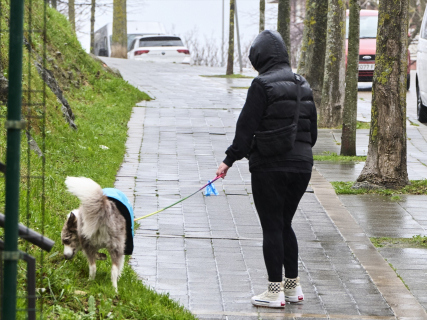
Torrential rains in Catalonia: five regions face the worst moment of the storm this Wednesday

The Generalitat has suspended classes and limited travel in the regions with the highest danger due to the forecast of torrential rains.

2 minutes

EuropaPress 6487023 llegada temporal maritimo viento lluvia cantabria 30 enero 2025 santander

EuropaPress 6487023 llegada temporal maritimo viento lluvia cantabria 30 enero 2025 santander

Add DEMÓCRATA to Google

Ask FREN

Published

Last updated

2 minutes

Most read

The torrential rains mark this Wednesday, September 9, the meteorological news in Catalonia, where the episode reaches its highest risk moment during the morning. The Servei Meteorològic de Catalunya has placed Baix Llobregat, Vallès Occidental, Garraf, Alt Penedès, and Baix Penedès at level 5 out of 6, the second highest on its danger scale. In these areas, precipitation exceeding 40 liters per square meter can be recorded in just 30 minutes, accompanied by storms and possible violent weather phenomena.

The situation has forced the Generalitat to adopt exceptional measures. Educational activities have been suspended in the five affected counties, and restrictions have also been established for travel during the hours of greatest danger. Protecció Civil has activated the special emergency plan for floods INUNCAT and has requested to reduce mobility to essential cases.

The episode particularly affects the central and coastal strip of Catalonia, although the meteorological risk extends to other areas. AEMET maintains warnings for rains and storms in the community and warns of a potentially adverse situation in much of the peninsular Mediterranean area and the Balearic Islands, with the possibility of very heavy precipitation, flooding, hail, and intense gusts of wind. 

A sudden change after several days of heat

The meteorological situation responds to the displacement of a colder air mass that favors the formation of storms when it encounters the warm and humid air accumulated over the last few days. This contrast is behind the irregular and potentially intense nature of the expected precipitation.

The change began to be perceived during the early morning. AEMET's records show still high temperatures in points of the Barcelona coast, but also a progressive decrease in other areas. The evolution over the next few hours will depend on the position and development of the storm centers, which can concentrate significant amounts of water in small spaces.

The situation is not limited to Catalonia. Balearic Islands, Valencia Community, and Murcia also face meteorological warnings for rains and storms, while other areas of the eastern and southeastern peninsular may record precipitation of lesser intensity. The episode is also accompanied by a widespread drop in maximum temperatures in much of Spain.

The Mediterranean also faces wind and rough seas

The episode presents other risks besides precipitation. In Girona, forecasts contemplate gusts of wind that can exceed 108 kilometers per hour in the Alt Empordà, while in certain points of the Girona coast and the Baix Empordà, waves over 2.5 meters are expected.

AEMET also maintains maritime warnings for the Catalan coastline. In the waters of Girona, Barcelona, and Tarragona, changes in the direction and intensity of the wind and a worsening of the sea state are anticipated, with downpours and storms during the hours of greatest instability.

The combination of intense rain, wind, and swell requires extreme caution in areas close to riverbeds, streams, ravines, and areas that can accumulate water quickly. Civil Protection recommends following the evolution of the warnings and avoiding both crossing flood-prone areas and staying near points where a sudden rise may occur.

More key points, information and questions with FREN

AI-GENERATED CONTENT

What steps must the Generalitat follow to lift restrictions and resume educational activity after a storm?

In practice, for the Generalitat to lift restrictions and resume educational activity after a storm (rain, snow, wind, floods, etc.), it must combine its competencies in civil protection, education, security, and, if applicable, public health. The goal is to orderly transition from an emergency situation to normality without creating unnecessary risks for students and staff.

1. General framework of competencies

In Catalonia, the organization is structured, in a simplified way, as follows:

  • Civil protection and emergencies: competence of the Generalitat (Department of the Interior), channeled through PROCICAT and territorial and special plans (floods, snowfalls, etc.).
  • Education: the Department of Education has competence over the operation of the non-university educational system and issues instructions to centers and territorial services.
  • Security and mobility: Mossos d’Esquadra, local police, and traffic services assess access, road safety, and school transport.
  • Local entities: municipalities are responsible for the state of public roads, many school buildings, and basic services (cleaning, access, lighting), making them key actors before reopening.

2. Who decides and what types of acts are used

Formal steps are usually staggered:

  • While the emergency plan (e.g., PROCICAT) is in alert or emergency phase, the civil protection body can recommend or order the closure of centers and limit activities, usually through resolutions or agreements.
  • For the resumption, a symmetrical approach is taken: PROCICAT or the body that issued the initial recommendation issues a new resolution declaring the end of the emergency phase or lowering the alert level.
  • From there, the Department of Education issues:
    • Instructions or resolutions from the ministry or the secretary-general setting the reopening date, conditions (schedule, transport, outdoor activities), and possible exceptions by zones.
    • In more serious or general cases, an order from the Department could be used to give greater rank and regulatory clarity.

These decisions are supported by technical reports (civil protection, public works, education, health) that justify that risks have been reduced to acceptable levels.

3. Coordination with municipalities and centers

Coordination is as important as the formal act:

  • Territorial education services collect information from each municipality and center about damages, access, electricity supply, heating, water, etc.
  • Municipalities certify the state of public roads, access to schools, tree stability, signage, and, if they own the school building, its basic safety.
  • Management teams report on interior damages, loss of materials, classroom and playground conditions, staff availability, and possible relocations.
  • When the situation is heterogeneous, partial or staggered reopenings by municipalities, counties, or even by center can be planned.

4. Technical checks before reopening

Before a general reopening, a minimum checklist is advisable:

  • Center infrastructure: inspection of roofs, facades, detached elements, electrical and heating installations; control of dampness and interior flooding.
  • Access and surroundings: removal of trees or branches at risk of falling, cleaning of snow or mud, stability of walls and fences; sufficient lighting at entrances and exits.
  • School transport: verification that routes are safe, roads open, stops accessible, and coordination with transport companies.
  • Health risks: water quality if there have been floods, cleaning of dining rooms and kitchens, pest control or contamination from spills.
  • Working conditions: ensuring safe work environments for teaching and non-teaching staff.

5. Public communication and to families

The reopening must be accompanied by clear communication:

  • The Government and the Department of Education issue an official note explaining from when classes resume, if there are territorial exceptions, and what criteria have been followed.
  • Municipalities reinforce the message locally and specify particularities (access changes, street closures, use of alternative facilities).
  • Each educational center informs families directly (email, website, apps, social networks, internal channels) about schedules, entrances, closed playgrounds, use of alternative spaces, or changes in dining and transport.
  • It is useful to include a message of caution (avoid still affected areas, pay attention to traffic indications) and contact channels for incidents on the first day.

In summary, lifting restrictions is not just signing a resolution: it requires verifying that the risk situation has ceased, coordinating at all administrative levels, and communicating transparently so that the return to classrooms is safe and orderly.

What are the competencies of Civil Protection of Catalonia in managing flood emergencies?

Civil Protection of the Generalitat of Catalonia plays a central role in managing flood emergencies, mainly defined by the Llei 4/1997, de protecció civil de Catalunya (Legal Portal) and framed by the Ley 17/2015, del Sistema Nacional de Protección Civil (BOE), the Royal Decree 903/2010, on flood risk assessment and management (BOE), and the consolidated text of the Water Law, approved by Royal Legislative Decree 1/2001 (BOE).

1. Risk prevention and analysis

The Llei 4/1997 defines the basic purposes of civil protection as risk forecasting (objective analysis and territorial location) and prevention (reduction and immediate detection of risks). Regarding floods, this translates into:

  • Preparing and maintaining updated flood risk maps in Catalonia, consistent with flood risk management plans approved by the State for the Catalonia river basin district (for example, Royal Decree 688/2023, BOE).
  • Integrating information from hydrological planning and flood risk management plans approved under Royal Decree 903/2010 into civil protection planning.
  • Promoting vulnerability reduction measures (land use planning, restrictions on risky activities, requiring self-protection plans for affected facilities, etc.).
2. Planning: special and municipal plans

Article 18 of Llei 4/1997 establishes that flood emergencies must be subject to special plans when the territory requires it. In Catalonia, this is embodied in the special flood emergency plan (INUNCAT), approved by the Government and declared of interest to Catalonia. Its key features are:

  • Defining risk scenarios, emergency levels, and action protocols for floods.
  • Establishing the plan management (civil protection authority of the Generalitat), intervention groups, order, health and logistics, and the communications and coordination device (including the CECAT – Catalonia Operational Coordination Center, mentioned in art. 27).
  • Requiring affected municipalities to prepare municipal action plans against flood risk integrated into the special plan.

Additionally, municipalities with higher population or risk must approve basic municipal emergency plans (art. 17), which must be consistent with the territorial civil protection plan of Catalonia and the special flood plan.

3. Operational coordination during the emergency

Llei 4/1997 configures an integrated system where the Generalitat, local entities, and self-protection services coordinate. In floods, Civil Protection of Catalonia generally assumes:

  • Direction and coordination of actions when the special plan is activated or when the emergency is declared of interest to Catalonia (art. 29), integrating municipal plans and assuming overall operational command.
  • Management of CECAT as the operational coordination center, which receives activation communications of plans (art. 27.3.d) and coordinates alerts, resources, and services.
  • Mobilization and allocation of resources and services from different administrations (art. 21), as well as coordination with other plans (territorial, specific, self-protection).

When the emergency reaches the category of national interest, according to Law 17/2015, direction passes to the State, but through the National Civil Protection System and the Basic Civil Protection Standard (Royal Decree 524/2023, BOE) the integration of Generalitat bodies and services into state direction is foreseen.

4. Information and alert to the population

Llei 4/1997 imposes on the Generalitat and local entities the obligation to prepare the population against serious risks through information campaigns and drills (art. 35). In floods, Civil Protection of Catalonia must:

  • Design and execute information campaigns about flood zones, self-protection, and behavior upon alerts.
  • Manage alert and communication systems provided in the plans (general alarm and communication network of art. 22, alerts through media and other channels).
  • Ensure plans include measures for information and protection of the population (art. 20.1.k).
5. Rehabilitation and recovery

Once the acute phase is overcome, Llei 4/1997 regulates the rehabilitation phase (arts. 30 to 34): public authorities must restore essential services, prepare recovery plans that assess damages and schedule actions, and create a Recovery Commission with participation from the State, Generalitat, and local entities to coordinate aid and infrastructure restoration projects. Here, Civil Protection of Catalonia promotes and technically coordinates this phase, ensuring projects incorporate future risk reduction criteria (art. 34.3).

6. Coordination with municipalities, State, and hydrographic confederations

In summary, the distribution of competencies is as follows:

  • Generalitat – Civil Protection of Catalonia: planning and coordination of civil protection in Catalonia, direction of flood emergencies except when declared of national interest, integration of municipal and self-protection plans.
  • Municipalities: preparation and application of municipal plans, first response in their territory, local information to the population, under the framework and coordination of the Generalitat.
  • State (Law 17/2015, State Civil Protection Plan against Flood Risk – Resolution of 2.8.2011): establishes basic regulations, declares emergencies of national interest, and directs response in such cases, integrating the Generalitat.
  • Hydrographic confederations and water administration (Royal Legislative Decree 1/2001 and development regulations): responsible for hydraulic public domain, hydrological planning, and flood risk management in the demarcations; their plans and forecasts are the technical-hydrological basis on which Civil Protection of Catalonia builds its operational planning.

What legal requirements must be met to declare level 5 meteorological risk in Catalonia?

In Catalan regulations, there is no “level 5” defined as such in the law; it is an operational label used by Civil Protection of the Generalitat to indicate the maximum level of risk or activation in certain meteorological episodes (heat waves, heavy rain, wind, snow…). However, the decision to set the system at this level is always based on legal and procedural requirements mainly established by the Llei 4/1997, de protecció civil de Catalunya, the Catalonia Civil Protection Plan (PROCICAT), and special plans (INUNCAT, NEUCAT, INFOCAT, VENTCAT, etc.).

1. General legal framework

Llei 4/1997 establishes:

  • That civil protection in Catalonia covers actions against situations of serious collective risk, disasters, and public calamities, including those of meteorological origin.
  • That the response is organized through civil protection plans (territorial and special), which must define application levels of the plan linked to alert and emergency situations, with measures associated with each level.
  • That the application of intervention measures is linked to the formal declaration of activation of the corresponding plan (art. 27).

The details of each level (including the maximum, colloquially associated with this “level 5”) are specified in plans approved by the Government and registered in the General Register of Civil Protection Plans.

2. Competencies to declare the maximum level

Llei 4/1997 and its development establish a hierarchical scheme:

  • Each civil protection plan (PROCICAT and special plans) has a plan director, who is the competent authority to declare its activation and level changes. In Catalonia-wide plans, this direction usually falls to the minister responsible for interior/civil protection or their delegate (Directorate General of Civil Protection).
  • When the emergency exceeds local capacity, the Generalitat can declare a “Catalonia interest emergency”, which implies activating a higher-level plan and transferring command to that autonomous authority.
  • At the municipal level, the mayor can activate the municipal plan, but the maximum meteorological risk level at the country scale will be declared by the autonomous civil protection authority through PROCICAT or the corresponding special plan.
3. Prior technical requirements

To reach the maximum level (level 5 on the operational scale), these general conditions must be met:

  • Existence of forecasts and warnings from Meteocat (Meteorological Service of Catalonia) placing the episode within the extreme thresholds defined in the special plan (precipitation intensity, wind, snow accumulation, fire danger indices, temperature, etc.).
  • Technical assessment by civil protection services (Directorate General of Civil Protection and CECAT), analyzing meteorological forecast, territorial vulnerability, and possible impact on population, infrastructure, and essential services.
  • Verification that it is a situation of effective or imminent serious collective risk, or an ongoing emergency that may overwhelm lower response levels.
  • Compliance with criteria set in the plan itself: each special plan sets when to move from pre-alert to alert, from alert to emergency, and between emergency degrees; the maximum level is reserved for scenarios with a high probability of population damage or massive impact on critical services.
4. Formal declaration act and legal effects

Once technical requirements are verified, the competent authority performs a formal activation or level change act of the plan:

  • The activation declaration or rise to the maximum level is issued, the planned action groups are mobilized, and the Catalonia Operational Coordination Center (CECAT) is notified.
  • The population is alerted through the planned channels (networks, media, sirens, or others) and self-protection instructions are disseminated.
  • Intervention measures on the population and property allowed by Llei 4/1997 are enabled: evacuations, confinements, access and mobility restrictions, limitation of service use, and even temporary requisition or occupation of goods and services necessary for emergency management.

These measures must be proportionate, time-limited, and legally compliant, and can only be adopted within a formally activated plan framework, which in practice is the legal basis for a “level 5” meteorological risk in Catalonia.

Play

Test your knowledge with FREN!

How much do you know about this topic? Answer the following 3 questions.

What level of meteorological risk has the Servei Meteorològic de Catalunya assigned to the five most affected counties?

Question 1 of 3

Which emergency plan does Protecció Civil keep activated due to the floods in Catalonia?

Question 2 of 3

What meteorological phenomenon has caused the torrential rains in Catalonia?

Question 3 of 3