Where is the Shakira Stadium in Madrid and why has a temporary venue been built

The venue built in Villaverde is not a new permanent stadium in Madrid: it is an installation specifically constructed within Iberdrola Music for the twelve concerts of Shakira's European residency.

EuropaPress 7729244 estado obras construccion ciudad shakira distrito villaverde 24 agosto 2026

EuropaPress 7729244 estado obras construccion ciudad shakira distrito villaverde 24 agosto 2026

Add DEMÓCRATA to Google

Ask FREN

Published

3 minutes

Most read

The Shakira Stadium in Madrid is not the Santiago Bernabéu, nor the Metropolitano, nor a new permanent stadium in the capital. The name corresponds to a temporary venue built within Iberdrola Music, in Villaverde, to host the twelve concerts that the Colombian artist will offer between September 18 and October 11, 2026.

The facility has been specifically designed for the European residency of Las Mujeres Ya No Lloran World Tour and has a capacity for more than 50,000 people per night. Its temporary nature explains why many Madrileños still do not identify the name of the venue despite the proximity of the first concerts.

Where the Shakira Stadium is

The Shakira Stadium is located within the Iberdrola Music space, south of the Villaverde Alto-Casco Histórico neighborhood of Villaverde. The venue is bounded by Laguna Dalga to the north, the Real de Pinto avenue to the west, the M-45 to the south, and the Camino de la Rabia to the east. The address used by the organization is calle Laguna Dalga, Villaverde, 28021 Madrid.

Iberdrola Music already regularly functions as a space for large musical events and is also the venue that hosts the Mad Cool festival. The Shakira Stadium occupies only a part of this large space.

Why a stadium has been built for Shakira

The reason lies in the format chosen for Shakira's return to Spain. Instead of holding one or several concerts in different European stadiums, Madrid will host an artistic residency of twelve nights.

The Shakira Stadium has been specifically designed for this project. The organization presents it as a temporary venue conceived to offer conditions of visibility, acoustics, and visual experience tailored to the show.

The design corresponds to the international architecture firm Bjarke Ingels Group (BIG). The concept has as a precedent the venue used for Adele's residency in Munich, Germany.

The facility thus allows for the creation of a space thought from the beginning for a musical show, rather than adapting a stadium built primarily for sports practice to concerts.

More than 50,000 spectators per concert

The venue will be able to accommodate more than 50,000 people each night, according to information released by Iberdrola Music and Live Nation.

The dimension of the project is even greater if the entirety of the residence is taken into account. With twelve concerts scheduled, the organization expects to welcome hundreds of thousands of people during the four weeks that Shakira will remain in Madrid. The concerts will be held on September 18, 19, 20, 25, 26, and 27 and October 2, 3, 4, 9, 10, and 11.

The stadium is part of a much larger facility

The concert is just one part of the project prepared in Villaverde. Around the stadium, an experience dedicated to Latin culture has been designed that will allow people to stay in the space for a good part of the day.

The project includes eight thematic spaces related to areas such as gastronomy, literature, fashion, art, or cinema, in addition to areas intended for the singer's fans and families. In this way, the residence aims to function during concert days as a small "ephemeral city", with the Shakira Stadium as the central piece.

Will the Shakira Stadium be permanent?

No. The organization itself defines the Shakira Stadium as a "temporary space specifically designed for the event". Its construction responds, therefore, to the twelve concerts of the European residence and does not imply the incorporation of a new permanent stadium to the map of large venues in Madrid.

The Iberdrola Music space, where it is installed, will continue to operate as a venue for festivals and large events once the residence concludes.

When are the concerts at the Shakira Stadium

The residence will begin on Friday, September 18, and will end on Sunday, October 11. The twelve performances will be spread over four consecutive weekends: from the 18th to the 20th and from the 25th to the 27th of September, and from the 2nd to the 4th and from the 9th to the 11th of October.
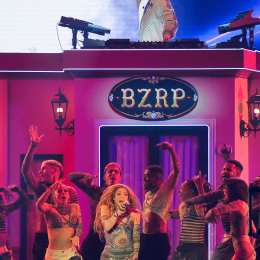
The Madrid City Council has prepared a special mobility device for all these days, with specific pedestrian accesses, Metro reinforcements, a free bus shuttle to Atocha, and traffic restrictions in Villaverde and some accesses from the M-45.

More key points, information and questions with FREN

AI-GENERATED CONTENT

What municipal procedures and permits are necessary to build a large temporary venue in Madrid?

To build and operate a large temporary venue in Madrid (for example, for concerts, festivals, or fairs), the City Council usually requires a combination of urban planning, activity, and safety procedures. The following is a practical and guiding overview, designed to help you structure the project and know what to check with municipal services or specialized engineering firms, but it does not replace direct consultation with the City Council or a qualified technician.

1. Preliminary project definition

Before going to the City Council, it is advisable to have some elements clear, as they condition the processing:

  • Exact location: private plot, municipal venue, public road, park, etc.
  • Duration: whether it is a single event lasting a few days or repeated use over weeks/months.
  • Expected capacity and type of audience (seated, standing, mixed).
  • Construction elements: tents, stands, stages, fences, metal structures, booths, portable toilets.
  • Main activity: concert, show, trade fair, sporting event, etc.
  • Temporary installations: electricity, generators, gas, hospitality, food trucks, etc.

2. Urban planning and construction procedures

If temporary structures of a certain scale are to be erected (large tents, stands, tall stages, lighting towers, etc.), some type of urban planning or construction authorization is usually required:

  • When structures affect the ground, require anchors, or exceed certain dimensions, a temporary works license or authorization or equivalent figure is usually processed.
  • A technical project signed by a competent technician (architect, engineer, etc.) must be submitted to justify structural stability, wind loads, anchor resistance, etc.
  • For simpler assemblies (small platforms, light fences, standardized removable booths), sometimes simplified procedures or notifications can be used, but it is advisable to confirm this explicitly.

3. Activity and public show license or declaration

The use of the venue as a public show or recreational activity requires a specific authorization, which may take the form of a license or responsible declaration, depending on the case. It analyzes:

  • Activity classification (musical show, recreational activity, fair, etc.).
  • Maximum authorized capacity and access control conditions.
  • Schedules, noise levels, and possible acoustic protection measures.
  • Health conditions (toilets, water points, waste management, associated hospitality).

Technical documentation signed by a competent professional in safety and self-protection is usually required, along with certificates for installations (electrical, gas, homologated removable structures, etc.).

4. Occupation of public roads or municipal spaces

If the temporary venue affects public roads, parks, or other municipal assets, a specific occupation authorization is usually required:

  • Request for public domain authorization or use assignment of the space, with detailed plans, dates, and schedules for assembly, event, and dismantling.
  • Calculation and payment of public road occupation fees (ground, airspace, terraces, booths, vehicles, etc.).
  • Coordination with Municipal Police for traffic cuts, detours, signage, and public order devices when there are large crowds.

5. Safety, emergencies, and self-protection

In large capacity venues, the safety block is key:

  • Self-protection or emergency plan, drafted by a competent technician, with risk analysis, evacuation plans, extinguishing means, meeting points, etc.
  • Calculation of width and number of exits, evacuation routes, capacity control, and communication systems with the public.
  • Material means: fire extinguishers, fire hose reels, emergency lighting, photoluminescent signage, auxiliary generators, etc.
  • Medical assistance device and coordination with emergencies (on-site medical services, ambulances, care points).

For large capacity events, the fire prevention and extinction service usually intervenes in project review and, if applicable, in the inspection prior to opening.

6. Coordination with the Community of Madrid

Public shows and recreational activities are also regulated at the regional level. For large temporary venues, coordination with the Community of Madrid may be necessary, for example in:

  • Compliance with regional regulations on public shows and recreational activities.
  • Additional safety and capacity control requirements for mega-events.
  • Regional communication or authorization in certain cases of special risk or very high capacities.

7. Inspections and controls

Before opening to the public, some form of review or inspection is usually carried out to verify that the assembly complies with the authorized project:

  • Verification that the structures are correctly assembled and certified.
  • Checking exits, signage, emergency lighting, and fire-fighting equipment.
  • Review of electrical installations and protection against contacts, overloads, and short circuits.

During the event, police and municipal services may carry out on-site inspections to control capacity, noise, schedules, alcohol consumption, etc.

8. Practical recommendations

  • Hire from the start a specialized engineering or consulting firm in temporary shows in Madrid.
  • Plan months in advance: some procedures require long submission deadlines.
  • Request from the City Council, in writing, a detailed list of licenses, responsible declarations, and authorizations applicable to the specific case.

Since regulations are updated and each project has particularities, it is essential to always verify with the competent municipal services and qualified technicians before starting any action.

Can you detail what content is usually required in the self-protection plan for a mass event in Madrid? What additional requirements usually apply if the temporary venue includes hospitality bars and alcohol sales? How does an event promoter normally coordinate with Municipal Police and emergency services for a large capacity festival?

What are the competencies of the Madrid City Council in authorizing mass events?

The Madrid City Council plays a key role in authorizing and managing mass events, but it operates within a framework shared with the State and the Community of Madrid. Its competencies focus on the use of public space, urban planning, noise, mobility, and venue control, while citizen security and public order are mainly state responsibilities, and the basic regulation of shows corresponds to the Community.

1. General framework of competency distribution

At the state level, legislation on citizen security and civil protection assigns the Government and Government Delegations the direction of security devices at large events (coordination of National Police, Civil Guard, etc.). A central piece is the Local Regime Bases Law, which recognizes municipalities' competencies in:

  • Traffic regulation and urban mobility.
  • Protection of the urban environment and noise control.
  • Security in public places through local police.
  • Use of local public domain (streets, squares, parks, etc.).

At the regional level, the Community of Madrid regulates public shows and recreational activities through Law 17/1997, on Public Shows and Recreational Activities (LEPAR), which sets safety, health, capacity, insurance, and emergency plan conditions. According to Demócrata, this law requires establishments to meet solidity, fire prevention, accessibility, and insurance requirements, and mandates emergency plans when appropriate.

2. Municipal competencies on mass events

Within this framework, the Madrid City Council exercises several relevant direct competencies:

  • Authorization of events on public roads and municipal spaces. The municipal note on the guide “Madrid: acts on public roads” explains that the City Council processes authorizations for acts on streets and green areas, setting documentation, deadlines, and fees according to capacity, temporary structures, sound use, fireworks, or filming.
  • Noise conditions and occasional exceptions. Authorization for the NFL game at the Bernabéu was granted by the Directorate General of Sustainability and Environmental Control of the City Council, allowing temporary exceedance of sound limits under the municipal noise ordinance, which contemplates exceptions for events of special civic significance.
  • Mobility regulation and traffic cuts. In large celebrations (World Cup, Pride, Formula 1, etc.), the City Council approves mobility plans and street closures, as shown in the note about the Formula 1 Grand Prix, where the City Council “greenlights the mobility plan” for an event with hundreds of thousands of attendees.
  • Control of establishments subject to LEPAR. The City Council carries out inspection and control tasks of leisure and hospitality venues (capacity, presence of minors, compliance with schedules and safety conditions), as highlighted in the special Christmas device.
  • Specific authorizations linked to urban planning. In the case of the Bernabéu, the Provincial Court has analyzed, among other aspects, that for uses other than football matches (such as concerts), a specific authorization adjusted to the urban planning license and required soundproofing measures is necessary.
3. Role of the Community of Madrid and ongoing reforms

LEPAR sets the regional framework for shows and recreational activities and, according to the analysis on the LIDER law of Madrid in Demócrata, it is being reformed to adapt to the reality of large events. Among the announced changes, it is expected that municipalities with more than 20,000 inhabitants will directly authorize large events, strengthening their role in this matter and reviewing the sanctioning regime.

Additionally, the Community has promoted Law 1/2026 on popular action that modifies, among others, Law 17/1997 to allow participation in criminal proceedings when public disorders occur that prevent or hinder the celebration of events and shows of general interest, impacting the legal protection of these events.

4. Coordination and limits

In practice, authorizing a mass event in Madrid city involves:

  • Permission or notification to the City Council for the use of public space, noise, schedules, and assembly.
  • Compliance with regional show regulations (LEPAR) and other sectoral regulations (sports, heritage, etc.).
  • Security and public order device coordinated by the Government Delegation and the Community, with participation of Municipal Police.

Therefore, the City Council does not solely control all aspects of a mass event, but it concentrates decisions on where, when, and under what conditions it is held in the city, and can limit, condition, or deny events based on their impact on coexistence, noise, mobility, and venue safety.

What professional background and trajectory does the Bjarke Ingels Group (BIG) architecture firm have in designing temporary venues?

Bjarke Ingels Group (BIG) is a Danish architecture firm founded in 2005 by Bjarke Ingels, with offices in Copenhagen, New York, London, and other cities. Although it is best known for large-scale permanent buildings, a significant part of its trajectory has been developed in designing temporary venues and structures: pavilions for world expos, ephemeral urban installations, and traveling structures for cultural and corporate events. These projects have served as a laboratory to experiment with lightweight materials, rapid assembly, and new forms of interaction with the public.

One of BIG's most influential precedents in temporary venues is the Denmark Pavilion for Expo Shanghai 2010. Conceived as a continuous circuit, the building-promenade allowed visitors to cycle through it, integrate a small harbor with water brought from Copenhagen, and even house the famous Little Mermaid sculpture. Although it was a large-scale pavilion with careful construction, its vocation was fully temporary: responding to the ephemeral context of an Expo, condensing a national narrative in a few square meters, and facilitating dismantling after the event. The project already showed several constants of the firm: experiential focus, circulation as a protagonist element, and use of the venue as a “stage” for a political-cultural narrative (in this case, Denmark's international image).

Another key milestone is the Serpentine Gallery Pavilion 2016 in London. The Serpentine commissions a temporary pavilion each year from a prestigious firm, and BIG's proposal consisted of “unfolding” a three-dimensional wall of fiberglass blocks until it became a habitable shell. The structure functioned as a luminous grotto: translucent, lightweight, and highly modular, designed to be assembled and dismantled in a few weeks. With this pavilion, BIG consolidated its reputation in ephemeral architecture as a firm capable of combining structural rigor, iconic impact, and material innovation in a format necessarily limited in time, budget, and complexity.

Beyond large institutional commissions, BIG has developed various urban installations and experimental pavilions of a temporary nature. Among them stand out lightweight structures for cultural and contemporary art festivals, designed to be transported, reused, or reconfigured in different contexts. In these cases, the firm usually resorts to prefabricated materials, modular systems, and simple geometries that facilitate both assembly and dismantling, reduce waste, and allow a certain circular economy of the venue itself.

In the field of public space installations, BIG has also explored the format of small-scale ephemeral pieces that function as “urban prototypes.” A representative example is its intervention in Times Square for the annual Valentine's Day installation program, where the firm used a repetitive system of backlit transparent elements to create an iconic object, but with rapid assembly and a strictly limited lifespan to the event. These types of venues, although small in size, require very controlled work in logistics, safety, and communication with municipal authorities and event promoters.

Experience in temporary venues has also extended to exhibition scenography and structures for fairs and congresses. BIG has designed interior assemblies and ephemeral supports that translate its volumetric language to the scale of stands or “microarchitecture.” In this field, the firm's trajectory is characterized by:

  • Intensive use of modular systems (repeatable, stackable, or interlocking pieces) that allow configuring different spaces with the same “kit of parts.”
  • Attention to narrative: the temporary venue is not limited to being a neutral container but incorporates messages, routes, and moments of visual impact linked to the brand, institution, or country represented.
  • Emphasis on sustainability, resorting when possible to recyclable materials, relocatable structures, and solutions that minimize wet work and waste.

Overall, BIG's history in designing temporary venues shows an evolution from large exhibition pavilions toward a broader range of ephemeral artifacts: from iconic urban installations to reconfigurable microarchitectures. Throughout this trajectory, some constant traits repeat: a taste for clear and legible geometry, experimentation with industrialized construction systems, and a reading of the temporary venue as a communication and experience tool rather than a mere provisional cover. All this has made the firm repeatedly chosen for commissions where public visibility, speed of execution, and the ability to generate an attractive spatial narrative are as important as the architectural form itself.

Play

Test your knowledge with FREN!

How much do you know about this topic? Answer the following 3 questions.

Where is the Shakira Stadium located in Madrid?

Question 1 of 3

What is the capacity of the Shakira Stadium per night?

Question 2 of 3

Who designed the Shakira Stadium?

Question 3 of 3