Price of electricity today, October 11: the five cheapest hours of Sunday

The wholesale market concentrates its lowest prices between 12:00 and 17:00. Check the table by hours and why these figures do not equate to the final amount of the invoice.

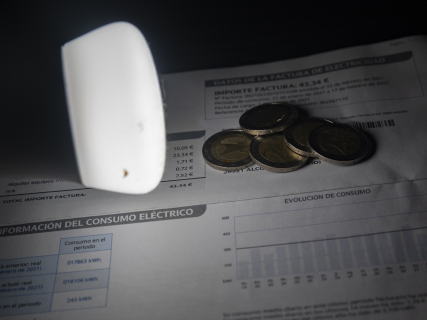
EuropaPress 4165629 lampara refleja importe factura dia precio luz marcado minimo primera vez

EuropaPress 4165629 lampara refleja importe factura dia precio luz marcado minimo primera vez

Add DEMÓCRATA to Google

Ask FREN

Published

Last updated

1 minute

Most read

Elecciones 29N · Encuestas

La media de las encuestas

Media a 12 de noviembre de 2026 · 15 institutos

  • PP31,5 %
  • PSOE26,7 %
  • Vox19,1 %
  • Frente Amplio6,2 %
  • ERC2,4 %
01020304050ene 2024jul 2024ene 2025jul 2025ene 2026jul 2026

Media del último estudio de cada instituto en 30 días y su evolución semanal desde el 23J. Partidos con al menos un 2 %.

Todas las encuestas

Elecciones generales del 29 de noviembre · Demócrata

The price of electricity today, Sunday, October 11, 2026, registers an average of 141.49 euros per megawatt hour (MWh) in the wholesale market, according to OMIE. The day combines very low prices at noon with a spike in the evening.

When is electricity cheaper today

The cheapest time is between 15:00 and 16:00, with an average of 0.52 euros/MWh. The five hours between 12:00 and 17:00 remain at 1.20 euros/MWh or less.

The most expensive period is from 19:00 to 20:00, with 234.79 euros/MWh. These are hourly averages from the wholesale market, not final prices for the consumer.

Price of electricity by hour this Sunday, October 11

  • 00:00–01:00
  • 200.25
  • 01:00–02:00
  • 199.86
  • 02:00–03:00
  • 198.74
  • 03:00–04:00
  • 197.83
  • 04:00–05:00
  • 197.69
  • 05:00–06:00
  • 197.22
  • 06:00–07:00
  • 197.55
  • 07:00–08:00
  • 198.57
  • 08:00–09:00
  • 198.79
  • 09:00–10:00
  • 141.93
  • 10:00–11:00
  • 83.94
  • 11:00–12:00
  • 26.66
  • 12:00–13:00
  • 1.20
  • 13:00–14:00
  • 1.07
  • 14:00–15:00
  • 1.07
  • 15:00–16:00
  • 0.52
  • 16:00–17:00
  • 1.16
  • 17:00–18:00
  • 66.55
  • 18:00–19:00
  • 178.46
  • 19:00–20:00
  • 234.79
  • 20:00–21:00
  • 234.00
  • 21:00–22:00
  • 223.38
  • 22:00–23:00
  • 209.49
  • 23:00–24:00
  • 205.09

Source: hourly data from the wholesale market collected by Selectra. It does not include the remaining components of the bill.

Why a price close to zero does not mean free electricity

The wholesale price is only part of the supply cost. The bill incorporates other concepts, such as regulated costs, contracted power, and taxes.

The CNMC reminds that even with very low wholesale prices, the bill does not disappear. There may also be costs associated with the operation and balance of the electrical system.

What to check before programming the washing machine

The first check is the contract. If you have a fixed price throughout the day, moving consumption from the afternoon to noon does not lower the contracted kilowatt hour by itself.

If your rate varies by hour, check the prices applicable to your supply. The wholesale table allows you to know the market evolution, but it does not replace that of the PVPC or the conditions of an indexed rate. Savings depend on both the time of consumption and the contract and the energy used.

More key points, information and questions with FREN

AI-GENERATED CONTENT

What are the pending parliamentary procedures to modify the regulation of the wholesale electricity market in Spain?

At this moment, according to the parliamentary information and press consulted, there is no comprehensive and specific reform of the wholesale electricity market design (marginalist mechanism, formation of the “pool” price) being processed in the General Courts as a government bill or autonomous bill proposal. What does exist are partial initiatives that affect the electricity sector (Law 24/2013 of the Electricity Sector, taxation, emission rights, hydroelectric, nuclear), and a significant part of the market changes is being channeled through regulatory rules and CNMC decisions outside the ordinary legislative process.

1. Absence of a “wholesale market reform law” in progress

Searches in initiatives from the Congress and Senate and specialized press show that:

  • No government bill nor group bill proposal is registered whose express and main purpose is to “reform the wholesale electricity market” or “change the marginalist design” in Spain.
  • The reform of the electricity market design that has advanced in recent years is mainly at the European level (EU electricity market reform package) and is being applied in Spain through regulations, ministerial orders, and CNMC circulars, not through a single large specific “pool” law.

Therefore, there is no specific file today in the Congress or Senate from which a closed list of “pending procedures” for a global wholesale market reform can be enumerated, because that reform is not formally registered as such.

2. Parliamentary initiatives that indirectly affect the market

There are various initiatives in process that affect the electricity framework and may influence the market’s functioning, although their main purpose is not to redesign the “pool”:

  • Reform of Law 24/2013 of the Electricity Sector (government or group bill proposal, according to the information summarized in the consulted news). According to parliamentary press, this initiative:
    • Has already been admitted for processing and passed the debate on consideration or entirety.
    • Has the amendment period closed and the amendments registered.

    In this case, the remaining parliamentary procedures in the Congress would typically be:

    • Report from the committee (if the Board refers it to a committee): technical negotiation among groups on the amendments.
    • Opinion of the competent Commission (Ecological Transition/Energy): approval of the articulated text, incorporating or rejecting amendments.
    • Debate and vote in the Plenary of the Congress on the text and reserved amendments.
    • If approved, referral to the Senate, where there may be:
      • Debate in Commission and Plenary.
      • Amendments or veto from the Senate.
    • Second reading in the Congress, which ultimately decides on the Senate’s veto or amendments.
    • Sanction, promulgation, and publication in the BOE.
  • Bill proposal on emission rights trading (122/000170, Congress). It is in an advanced phase: the amendment period to the articles has closed and the amendments are already published. Its pending steps are the typical ones: committee report (if constituted), commission opinion, Congress Plenary, Senate referral, and possible return to Congress.
  • Bill proposal on public hydroelectric plants (122/000185, Congress), which proposes the takeover of plants by a public entity. The initiative has already been taken into consideration, so the full cycle of amendments, committee, commission opinion, Plenary, and possibly Senate processing remains.
  • Bill proposal on nuclear energy (122/000179, Congress), focused on the role of nuclear in decarbonization and nuclear park planning. The amendment period is open and extended; afterwards will come committee, commission opinion, Plenary, and referral to the Senate if approved.

All of these can modulate costs, investment, or supply structure, and therefore indirectly affect the wholesale market, but do not themselves rewrite the marginalist design.

3. Market reforms via regulations and CNMC (outside Parliament)

A good part of recent modifications to the wholesale market functioning are being processed through non-legislative means:

  • The CNMC has approved relevant changes in the day-ahead and intraday market rules, such as the introduction of 96 quarter-hourly trading rounds to bring the intraday market closure closer to real time, aiming to integrate more renewables and reduce deviations.
  • The MITECO has launched and completed the regulation of the new capacity market, structured through ministerial orders and auctions, after approval by the European Commission.

These reforms are already being published in the BOE and deployed, and do not require additional parliamentary procedures, beyond possible political oversight (questions, interpellations, non-legislative proposals) and the mentioned sector laws.

4. Conclusion

In summary, as of today there is no “wholesale electricity market reform law” in progress whose pending procedures can be directly listed. What does exist is a set of partial laws in process (on the electricity sector, emission rights, hydroelectric, nuclear) that still must go through the classic phases of committee, commission opinion, Congress Plenary, Senate processing, and final approval, and a very relevant block of market changes materializing through regulatory rules and CNMC decisions, already outside the strict parliamentary legislative procedure.

Can you specify what changes the reform of Law 24/2013 of the Electricity Sector currently in process would introduce? What differences exist between parliamentary reforms and CNMC decisions regarding their impact on the wholesale electricity market? What political scenarios could lead to the registration of a comprehensive reform of the wholesale electricity market design in the next legislature?

What powers does the CNMC have in supervising and controlling electricity prices?

The National Commission on Markets and Competition (CNMC) does not directly “set” the final price that consumers pay for electricity, but it does have a central role in the supervision, regulation, and control of many elements that influence that price and the proper functioning of the electricity market. Its functions are mainly defined by European regulations and Spanish legislation on the electricity sector and competition defense.

1. Supervision of the wholesale electricity market

The CNMC monitors the wholesale market (the so-called electricity “pool”) to ensure that price formation occurs under conditions of effective competition:

  • Control of daily and intraday matching: analyzes energy sale and purchase offers in organized markets to detect abusive strategies, price manipulation, or misuse of privileged information.
  • Supervision of agent behavior: examines whether generating companies (and other participants) offer their production coherently with their costs and technical capacities, and whether there is artificial capacity withholding or coordinated practices.
  • Application of REMIT regulation (European regulation against market abuse in energy): investigates possible cases of market manipulation and insider trading in wholesale and derivatives markets, and imposes sanctions when this regulation is violated.

2. Regulation of transport and distribution tariffs

A relevant part of the electricity bill consists of access tariffs, which remunerate transport and distribution networks. Here the CNMC does have direct regulatory competence:

  • Setting the methodology to calculate transport and distribution tariffs, in accordance with legal frameworks and European regulations.
  • Approval of circulars that specify how network costs are allocated among different types of consumers (voltages, powers, time-of-use, etc.).
  • Supervision of network companies (transmission and distribution) to ensure their regulated revenues comply with efficiency criteria and do not pass unjustified costs to the system.

Although the Government retains decision-making power over charges (other regulated concepts on the bill different from tariffs), the CNMC acts as a technical counterbalance by defining and monitoring the part strictly linked to network use.

3. Competition protection and conduct control

As a competition authority, the CNMC can decisively influence electricity price evolution through:

  • Investigation and sanctioning of cartels or anticompetitive agreements among electricity companies (e.g., market sharing, coordinated price fixing, or artificial supply limitation).
  • Control of abuse of dominant position: examines whether a company with a large share in generation, distribution, or commercialization uses that power to impose excessive prices or unfair conditions.
  • Control of concentrations (mergers and acquisitions): assesses whether a business operation may reduce competition in the electricity sector and thus negatively affect prices, potentially imposing conditions or even vetoing the operation.

4. Supervision of commercialization and consumer relations

The CNMC also intervenes in the commercialization phase of electricity, where the price paid by the customer is set:

  • Supervision of the retail market: analyzes offers from retailers (in free and regulated markets) to verify that there are no misleading or discriminatory practices.
  • Price transparency and billing: issues criteria and circulars to make bills more understandable and to allow consumers to compare offers clearly.
  • Monitoring of reference retailers that offer the Voluntary Price for Small Consumers (PVPC), ensuring they correctly apply approved methodologies and do not add undue margins.

5. Reports, recommendations, and regulatory monitoring

Beyond strictly binding decisions, the CNMC prepares reports, studies, and recommendations on the electricity market’s functioning, analyzing:

  • The evolution of wholesale and retail prices.
  • The degree of effective competition in generation, distribution, and commercialization.
  • The impact of regulatory changes on consumer bills.

These reports do not set prices but influence Government and legislator decisions, and serve as a technical and public reference on whether prices are being formed reasonably and competitively.

In sum, the CNMC does not determine the final price euro by euro, but plays a key role in regulating regulated costs, market oversight, and competition defense, three decisive levers to ensure electricity prices form transparently, efficiently, and for consumers’ benefit.

What were the results of the last general elections in Spain and which parties currently lead energy policies?

The last general elections held in Spain were on July 23, 2023 (23J). From them came the current Congress and the coalition Government that today directs energy policy. Based on those results, the Executive is in the hands of PSOE and Sumar, while PP and Vox lead the opposition and dispute the course of the energy transition.

Results of the general elections of 23J (Congress)

According to official data compiled from the sources consulted, the distribution of seats in the Congress after the July 23, 2023 elections was as follows for the main nationwide parties:

Party Votes % vote Seats
PP 8,091,840 33.05 % 137
PSOE 7,760,970 31.70 % 121
Vox 3,033,744 12.39 % 33
Sumar 3,014,006 12.31 % 31

Additionally, various regional forces obtained representation in the Congress:

  • ERC: 7 seats.
  • Junts: 7 seats.
  • EH Bildu: 6 seats.
  • PNV: 5 seats.
  • BNG: 1 seat.
  • Coalición Canaria: 1 seat.
  • UPN: 1 seat.

In total, the Congress has 350 deputies and the absolute majority is at 176 seats. The sum of PP (137) and Vox (33) was 170, insufficient to invest Alberto Núñez Feijóo.

In November 2023, Pedro Sánchez was invested president with a majority of 179 deputies, supported by PSOE, Sumar, ERC, Junts, EH Bildu, PNV, BNG, and Coalición Canaria. Since then, a PSOE–Sumar coalition governs, backed by those parliamentary partners in key votes.

Who currently leads energy policies

Currently, the leadership of energy policy corresponds to the PSOE–Sumar coalition Government. The key department is the Ministry for Ecological Transition and Demographic Challenge (MITECO), led by Third Vice President and Minister Sara Aagesen, who succeeded Teresa Ribera when she moved to the European Commission.

The central lines of the Government’s energy policy, according to official documentation of the 2023‑2030 National Integrated Energy and Climate Plan (PNIEC) and the Executive’s notes, are:

  • Acceleration of renewable energies (solar, wind, self-consumption, and storage), aiming to achieve by 2030 an electricity system with around 81 % renewable generation and 48 % renewables over final energy consumption.
  • Reduction of greenhouse gas emissions by about 32 % compared to 1990 and decrease of external energy dependence to approximately 50 %.
  • Deployment of renewable hydrogen and strengthening of electrical grids to integrate new renewable capacity and storage.
  • Electrification of transport, industry, and buildings, supported by renewable expansion.
  • Maintenance of the progressive nuclear plant closure schedule, which still foresees about 3.2 GW of nuclear power in 2030, but without new plants and with phased withdrawal.

Within the Government block itself, there are nuances: PSOE emphasizes legal certainty, investment, and industrial competitiveness, while Sumar advocates a faster transition, with greater public intervention and a generally more critical stance toward nuclear energy and fossil fuels.

The role of the opposition in energy

Although energy policy design powers lie with the Government, the opposition conditions parliamentary and social debate:

  • People’s Party (PP): is the largest force in Congress and the main opposition party. It advocates lowering energy costs for households and industry, maintaining a mix of low-emission technologies including nuclear and renewables, reviewing the nuclear closure schedule, and simplifying project and grid processing. It criticizes the Government for advancing nuclear closures without ensuring sufficient firm support, storage, and competitive prices.
  • Vox: leads the most critical flank against European climate policies. Its documents and statements insist on maintaining or expanding nuclear energy, halting closures, “reviewing” climate goals considered harmful to industry and agriculture, and prioritizing energy sovereignty using “all” sources (gas, nuclear, conventional fuels). It labels the Government’s strategy as “ideologized” and demands a review of the European Green Deal.
  • Nationalist and regional parties (PNV, ERC, Junts, BNG, Coalición Canaria, among others) do not control the ministry but have veto or support power over laws and budgets. They usually combine support for renewables with territorial demands: environmental protection, local impact of projects and infrastructure, energy prices, and guarantees for their communities’ industries.

In sum, energy policies are today led by the PSOE–Sumar Government through Sara Aagesen’s MITECO, with an accelerated decarbonization strategy based on renewables, electrification, storage, and hydrogen. Opposing them, PP and Vox lead an opposition calling for more weight for nuclear, more attention to energy prices, and industrial competitiveness, while territorial parties try to steer decisions toward their regions’ specific needs.

Can you break down by province how many seats each party obtained in the 23J 2023 general elections? What specific targets does the PNIEC 2023‑2030 set for installed wind, solar, and storage capacity in Spain? How do PP, Vox, PSOE, and Sumar usually vote in Congress when debating initiatives on nuclear energy and renewables?

Play

Test your knowledge with FREN!

How much do you know about this topic? Answer the following 3 questions.

What was the average electricity price in the wholesale market on October 11, 2026?

Question 1 of 3

Between what hours were the lowest electricity prices recorded on October 11, 2026?

Question 2 of 3

What does the CNMC warn about very low wholesale prices?

Question 3 of 3