Price of electricity today, Saturday, October 17: the five cheapest hours to run the washing machine

The price of electricity today, Saturday, October 17, 2026, registers an average of 0.1443 euros per kilowatt hour in the mainland PVPC, excluding taxes. The opportunity to concentrate consumption arrives at noon: between 11:00 and 16:00 there are five consecutive hours below two cents per kWh.

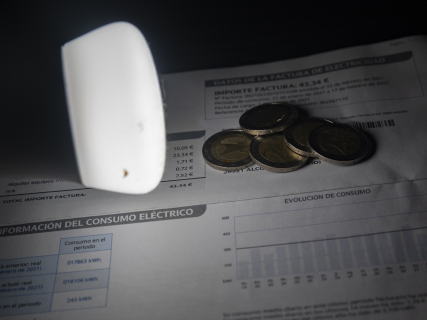
EuropaPress 4165629 lampara refleja importe factura dia precio luz marcado minimo primera vez

EuropaPress 4165629 lampara refleja importe factura dia precio luz marcado minimo primera vez

Add DEMÓCRATA to Google

Ask FREN

Published

Last updated

1 minute

Most read

Elecciones 29N · Encuestas

La media de las encuestas

Media a 13 de noviembre de 2026 · 15 institutos

  • PP31,4 %
  • PSOE26,8 %
  • Vox19,1 %
  • Frente Amplio6,3 %
  • ERC2,4 %
01020304050ene 2024jul 2024ene 2025jul 2025ene 2026jul 2026

Media del último estudio de cada instituto en 30 días y su evolución semanal desde el 23J. Partidos con al menos un 2 %.

Todas las encuestas

Elecciones generales del 29 de noviembre · Demócrata

What time is electricity cheaper today

The minimum is reached from 13:00 to 14:00, with a price of 0.01781 euros per kWh.

For a consumption of two consecutive hours, the most economical period is from 13:00 to 15:00. It is the time frame to consider if the use of the washing machine or dishwasher can be moved to noon.

What are the most expensive hours

The maximum on Saturday corresponds to the period from 00:00 to 01:00, with 0.24676 euros per kWh. In the morning, the period from 08:00 to 09:00 also stands out, at 0.24049 euros.

Prices rise again at dusk, although they do not reach the maximum of the early morning.

Price of electricity today by hours

The following table lists the prices of the PVPC in mainland Spain in euros per kilowatt hour, excluding taxes.

Price of electricity on Saturday, October 17, 2026
Hour Price (€/kWh)
00:00–01:00 · Maximum0.24676
01:00–02:000.23300
02:00–03:000.21593
03:00–04:000.19183
04:00–05:000.18061
05:00–06:000.17248
06:00–07:000.19415
07:00–08:000.22446
08:00–09:000.24049
09:00–10:000.17668
10:00–11:000.09051
11:00–12:000.01974
12:00–13:000.01815
13:00–14:00 · Minimum0.01781
14:00–15:000.01804
15:00–16:000.01923
16:00–17:000.02276
17:00–18:000.07483
18:00–19:000.15524
19:00–20:000.19753
20:00–21:000.19848
21:00–22:000.19714
22:00–23:000.18696
23:00–00:000.17094

PVPC mainland, excluding taxes. Source: Vatio, with data identified as coming from Red Eléctrica. Does not include all concepts of the bill.

Who is affected by these prices

These amounts correspond to the regulated PVPC tariff. They do not automatically apply to contracts in the free market, whose prices depend on the conditions agreed with each supplier.

They also do not equate to the full amount of the bill: taxes and fixed concepts, such as the contracted power, are missing.

Therefore, a price lower than two cents per kWh does not mean that using an appliance is free. The savings depend on the consumption that can be shifted and the contracted tariff.

More key points, information and questions with FREN

AI-GENERATED CONTENT

What are the necessary procedures to switch from the regulated PVPC tariff to the free market in Spain?

To switch from the regulated electricity tariff (PVPC) to the free market in Spain, the process is relatively simple and, in most cases, can be done without supply interruptions. Below I explain the steps, what you should consider, and some practical advice.

1. Check what type of contract you currently have

Before doing anything, confirm that you are really on PVPC and not on a free market tariff:

  • Check your electricity bill: if you are on PVPC, the retailer will be one of the so-called “reference retailers” (Curenergía, Energía XXI, Baser COR, Régsiti, CHC COR, etc.) and the bill will mention “Voluntary Price for the Small Consumer” or “PVPC”.
  • If the retailer's name is different (Iberdrola Clientes, Endesa Energía, Repsol, Holaluz, etc.) it is most likely that you are already in the free market.

It is useful to have a recent bill at hand because it contains all the data you will be asked for later.

2. Compare free market offers

The next step is not yet a formal procedure, but it is key:

  • Compare prices per kWh and power price (fixed term).
  • Check if there is time-of-use pricing (different prices depending on the hour) or a flat rate.
  • Review contract duration, possible penalties for commitment, additional services (maintenance, insurance, etc.) and whether they are mandatory or optional.
  • Check if the price is fixed for a period (e.g., 12 months) or if it is an indexed tariff to the wholesale market.

You can also consult official or independent comparison tools to get a broader view of available offers.

3. Choose a free market retailer

Once you have chosen the offer that interests you, the formal procedure is almost always done with the new retailer, not the current one. You do not need to notify your PVPC company: the change is managed by the new one.

You can contract:

  • By phone, calling the new company's customer service.
  • Online, through their website or app.
  • In person, if they have offices or physical service points.

4. Necessary data and documentation

When contracting the new free market tariff, you will usually be asked for:

  • Personal data of the holder: full name, ID/NIE, phone number, and email.
  • Supply point address: the exact address where the meter is located.
  • CUPS code: it is the identifier of the supply point, appears on all bills (starts with ES...).
  • Bank account (IBAN) for direct debit of bills.
  • Sometimes, a copy of the ID and/or a recent bill to verify data.

If you want to take advantage of the change to modify the contracted power, you must indicate it explicitly; in that case, there may be regulated costs associated with the power change.

5. Contract signing and change process

When you accept the offer (by recorded voice, digital signature, or handwritten signature), the change begins:

  • The new retailer processes the contract registration with the distributor in your area.
  • The meter or installation is not changed, only the company that bills you and the economic conditions.
  • There are usually no power outages; it is an administrative change.
  • The change usually takes effect in a few days or, at most, one or two weeks, often coinciding with the next meter reading cycle.

You will receive the contract in writing (email or postal) with the conditions: it is important to keep and review it.

6. Costs and commitments

In general:

  • The change of retailer is free at the regulated level: no toll is charged for switching from PVPC to the free market.
  • There may be penalties if you had commitments with additional services from your previous company, but in pure PVPC there usually are none.
  • If you modify the contracted power taking advantage of the change, regulated charges by the distributor may apply.

7. Confirmation and subsequent verification

Once the change is made:

  • You will stop receiving bills from your reference retailer and start receiving them from the new free market company.
  • Check on the first bill that:
    • The price per kWh and the contracted power match what was agreed.
    • No undesired services (maintenance, electrical emergencies, etc.) have been added.

If you detect discrepancies, you can first complain to the retailer and, if not resolved, go to the consumer bodies of your autonomous community or the corresponding regulator.

What are the main differences between the regulated PVPC tariff and free market offers? What should I consider to assess whether it is better for me to stay on PVPC or switch to the free market? How can I return from a free market tariff to the regulated PVPC tariff and what are the requirements?

What powers does the National Commission on Markets and Competition (CNMC) have in setting electricity tariffs?

The CNMC sets the electricity transmission and distribution tolls, but does not alone determine the final electricity price. Its competence includes the methodology, structure, and amounts of those tolls, as well as the remuneration of the networks. System charges and the regulated tariff methodology correspond to the Government and the competent ministry.

1. What the CNMC directly decides

Article 7 of Law 3/2013 and Article 16 of the Electricity Sector Law assign it two distinct decisions:

  • Design how tolls are calculated. Through circulars, it establishes their structure and methodology: how network costs are distributed among users and how supply voltage, power, and time periods influence.
  • Approve their specific values. Through resolutions published in the BOE, it sets the amounts users must pay. The law expressly states: "The National Commission on Markets and Competition shall approve tolls by resolution."

Generally, these amounts are set annually, although they can be revised when regulated costs or parameters change significantly. Tolls are uniform throughout the national territory and do not include taxes.

2. How it exercises this power

The methodological reference is Circular 3/2020, amended, among others, by Circular 1/2025. Its criterion is to assign costs according to network usage and encourage consumption during less congested periods. The 2025 reform also introduced treatment of certain positive deviations from previous years to avoid sharp toll variations.

The CNMC must act with consultation of interested parties and criteria of economic efficiency, transparency, objectivity, and non-discrimination, respecting energy policy guidelines and the system's economic sustainability. Therefore, it does not have unlimited freedom to raise or lower these prices.

3. It also determines network remuneration

The Commission approves methodologies, parameters, and amounts of remuneration for transmission and distribution: how much companies are recognized for investing in, operating, and maintaining networks. This includes unit investment values, operation and maintenance costs, regulatory useful life, and financial remuneration rate.

This function is directly related to tolls: the recognized remuneration constitutes the cost these must recover. For example, the CNMC approved a rate of 6.58% for 2026-2031, as reported by Demócrata.

4. What the CNMC does not set

  • System charges. Cover other regulated costs different from networks. The Government establishes their methodology, after CNMC's report, and the Ministry for Ecological Transition approves their values by order. Reporting does not mean deciding.
  • PVPC methodology. The Voluntary Price for the Small Consumer corresponds to the Government. It integrates the energy cost determined by market mechanisms, tolls, charges, and commercialization costs. The CNMC decides the incorporated tolls, not the entire regulated price.
  • Free market offers and taxes. The Commission supervises the competitive functioning of the market but does not set the price of each commercial contract nor the bill's taxation.

In short, its role is decisive regarding how much it costs to use the networks and how that cost is distributed, not all components of the electricity bill.

What legal requirements must retailers meet to offer tariffs in the free market?

If you refer to electricity and natural gas retailers in Spain, they must meet two blocks of requirements: those necessary to carry out the activity and those that protect the consumer when offering, contracting, and billing the supply. The free market allows economic conditions to be agreed upon, but does not eliminate obligations of capacity, guarantees, transparency, and customer service.

1. Notify the start of activity

In electricity, Article 46 of Law 24/2013 of the Electricity Sector requires notifying the start of activity and submitting a responsible declaration of compliance with regulatory requirements. If the activity is carried out exclusively in an autonomous community, the notification is addressed to the competent regional body, which forwards it to the ministry.

In gas, Article 80 of Law 34/1998 of Hydrocarbons also establishes notification and responsible declaration, accompanied by a sales forecast for the first year. Therefore, this general regime should not be confused with a universal prior administrative authorization to commercialize.

2. Maintain capacity and guarantees
  • Electricity: maintain legal, technical, and economic capacity; acquire and pay for the necessary energy; constitute the required guarantees; and pay tolls, charges, and system obligations, even if the customer has not yet paid.
  • Natural gas: have sufficient technical and human resources and demonstrate capacity to meet demand through contracts or supply guarantees. Economic guarantees must also be constituted, necessary accesses contracted, and applicable obligations on minimum stocks and diversification fulfilled.

Royal Decree 1434/2002 requires, for gas, a commercial company form or equivalent foreign entity and contemplates prior authorization in certain cases of companies from non-EU countries without reciprocity.

3. Offer transparent conditions

In electricity, Article 44 requires that the contract identify the company and detail prices, duration, renewal, causes and termination procedures, revision clauses, required quality, and dispute resolution channels. The offer must allow knowing what is contracted and how it can change, not just advertise a discount.

The current electricity regulatory framework includes Royal Decree 88/2026, which approves the General Regulation of supply, commercialization, and aggregation. This regulation has partially repealed previous provisions, so Royal Decree 1955/2000 should not be used as the sole current reference.

4. Contract and bill correctly

Electricity retailers must formalize contracts according to regulations and bill according to agreed conditions, with the required breakdown. They must also inform about the origin of electricity and its environmental impacts. In gas, the Hydrocarbons Law subjects measurement, billing, collection, company change, and supply suspension to specific rules: the free price nature does not allow ignoring them.

5. Handle complaints and facilitate supervision

To supply electricity to end consumers, they must have a postal address, free telephone service, and an electronic channel with receipt confirmation. They must inform about conflict resolution channels and offer access to an accredited alternative consumer dispute resolution entity.

Additionally, retailers are subject to information obligations before authorities and confidentiality. In electricity, they must send the CNMC monthly information on contracting and individualized billing and on certain purchasing and hedging instruments. These requirements remain throughout the activity: it is not enough to comply only at the start.

Play

Test your knowledge with FREN!

How much do you know about this topic? Answer the following 3 questions.

What is the cheapest time to consume electricity according to the peninsular PVPC on Saturday, October 17, 2026?

Question 1 of 3

To which tariff do the hourly prices mentioned in the news correspond?

Question 2 of 3

What is the maximum price recorded for electricity on Saturday, October 17, 2026?

Question 3 of 3