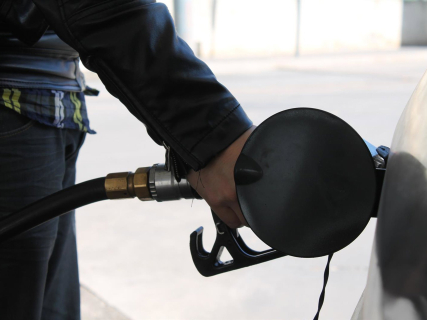
Price of gasoline today, September 15: the 95 rises to 1.886 euros and diesel to 1.868

Filling 50 liters of 95 gasoline costs 94.30 euros, while the same tank of diesel A amounts to 93.40 euros.

fotonoticia 20260722162852 1920

fotonoticia 20260722162852 1920

Add DEMÓCRATA to Google

Ask FREN

Published

Last updated

2 minutes

Most read

Elecciones 29N · Encuestas

La media de las encuestas

Media a 15 de noviembre de 2026 · 16 institutos

  • PP31,4 %
  • PSOE26,9 %
  • Vox19,0 %
  • Frente Amplio6,2 %
  • ERC2,5 %
01020304050ene 2024jul 2024ene 2025jul 2025ene 2026jul 2026

Media del último estudio de cada instituto en 30 días y su evolución semanal desde el 23J. Partidos con al menos un 2 %.

Todas las encuestas

Elecciones generales del 29 de noviembre · Demócrata

ELECCIONES 29N

¿Cuál es tu pronóstico? 29N

Reparte los 350 escaños del Congreso como creas que quedarán el 29 de noviembre. Puedes cambiar tu pronóstico hasta que cierren los colegios.

0 de 350 escaños

PP
PSOE
Vox
Frente Amplio
ERC
Junts
EH Bildu
PNV
Más partidos
Podemos
BNG
SALF
CC
UPN
Adelante
Aliança
Otros

Protegido por reCAPTCHA de Google: privacidad y condiciones

Pronóstico de DemócrataParticipación abierta, no es una encuesta

The price of gasoline today, Tuesday, September 15, 2026, rises again in Spain. Unleaded gasoline 95 reaches an average price of 1.886 euros per liter, five thousandths more than on Monday, while diesel A stands at 1.868 euros per liter, with an increase of seven thousandths.

The two main fuels thus chain a new rise after the decrease recorded on Monday. The difference between the two remains in favor of diesel, although it is reduced to 1.8 cents per liter.

Price of gasoline and diesel today, September 15

Gasoline 95 goes from 1.881 euros per liter on Monday to 1.886 euros this Tuesday. The increase is 0.005 euros per liter. Diesel A rises from 1.861 euros to 1.868 euros per liter, an increase of 0.007 euros.

The trend is again upward for both fuels. The prices correspond to the national average calculated from the official data reported by the service stations.

Fuel Price today Price yesterday Daily variation
Gasoline 95 1.886 €/l 1.881 €/l +0.005 €/l
Diesel A 1.868 €/l 1.861 €/l +0.007 €/l

National average prices updated on September 15, 2026.

How much it costs to fill the tank this Tuesday

With gasoline 95 at 1.886 euros per liter, filling a 50-liter tank costs 94.30 euros. The amount increases by 25 cents compared to the cost calculated with the average price on Monday.

In a diesel vehicle, refueling 50 liters of diesel A costs 93.40 euros. The difference between both tanks is thus 90 cents.

Fuel Price per liter 50-liter tank
Gasoline 95 1.886 € 94.30 €
Diesel A 1.868 € 93.40 €

Gasoline 95 costs this Tuesday 1.8 cents more per liter than diesel A. In a 50-liter tank, the difference between both fuels is 90 cents.

Gasoline and diesel rise again

Both fuels register increases compared to Monday. Gasoline 95 adds 0.5 cents per liter, while diesel A increases by 0.7 cents.

Diesel therefore records a slightly higher increase in daily terms. Nevertheless, it remains below gasoline in the national average price.

The difference between gasoline and diesel decreases

Gasoline 95 is 1.8 cents above diesel A. The distance has reduced compared to previous days due to the greater increase recorded by diesel in this update.

For a deposit of 50 liters, this difference now represents 90 cents. The final cost may be different depending on the price applied by each service station.

The average price changes according to the gas station

The national average does not determine the price that each driver will find. Service stations communicate their own rates and there are differences between operators, provinces, and municipalities.

The official data allows for comparing the general evolution of the market, but the amount of refueling depends on the chosen establishment. Checking the prices of nearby stations may allow for finding more economical options.

Fuels are becoming more expensive again

Tuesday brings new increases in the two main fuels. Gasoline 95 reaches 1.886 euros per liter and diesel A reaches 1.868 euros, after increasing five and seven thousandths respectively.

With these prices, filling 50 liters costs 94.30 euros with gasoline 95 and 93.40 euros with diesel A. Thus, the price of gasoline today rises again and maintains a difference of 90 cents per deposit compared to diesel.

More key points, information and questions with FREN

AI-GENERATED CONTENT

What legal requirements must service stations meet to communicate their official prices in Spain?

In Spain, service stations have a dual obligation regarding prices: to periodically communicate their official prices to the Administration and to provide consumers with truthful, complete, and accessible information at the point of sale. This framework is supported by sectoral hydrocarbon regulations, price transparency rules, and competition and consumer rules that have been strengthened in recent years.

1. Electronic communication of prices to the Administration

The central piece is Order ITC/2308/2007, of July 25, on the submission of information to the Ministry of Industry (now Ecological Transition) about the supply of petroleum products (text in BOE). According to the consulted excerpts:

  • Who is obliged: wholesale operators and holders of retail sale facilities (service stations, direct sales to consumers, and supply to vessels) are part of the “obligated parties” in articles 3 and 4.
  • What information must be submitted: sales prices, quantities, discounts, and basic data of each facility, following the standardized formats of the annexes (I.1 for vehicle stations, I.2 for direct sales, II for supply to vessels).
  • Frequency:
    • Every Monday (or the next business day) the current prices must be sent.
    • Additionally, each time prices change, the communication must be made with a maximum advance of three days and at least one hour before they take effect.
    • There are monthly and annual submissions with aggregated sales information and facility characteristics.
  • Format and channel: data are sent electronically to the Ministry's telematic registry, according to Order ITC/2308/2007 itself. This information feeds the Hydrocarbons Geoportal / Gas Stations Geoportal, where the prices seen by the public come from what the stations have communicated; it updates automatically every five minutes with data sent by the obligated parties.
  • The prices communicated to the Geoportal are retail prices including taxes, although they do not necessarily reflect individual commercial discounts (cards, promotions, etc.).
2. Strengthening transparency and margin control

The hydrocarbon framework (Law 34/1998, of October 7) has been reinforced through recent royal decree-laws to improve price monitoring:

  • Royal Decree-Law 7/2026, on the response plan to the crisis in the Middle East, empowers the CNMC to collect detailed information on acquisition costs and fuel sale prices to service stations by operators.
  • Notes from MITECO and the CNMC indicate that wholesale operators with refining capacity are obliged to submit weekly to the CNMC their costs and sale prices to gas stations, an obligation that has been extended and expanded.
  • A subsequent reform of RDL 7/2026 itself, recorded by the Ministry of Social Rights and Consumption, extends this obligation to all wholesale operators and links it to a sanctioning regime where failure to provide information is considered a serious infringement and can lead to very high fines.
  • With this data, the CNMC publishes bulletins and monitoring tools that measure the degree of compliance with the price submission obligation by service stations and detect abnormal behaviors.
  • Additionally, a public list of stations with possible “abnormal behaviors” (misuse of aid, unjustified margins) has been created, generating market pressure and facilitating consumer claims.
3. Consumer information and user protection

From the perspective of consumption and competition, the key obligations are not only sectoral but also general:

  • Consumer regulations and ongoing developments (such as the Client Service Bill Project, according to Demócrata) emphasize that companies must display the full final price, including taxes and breaking down, if applicable, discounts and additional charges applicable to the consumer.
  • Measures promoted by Consumption regarding fuels add, for stations included in the CNMC list, the duty to:
    • Maintain a visible, accessible, and free complaint channel at the station and on its website, even during a period after leaving the list.
    • Assume a shared responsibility with the wholesale operator: if the price is set by a third party, the station must identify it and provide contacts so the customer can direct their economic claim.
    • Inform the consumer, if the claim is rejected, of extrajudicial dispute resolution channels and the competent consumer authorities.
  • The Treasury emphasizes, in anti-fraud operations, that the use of abnormally low prices linked to VAT schemes or non-compliance with fiscal or sectoral obligations is prosecuted and can lead to sanctions and closure of operators.

Overall, a service station that wants to comply scrupulously must: submit its official prices electronically and on time to the Ministry according to Order ITC/2308/2007; respect the additional reporting requirements to the CNMC and transparency on margins introduced by RDL 7/2026 and its reforms; and ensure that the price information offered to the public is clear, complete, includes taxes, and is compatible with consumers' rights to claim and compare.

What is the role of the National Commission on Markets and Competition in supervising fuel prices?

The National Commission on Markets and Competition (CNMC) does not set fuel prices in Spain, but it plays a central role in monitoring how they are formed, ensuring they occur in a competitive environment, and acting if abuses or anticompetitive practices are detected. Its function combines continuous economic supervision, information publication, and investigative and sanctioning powers in competition matters.

Legal framework and scope of action

The CNMC operates under Law 3/2013, which establishes it as an independent supervisory and competition authority, and Law 34/1998 on the hydrocarbon sector, which assigns it specific supervision and transparency functions regarding fuels. In price tension contexts, recent royal decree-laws (such as RDL 7/2026) have temporarily strengthened its competencies for monitoring the fuel market and collecting additional information from wholesale and retail operators.

According to a Moncloa note on coordination with the CNMC, the body carries out continuous and daily monitoring of energy markets—including fuels—to detect incidents and ensure markets function normally, transparently, and according to regulations (Moncloa note, 03/11/2026).

What exactly does the CNMC monitor in fuels

In the fuel market, the CNMC supervises:

  • The daily evolution of prices of gasoline and diesel in more than 12,000 service stations, station by station and product by product, with almost real-time information.
  • The pass-through of international quotations (crude oil and especially petroleum products) to final consumer prices, to verify if increases or decreases respond to market conditions.
  • The margins along the value chain (refining, logistics, wholesalers, retailers) and their evolution over time, based on companies' economic and accounting data.
  • The degree of local competition in retail distribution: number and type of gas stations per area, presence of independent or “low cost” operators, and concentration of shares by provinces or municipalities.
  • The compliance with the obligation to submit prices by service stations, evaluated in its Fuel Distribution Information Bulletin.

In exceptional situations (such as the crisis due to the war in the Middle East), the Government has required operators to submit weekly to the CNMC detailed information on acquisition costs and sale prices to gas stations, data that the Commission analyzes and forwards to several ministries to assess market behavior (CNMC blog, 05/04/2026).

Public reports and monitoring tools

To enhance transparency, the CNMC systematically publishes:

  • A Fuel Distribution Bulletin at service stations, at least monthly and, in recent times, with key data published weekly.
  • A tool on its website that allows consulting prices by product and municipality, enabling consumers to compare and competitively pressure gas stations.
  • Statistics and historical series in CNMC Data and petroleum product statistics, including prices, market structure, and other indicators.
  • Specific reports on margins and market functioning, such as the report on “recommendations regarding the evolution of margins” of companies in the fuel value chain, concluding that, in general, margins are moderate and compatible with a competitive structure (CNMC note, 06/30/2026).
  • Provincial “market x-ray” bulletins analyzing average prices, station types, and competition levels by territory (CNMC blog, 04/08/2025).

Additionally, the publication of lists of gas stations with abnormal behaviors (e.g., misuse of public aid to increase margins) is planned as a deterrent and consumer information mechanism, as announced by the CNMC and the Government.

What it can do if it detects abnormal or anticompetitive conduct

When, based on its supervision, the CNMC detects signs of competition problems or abuses, it can:

  • Open sanctioning proceedings in competition defense matters (Competition Defense Law and Article 102 TFEU), for example against abuses of dominant position (such as “margin squeezing” in diesel A sales to competitors).
  • Impose significant fines on responsible companies; in the hydrocarbon sector, it has issued sanctions of tens of millions of euros and can also impose bans on participating in public tenders in serious cases.
  • Request and, if necessary, enforce the submission of information; recent regulations provide for fines of up to 6 million euros or 5% of turnover for those who fail transparency obligations or do not cooperate in sending cost and price data.
  • Make recommendations to the Government on the design of regulatory or fiscal measures when it detects risks in margin evolution or market structure.

In summary, the CNMC acts as a technical supervisor and competition guarantor in the fuel market: it intensively monitors prices and margins, publicly releases very detailed data to empower consumers, and when it finds signs of abnormal practices, it can open investigations, sanction, and propose regulatory changes. All this without directly setting prices but decisively influencing that they result from the most competitive and transparent market possible.

What differences exist in the taxation of gasoline and diesel in Spain compared to other European Union countries?

In Spain, the taxation of gasoline and diesel is based on two pillars: the Special Hydrocarbons Tax (IEH) and VAT. In recent months, temporary reductions linked to the crisis in the Middle East have been applied, bringing rates practically to the minimum allowed by European Directive 2003/96/EC, placing the tax burden below the EU and eurozone average.

Basic structure of taxes on gasoline and diesel in Spain

According to several analyses collected by Demócrata, before the latest tax cuts the IEH represented:

  • Around €0.47/l on gasoline (about 47 cents per liter).
  • About €0.38/l on automotive diesel A (38 cents per liter).

On this base, VAT is applied. Under ordinary conditions, the general rate is 21 %, but the Royal Decree-Law approved on March 20, 2026, temporarily reduced VAT on gasoline and diesel to 10 % and lowered the IEH on both fuels “to the minimum level allowed by the European directive” (Treasury note).

The combination of lower IEH and lower VAT has meant that, at the peaks of the measures' application, taxes accounted for around 45 % of the final price on 95-octane gasoline and about 38 % on diesel A, according to calculations disseminated by Demócrata based on the EU Petroleum Bulletin.

Relation to the minimums of Directive 2003/96/EC

Directive 2003/96/EC sets minimum tax rates on energy products, including gasoline and diesel. Spain has used this margin to place its taxation near those minimums in recent anti-crisis packages:

  • The Government has explicitly stated that the IEH on the most consumed fuels (diesel A and unleaded gasoline) is reduced “to the minimum allowed by the directive”, both in March 2026 and in the subsequent royal decree-law of June (Middle East war response plan and new fuel tax reduction).
  • In the case of professional diesel, a parliamentary reference collected by Demócrata indicates that, counting the partial refund, the effective IEH rate is around €33/1,000 liters, barely €12/1,000 liters above the minimum authorized by the Directive, showing a position very close to the European threshold.
Comparison with the EU average and neighboring countries

Although the consulted articles do not detail IEH rates country by country in France, Germany, Italy, or Portugal, they offer two relevant conclusions:

  • The Bank of Spain highlights the “lower weight of taxes in the retail price of fuels in Spain compared to the EMU”, implying that, with equal international quotations, final Spanish prices react more to raw material variations (2024‑2026 projections).
  • The EU Petroleum Bulletin, frequently cited by Demócrata, shows that both 95-octane gasoline and diesel A are systematically cheaper in Spain than the EU and eurozone averages. News from 2025 and 2026 emphasize that Spanish prices are below the community average and that, after tax cuts, the gap widens.

Meanwhile, the service station sector itself recalls that other countries, such as Portugal, have applied temporary reductions of their energy product tax to contain prices, but on generally higher initial tax structures than Spain's. The European Commission, in debates on energy tax reform, has stressed that taxes have a very high weight in the energy bill of European industry and households, contrasting with the lower relative weight in Spain noted by the Bank of Spain.

Professional diesel, agricultural diesel, and rebates

Spain makes intensive use of the rebate possibilities allowed by European regulations:

  • Professional diesel has a partial IEH refund and, since March 2026, an additional aid of 20 cents per liter paid by the Tax Agency for transporters, farmers, livestock breeders, and fishermen (Treasury).
  • Agricultural diesel maintains a very low rate: the Ministry of Agriculture estimates the tax at 3.3 cents per liter, compared to about 37.9 cents for the general rate, plus additional IRPF reductions for the agricultural sector (Agriculture note).

Overall, the available evidence points to Spanish gasoline and diesel taxation being among the lowest in Europe, with rates close to the minimums of Directive 2003/96/EC and a wide range of rebates for professional and agricultural uses. This translates into final prices below the EU and eurozone averages, although at the cost of revenue more sensitive to international crude price fluctuations.

Play

Test your knowledge with FREN!

How much do you know about this topic? Answer the following 3 questions.

What was the average price of 95 gasoline in Spain on September 15, 2026?

Question 1 of 3

How much does it cost to fill a 50-liter tank with diesel A according to the average prices on September 15, 2026?

Question 2 of 3

By how much was the per liter difference between the price of 95 gasoline and diesel A reduced after the last increase?

Question 3 of 3