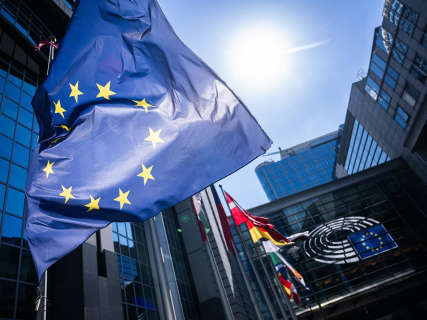
Brussels mobilizes 114.7 million to respond to the crisis in Ceuta

European aid will finance border surveillance, thermal cameras, buoy systems, underwater drones, additional personnel, facilities to identify migrants, returns, and reception capacity for unaccompanied minors.

2 minutes

fotonoticia 20260826125726 1920

fotonoticia 20260826125726 1920

Add DEMÓCRATA to Google

Ask FREN

Published

Last updated

2 minutes

Most read

The European Commission approved this Wednesday 114.7 million euros of emergency aid for Spain with the aim of addressing the consequences of the massive influx of people recorded in Ceuta on July 30 and 31. The package will finance everything from border reinforcement to the reception of minors and the returns of those who remain irregularly in the autonomous city.

Brussels has also confirmed a greater operational assistance from Frontex, Europol, and the European Union Asylum Agency (EUAA). The three agencies have responded favorably to the request made by Spain to reinforce the Spanish authorities' operations on the ground.

The decision comes after the Government formally requested emergency funds on August 24. Four days later, on August 28, Spain also requested additional assistance from the European agencies, a request to which the Commission has responded this Wednesday.

82.7 million for migration and 32 million for borders

The 114.7 million euros will come from two different instruments of the community budget.

The majority, 82.7 million, will come from the Asylum, Migration and Integration Fund (AMIF). Another 32 million will come from the Financial Support Instrument for Border Management and Visa Policy.

The money will thus have a dual purpose: to address the migratory needs generated by the crisis and to strengthen Spain's capacity to control and protect the external border of the European Union in Ceuta.

Thermal cameras, underwater drones, and buoys

Part of the funds will be directly allocated to improve surveillance, protection, and security infrastructure at the border.

The Commission explicitly mentions among the elements that can be financed thermal cameras and observation technology, floating buoy systems, and underwater drones. The aid will also cover the deployment of additional personnel and equipment.

This is one of the most significant economic measures adopted so far by European institutions following the crisis at the end of July, which placed the Ceuta border at the center of the debate on the protection of the EU's external borders.

Funds for returns and migrant identification

The package is not limited to border control. Brussels will also finance the creation of facilities for the screening and identification of migrants arriving in the city.

The European resources may also be used to support the returns of people who remain irregularly in Ceuta, as detailed by the Commission.

The funding will also reach the reception capacity of the autonomous city, with an explicit reference to the care of unaccompanied foreign minors, one of the main assistance challenges arising from the massive entry.

Frontex, Europol, and the Asylum Agency reinforce assistance

The economic injection is joined by the operational component. Frontex, Europol, and the EUAA have agreed to provide support to Spain, after the Executive requested greater involvement from the community agencies on August 28.

The Commission assures that it has coordinated and facilitated their mobilization to expand the resources available to the Spanish authorities on the ground.

Each agency has different competencies: Frontex specializes in the management of external borders; Europol, in police cooperation and fighting crime; and the EUAA provides assistance in asylum and reception matters.

More key points, information and questions with FREN

AI-GENERATED CONTENT

What are the next steps in the processing and execution of the European aid for Ceuta?

The term “European aid for Ceuta” does not refer to a single instrument, but to a set of EU funds that today support much of the investment and employment policies in the city: the FEDER Ceuta Program 2021‑2027, the FSE+ Ceuta Program 2021‑2027, the FEMPA for fisheries and participatory local development, and the investments of the Recovery, Transformation and Resilience Plan (NextGenerationEU). The next steps in their processing and execution combine European deadlines (closure of the Recovery Plan) and local administrative processes (new calls, resolutions, and project justification).

1. General framework of European funds in Ceuta
  • FEDER Ceuta Program 2021‑2027: foresees aid of 27.33 million euros for the period 2021‑2027, with 25 % aimed at a “digital content hub” and 57 % at a “greener EU” (energy rehabilitation, biodiversity, etc.), in addition to resources for a “more social and inclusive EU”. The FEDER Monitoring Committee of Ceuta, co-chaired by the Treasury and the City, annually analyzes the deployment and has approved the Criteria and Procedures for the Selection of Operations, which set how projects to be financed are chosen (Treasury note).
  • FSE+ Ceuta Program 2021‑2027: co-finances 85 % of employment and inclusion actions (permanent hiring of groups with special difficulties, Youth Guarantee young people, mixed employment and training workshops, etc.), with 15 % from the Autonomous City. Several recent resolutions (February‑March 2026) show calls and resolution proposals within this framework.
  • FEMPA (fisheries and coast): is used, for example, for aid to projects under the local participatory development strategy of the GALP of Ceuta (modification of aid concession published in the BOCCE on 20‑02‑2026).
  • Recovery Plan (NextGenerationEU): until 31‑03‑2025 Ceuta had received 93 million euros in projects from the Recovery Plan (official balance), which have financed infrastructure, housing, mobility, energy, employment, digitalization, and tourism.
2. What remains to be processed at the European level
  • The Spanish Recovery Plan, which is the main channel for NextGenerationEU funds, is entering its final phase. According to the Economy Ministry and the European Commission, Spain must have fulfilled all milestones and targets by August 31, 2026, and has until September 30, 2026 to submit the last payment request and supporting documentation for the seventh and final disbursement (analysis in Demócrata).
  • After that date, Brussels will evaluate the documentation and may approve, reduce, or partially suspend payments if any commitment has not been properly met. In practice, this means that all investments linked to the Recovery Plan in Ceuta must be executed and justified according to the national schedule.
  • For the FEDER and FSE+ 2021‑2027 programs, the European framework is somewhat longer, but the phase of accelerating the selection and execution of operations is already underway, given that the FEDER Monitoring Committee has approved the selection criteria and the deployment of the 2021‑2027 operations in Ceuta is being promoted.
3. Next steps in execution in Ceuta

Based on recent information from the Official Bulletin of the City and Government notes, the practical next steps are:

  • Close ongoing calls:
    • In FEDER 2021‑2027: continue resolving aids such as those for creation and modernization of innovative business projects and start-ups intensive in digital services, co-financed at 85 % by FEDER (resolutions published on 20‑02‑2026).
    • In FSE+ 2021‑2027: advance from provisional resolution proposals to definitive resolutions in lines such as permanent hiring of groups with special difficulties or mixed employment and training workshops, with successive authorized and funded call deadlines (for example, €800,000 for the third permanent hiring call).
  • Publish and manage new calls:
    • Continue launching specific calls (such as the third FSE+ aid call for permanent hiring mentioned in the BOCCE of 14‑04‑2026), taking advantage of the remaining time margin until 2027 in the structural programs.
    • In FEDER, select new operations according to the Criteria and Procedures for the Selection of Operations approved by the Monitoring Committee, prioritizing projects of green transition, digitalization, and social cohesion in Ceuta.
  • Material execution of projects:
    • Continue executing already financed projects: energy rehabilitations, social housing, tourism investments, employment programs, atmospheric quality control stations, etc., which in Ceuta have been financed with FEDER, FSE+, and NextGenerationEU.
    • For the Recovery Plan, concentrate the effective execution of investments in 2025‑2026, a period in which the Government itself places the “maximum impact” of the funds on the economy.
  • Justification and control:
    • Prepare the detailed justification of Ceuta’s projects linked to the Recovery Plan so that Spain can demonstrate to the European Commission the fulfillment of the last milestones before 31‑08‑2026 and submit the documentation for the last payment before 30‑09‑2026.
    • In FEDER and FSE+, continue with the usual logic: periodic expenditure certifications, audits, and annual review by the Monitoring Committee, which evaluates the program’s progress and can approve adjustments and modifications.
4. Relationship with the Comprehensive Development Plan of Ceuta

In parallel to these European funds, the Government maintains a Comprehensive Socioeconomic Development Plan of Ceuta, with execution planned until 2026 and, in some cases, until 2030 (Territorial Policy note). Some of its actions are supported by national resources, but others are articulated and complemented with investments from FEDER, FSE+, and the Recovery Plan itself.

In summary, the next steps combine completing the NextGenerationEU cycle on time (milestones until August and last payment request in September 2026) and accelerating the selection, execution, and certification of FEDER, FSE+, and FEMPA projects in Ceuta until the closure of the 2021‑2027 period, using the calls and resolutions that the Autonomous City is approving in its official bulletin.

What functions do Frontex, Europol, and the European Union Asylum Agency have according to EU regulations?

Frontex, Europol, and the European Union Asylum Agency (EUAA, formerly EASO) are three EU agencies operating within the area of freedom, security, and justice. Their functions are defined in their founding regulations and focus on supporting Member States, without replacing their sovereign competences in border control, internal security, and asylum.

Frontex: European Border and Coast Guard

Frontex is the EU agency responsible for coordinating the integrated management of the external borders of the Schengen area. According to its regulations, its main functions are:

  • Operational support to Member States: coordinates and reinforces joint operations and rapid interventions at external borders, especially where there is “migratory pressure” or high security risks. It can deploy border and coast guard teams from Member States and its own standing corps.
  • Border surveillance and risk analysis: conducts periodic risk analyses on external borders, integrating data from Member States and other agencies. It advises on where to concentrate resources, how to adapt controls, and what migratory or criminal trends are emerging.
  • Support in returns: assists Member States in organizing return operations (both voluntary and forced) of third-country nationals in irregular situations, coordinating joint flights, logistical support, and, in some cases, specialized teams.
  • Cooperation with third countries: can collaborate with authorities of origin and transit countries through operational agreements, projects, and deployments, always under the EU legal framework and respect for fundamental rights.
  • Supervision of respect for fundamental rights: its regulation establishes the obligation to integrate human rights safeguards in all its activities, including a fundamental rights officer and complaint mechanisms.

Europol: European Union Agency for Law Enforcement Cooperation

Europol is the EU agency for police cooperation. It has no executive powers itself (it cannot arrest or search on its own), but supports national authorities in combating serious crime and terrorism. Its core functions are:

  • Information exchange: acts as a centralized platform for police information exchange among Member States and certain external partners, offering secure and standardized channels.
  • Analysis and investigative support: conducts strategic and operational analyses on criminal networks (terrorism, organized crime, cybercrime, human trafficking, drug trafficking, money laundering, etc.), producing reports and intelligence products that assist national investigations.
  • Specialized centers: hosts centers such as the European Counter Terrorism Centre or the European Cybercrime Centre, which bring together experts and specific tools to support complex operations.
  • Operational support on the ground: can deploy analysts and liaison officers who accompany national teams in joint operations, coordinate EU-wide action days, and facilitate the use of technical tools and databases.
  • International cooperation: maintains agreements with third countries and international organizations (e.g., Interpol), always under strict data protection and proportionality controls.

European Union Asylum Agency (EUAA)

The European Union Asylum Agency’s central mission is to support the coherent and effective application of the common European asylum system. According to its regulations, its key functions are:

  • Operational support to national asylum systems: deploys asylum support teams in Member States facing particular pressure. These teams assist in registering and processing applications, preparing files, and managing reception centers, always under the responsibility of the national authority.
  • Guidelines, standards, and best practices: develops guidance, practical tools, and training for asylum and reception officials, aiming to harmonize criteria and practices, for example on credibility assessment, treatment of unaccompanied minors, or reception conditions.
  • Information on countries of origin: produces and coordinates reports on the situation in the countries of origin of international protection applicants, which serve as a common basis for Member States’ decisions.
  • Supervision and support for the application of EU law: assists the European Commission in evaluating how Member States apply asylum legislation, identifies structural deficiencies, and proposes corrective measures and support plans.
  • Strengthening fundamental rights: as with Frontex, integrates obligations to respect the fundamental rights of persons seeking international protection, with internal control mechanisms and specific training.

Together, these three agencies operate as complementary gears: Frontex in border management and returns, Europol in police cooperation against serious crime and terrorism, and the EUAA in support of asylum and reception systems, always under the framework of EU regulations and with ultimate responsibility resting with the Member States.

What have been the results of the latest regional elections in Ceuta and how is its government composed?

The latest elections to the Assembly of Ceuta were held on May 28, 2023. They resulted in a 25-seat Assembly with the Popular Party as the most voted force but without an absolute majority (set at 13 deputies). The Government of the Autonomous City is presided over by Juan Jesús Vivas Lara and is structured into a Presidency and seven ministries, occupied by eight members in total.

Results of the latest elections to the Assembly of Ceuta

The most complete reference on the distribution of votes and seats comes from an analysis by Demócrata that reproduces the official data of the 2023 regional elections, citing RTVE as the source. For a 25-deputy Assembly, the distribution after the count was as follows:

  • Popular Party (PP): 11,738 votes, 34.37% of the votes, and 9 seats.
  • Spanish Socialist Workers' Party (PSOE): 7,158 votes, 20.96%, and 6 seats.
  • Vox: 7,050 votes, 20.64%, and 5 seats.
  • Movement for Dignity and Citizenship (MDyC): 3,839 votes, 11.24%, and 3 seats.
  • Ceuta Ya!: 3,428 votes, 10.03%, and 2 seats.

Overall, the right and conservative bloc (PP and Vox) sum 14 deputies, while the left-wing and local-based formations (PSOE, MDyC, and Ceuta Ya!) reach 11 seats. The PP thus won with a clear vote advantage but without achieving an absolute majority, which has required in this legislature to arrange external parliamentary support for investiture and ordinary management.

Various political chronicles collected in Demócrata describe that, since 2023, Juan Jesús Vivas has governed in minority, with 9 own seats, and with different parliamentary collaboration agreements with other forces in the Assembly. More recently, Vox has even publicly demanded entry into the Ceuta Executive, arguing that there is an “alternative absolute majority” if their votes are added to those of the PP, and requesting that the agreements the Government maintains with other formations be reviewed. That is, it is not a formal coalition government, but an Executive supported by political pacts that have been modulated throughout the legislature.

Current composition of the Government of the Autonomous City of Ceuta

According to the most recent structural information from the institutional database of regional officials, the Government of the Autonomous City of Ceuta is organized around the Presidency and a set of sectoral ministries. The main members and their areas are:

  • President of the Autonomous City of Ceuta: Juan Jesús Vivas Lara. Heads the Presidency of the City and holds the highest institutional representation and political direction of the regional Government.
  • Ministry of Commerce, Tourism, Employment, and Sports: holder Nicola Cecchi Bissoni. Manages policies for tourism promotion, support for the commercial sector, employment promotion, and development of sports activity in the city.
  • Ministry of Education, Culture, and Youth: holder Pilar Orozco Valverde. Responsible for education within the City's competences, cultural programming, and policies aimed at the young population, including training and leisure activities.
  • Ministry of Treasury, Economic Transformation, and Digital Transformation: holder Kissy Chandiramani Ramesh. Assumes budget planning, management of financial resources, and initiatives for economic modernization and digitalization of the administration and local productive fabric.
  • Ministry of Environment, Urban Services, and Housing: holder Alejandro Ramírez Hurtado. Covers competences in environmental management, cleaning and urban services, as well as housing policies promoted by the Autonomous City.
  • Ministry of Presidency and Governance: holder Alberto Ramón Gaitán Rodríguez. Coordinates government action, institutional relations, and matters related to security and governance within Ceuta.
  • Ministry of Health and Social Services: holder Nabila Benzina Pavón. Handles health policies of regional competence, as well as social services, care for vulnerable groups, and coordination with other administrations in these areas.
  • Ministry of Urban Planning and Transport: holder Rafael Martínez Peñalver. Responsible for urban planning, territorial planning, and organization of transport and mobility systems in the city.

The available institutional information clearly identifies these positions and portfolios, although the consulted database does not systematically record the party affiliation of each minister. In any case, the described structure reflects a City Government composed of eight members (president and seven ministers) covering the main public policy areas of the Autonomous City of Ceuta.

Play

Test your knowledge with FREN!

How much do you know about this topic? Answer the following 3 questions.

What amount of emergency aid has the European Commission approved for Spain in response to the migration crisis in Ceuta?

Question 1 of 3

What type of technologies will be financed with European funds to strengthen the Ceuta border?

Question 2 of 3

Which European agencies will reinforce operational assistance in Ceuta?

Question 3 of 3