

A week before the heads of State and Government of the Twenty-Seven meet in Brussels to discuss the next steps in boosting the continent's competitiveness, the alliance of the E6 has sent a letter, to which Demócrata has had access, with its recommendations to safeguard the economic strength of the Union.
The finance ministers of the six countries, after a meeting this Monday prior to the monthly Eurogroup meeting, have conveyed to the European Commission the idea that “creating a genuine Savings and Investment Union has become an urgent strategic necessity”. For this reason, they acknowledge that they are willing to take steps within their areas of competence within the Member States, but also call for actions at the community level.
Capital market
One of the main obstacles detected to achieve a deeper union is the lack of a more efficient regulatory framework. With a view to market integration, the six signatory ministers consider that the supervision package (MISP) that the Executive presented at the end of the previous year is an essential piece. Its underlying objective is to eliminate those national barriers that hinder the cross-border circulation of investment funds. Thus, investors have better access to the capital markets of the Twenty-Seven, while companies benefit from greater sources of capital.
The main euro economies will ask their counterparts at the table of the Council of the European Union to adopt a position on this regulatory package before the summer of 2026 “to ensure that this vital step is taken with the necessary speed”. They recognize that the proposals on market integration will represent significant advances in areas such as negotiation and digital securities markets.
Democrat Brussels
Nadia Calviño: “Europe needs a consolidation process, not only in the financial sector”
Regarding the debate on European integration, in an interview with Demócrata, the president of the European Investment Bank, Nadia Calviño called for favoring transnational operations that allow for a financial system “and a truly European telecommunications and digital market.”
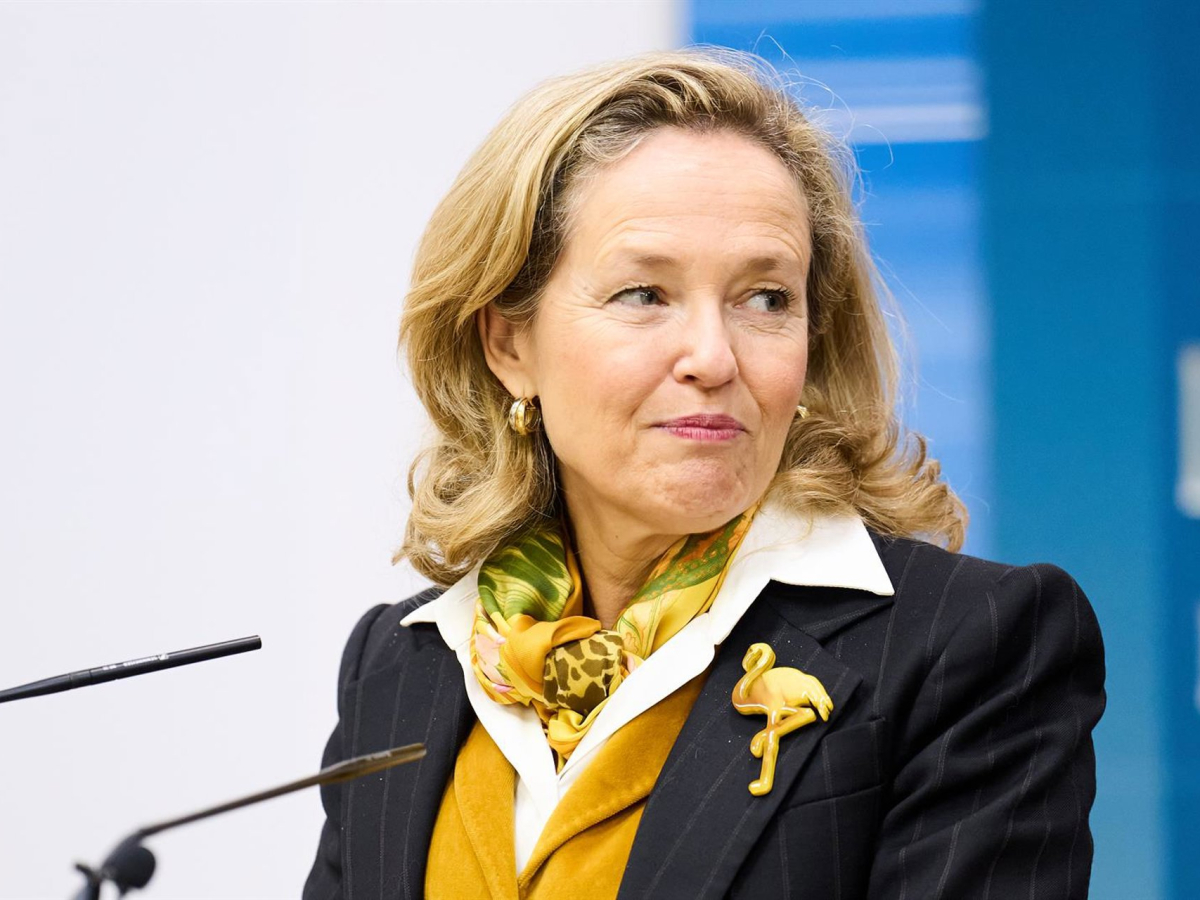
For the Spanish official, this 2026 would be key to decisively advance in the union of savings and investment. “The EIB is using all its financial potential, both in debt and in venture capital, to boost this process. Last year, approximately a quarter of high-risk debt — venture debt - and 30% of venture capital in Europe has been generated by the EIB group,” she stated.
For the equity markets, they ask to strengthen transparency and equal conditions with the aim of articulating a more efficient trading environment. “Improving the interconnection between market infrastructures could unleash transformative potential”, says the text sent to Brussels. They consider that the proposal has to focus on centralized supervision for the most systemic, relevant, and cross-border financial market infrastructures.
The Economy ministers of the group ask the Executive to propose specific measures to increase the transparency of stock markets. Furthermore, they point out that any reform “must avoid unintentionally deepening the shift towards non-transparent trading environments”.

Regarding securitizations, which they state have significant potential “to free up private capital”, countries have committed to “constructive and rapid” trilogue negotiations so that this element of the agenda of the Savings and Investment Union is completed before next autumn. “We commit to moving towards a European securitization platform within the competitiveness laboratory”, they add.
They have proposed to the European Commission that it develop a legislative proposal related to a European Capital Markets Code that is capable of promoting innovation and facilitating the cross-border custody of securities. In this vein, they confirm their support for a “resilient digital payments ecosystem” along with private pan-European solutions.
“The digital euro is essential to create a digital payment system,” they point out when demanding a “rapid conclusion of the legislative process” and ask the European Parliament’s negotiating team, led by the popular Fernando Navarrete, to adhere to the Council’s approach, both online and offline. The President of the European Investment Bank, Nadia Calviño, believes that Europe is already prepared for this measure. "The challenge is to convert these initiatives into truly pan-European ones. The European Central Bank's digital euro will be complementary within this ecosystem," she told Demócrata.
Given the “urgency” of this issue, they also urge the Executive to “quickly” publish a strategy to reduce dependencies in retail, wholesale, and business payments.
With the aim of closing the growth financing gap, they propose to boost initiatives that unlock long-term venture capital for innovative companies. In this vein, they give their approval to a second phase of the initiative known as “European Tech Champions”. Thus, the six States promise a financial contribution during this year to achieve combining institutional and public private capital with the aim of financing megafunds.
What is intended, through national models such as “España Crece”, is to make listing on the stock exchange in the European Union more attractive. To this end, they propose creating a mechanism with simplified conditions for public offerings. Furthermore, they advocate in the letter for introducing an “optional European company law regime 28”.
Simplify the simplification
In the chapter of the simplification of the European financial regulatory framework, they maintain their will for a package for the simplification of European financial services to be presented. They believe that “simplification must be addressed comprehensively, ensuring coherence between financial regulation and other regulatory areas”.
This process, they warn, must be done with a “simplification mindset”: new regulations must be approved only when necessary. Reducing the complexity of delegated acts, eliminating financial bureaucracy and advancing in the simplification of tax directives in direct taxation matters are other measures proposed by the six ministers.
This group of countries, led by France and Germany, is also composed of Spain, Italy, the Netherlands and Poland, and was formed outside the Eurogroup to accelerate progress on strategic economic priorities of the continent, following the model of a “two-speed Europe”. The axis of its action is the international projection of the euro and the optimization of investments.
The Finance ministers are aware of the urgency. They state that the success of the Savings and Investment Union depends largely on the collective will to transform the ambition that Europeans say they have into concrete actions. “Only a coordinated and decisive effort by all Member States can provide the scale and integration that European capital markets urgently need”, concludes the letter sent to the economic services of the Commission.