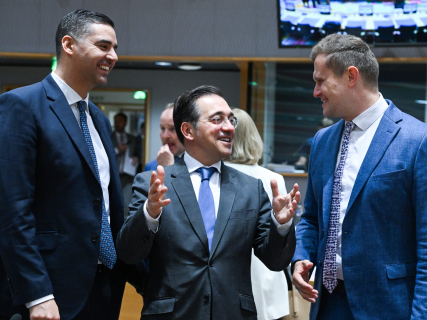

In Moncloa, they do not give up on their effort to achieve the official status of Catalan, Galician, and Basque in the European Union. However, the Government insists that this time it is not like the previous ones by introducing a new element in its diplomatic offensive in Brussels: the possibility of linking progress on this issue with its support for the accession to the community project of some candidate countries, such as Montenegro.
The team of the Minister of Foreign Affairs, José Manuel Albares, plans to use the upcoming meeting of the General Affairs Council, in which the representatives of the Twenty-Seven participate, to reactivate a proposal that was frozen two summers ago. The main novelty is that Spain is hinting at the possibility of using its position on enlargement as a pressure element to unlock the recognition of its co-official languages.
Albares: "It is unthinkable that there is a new language" without the Spanish languages
The position of the Spanish Executive was made explicit this Wednesday by Albares himself in an informal conversation with journalists, on the eve of the ministerial meeting. "We are totally in favor of enlargement, that is why we urge to resolve the issue of our official languages, because it is unthinkable that there is a new language if Catalan, Galician, and Basque are not included", the minister stated.
Albares seeks to place the linguistic issue back on the political agenda of the Council, after Spain formally requested to include a specific point on the official status of the three languages in the next meeting. Sources from the Irish presidency of the Council confirmed last week that Spain had requested to incorporate a point "without a decision forecast" dedicated to this issue in the agenda. Therefore, it is a political discussion that does not contemplate, at least initially, a vote or the adoption of an agreement.
Content to remain unchangedDiplomatic teams from other member states downplay the inclusion of the point and, for the moment, do not detect sufficient movements among national delegations to anticipate a substantial change in the positions held so far. On the last occasion when the Twenty-Seven addressed the possible official status of Catalan, Galician, and Basque, Germany led one of the strongest positions against the Spanish proposal. Berlin argued then that a modification of this scope would require addressing the legal basis of the Treaties beforehand to ensure the legal coverage of the incorporation of new official languages.
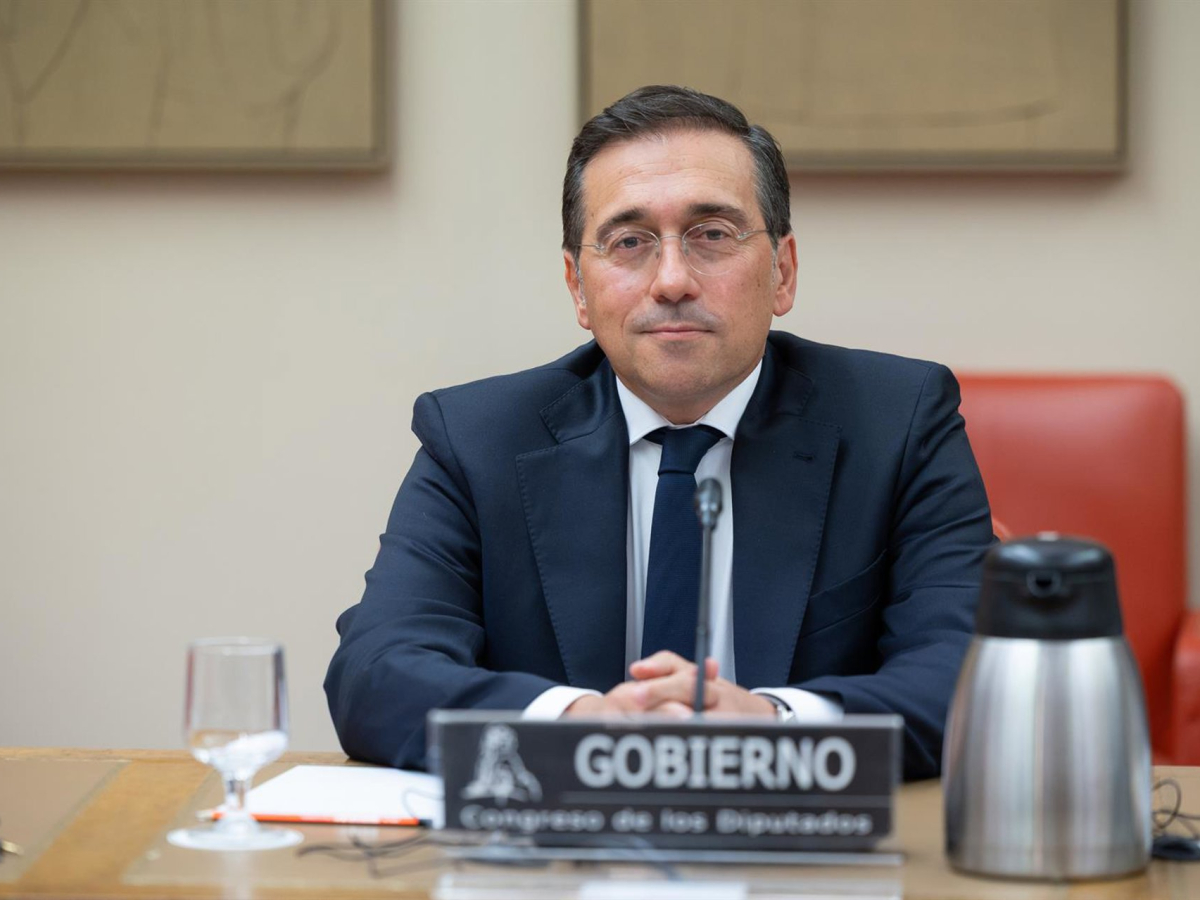
After that blockage, Moncloa and the German government agreed, through the intervention of Chancellor Friedrich Merz and the President of the Government, Pedro Sánchez, "to open a dialogue" to give "response" to the Spanish request in a way that is "acceptable for all member states". However, Berlin does not believe that the September meeting will generate the necessary conditions to resume substantive discussions. Among the variables weighing on the German position are both the long pending calendar for the accession of candidate countries and the Spanish political scenario ahead of the upcoming national elections.
The issue continues to be conditioned, in any case, by a central element of the procedure: the need for unanimity among the Twenty-Seven. Without the support of all member states, the modification of the EU's linguistic regime cannot move forward.
Spain offers to bear the cost and proposes a gradual implementation
Moncloa has conveyed on multiple occasions to its European partners its willingness to bear the additional costs arising from the incorporation of the three languages into the community linguistic regime. The European Commission has estimated the impact at approximately 132 million euros annually.
To facilitate the agreement, Spain has also proposed a progressive application of official status. In the spring of 2025, the Executive proposed that Catalan, Basque, and Galician acquire official status partially starting in 2027. The proposal initially contemplated that, from that year, only the regulations of the Council and the European Parliament would be translated into these three languages, which during the previous legislature represented around 3% of the total legal acts of the Union. The Government thus seeks to limit the budgetary and operational impact of the measure, while offering a gradual formula that allows member States to assess its effects before moving towards full implementation.
Against the possible "pull effect" on other regional or minority languages, the Spanish Executive maintains that there is a substantial difference compared to other potential cases. Catalan, Galician, and Basque have constitutional recognition in Spain since before the country's accession to the European Union and are also used in state institutions such as the Congress and the Senate. Spain also recalls that, since its entry into the European Communities, it has assumed the translation into these languages of the European Treaties and a good part of the community acquis.