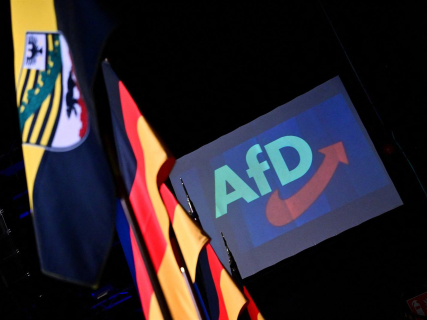
Who has voted for AfD in today's elections in Germany: 61% of workers and 65% with economic problems

The first portrait of AfD voters after the elections in Saxony-Anhalt shows where it reaches its highest levels of support. According to the electoral analysis data from Infratest dimap for ARD, the party obtains 61% among workers and laborers, 65% among those who rate their financial situation negatively, and exceeds 50% among men.

3 minutes

fotonoticia 20260906182053 1920

fotonoticia 20260906182053 1920

Add DEMÓCRATA to Google

Ask FREN

Published

Last updated

3 minutes

Most read

The victory of AfD in Saxony-Anhalt has a very marked social profile. The first data on electoral behavior shows that the party reaches its highest percentages among workers and laborers, people who negatively describe their economic situation and voters with low or medium educational levels.

The analysis comes from the exit poll conducted by Infratest dimap for ARD during the election day. It is not the official result broken down by personal characteristics, something that the ballots do not allow to know, but a demographic estimate constructed through interviews with voters and subsequently weighted. Tagesschau uses these polls for its analyses on who voted for each party.

AfD reaches 61% among workers and laborers

AfD obtains 61% among voters classified as workers or working class. It is the highest percentage recorded by the party within the major professional groups of the analysis.

Among the self-employed, it reaches 53%. Among employees and office workers, it stands at 46%.

Support falls among pensioners, although AfD remains the first choice in that group with 38%. The CDU comes much closer here and reaches 27%.

The data reinforces a trend that had already been observed at the federal level and in other regional elections: AfD has become a particularly competitive force among workers. Tagesschau had recently pointed out that the party had been the most voted among workers in the last federal elections.

65% among those who say they are in a bad financial situation

The biggest difference appears when asking about personal economic situation. Among voters who consider their financial situation bad, AfD reaches 65%.

Among those who consider their economic situation good, support falls to 37%. The distance is 28 points.

This result connects with one of the main elements detected during the campaign. The economy, prices, and the perception of economic insecurity were among the main concerns of the electorate in Saxony-Anhalt, where wages and disposable income are below the German average and unemployment is above the national average.

AfD surpasses 50% among men

A clear gap by sex also appears. Among men, AfD reaches 51%. Among women, it obtains 40%.

The CDU registers the opposite pattern, although with a smaller distance: it obtains 16% among men and 20% among women. SPD also receives more support among women, 9% compared to 7% among men.

The Greens, on the other hand, register 9% in both groups.

It is not just a young vote: AfD dominates among those aged 35 to 59

The data by age dismantles another overly simple reading of the result. AfD achieves very high levels among young people, but its maximum is not found among them.

  • Among voters aged 16 to 24, it achieves 42%.
  • Among those aged 25 to 34, it rises to 44%.

The jump occurs among the middle ages. AfD reaches 53% among both voters aged 35 to 44 and those aged 45 to 59.

Among those aged 60 to 69, it maintains 47%. Only among those over 70 does it clearly drop, to 32%. Even there, it is practically tied with the CDU, which obtains 31%.

The CDU collapses among young people

The age distribution leaves another result especially harsh for the CDU. The party obtains only 5% among voters aged 16 to 24 and 6% among those aged 25 to 34.

Among those under 25, Die Linke reaches 18% and the Greens 14%, while AfD dominates with 42%.

The CDU begins to regain ground as age increases: 9% among those aged 35 to 44, 14% among those aged 45 to 59, 21% among those aged 60 to 69, and 31% among those over 70.

The party thus appears extraordinarily concentrated in the older generations.

From 58% with lower educational level to 31% with higher education

The educational level again shows a significant fracture. Among voters in the lowest educational group, AfD reaches 58%. With an average educational level, it obtains 52%. Among those with a high educational level, it falls to 31%.

In this last group, the vote is distributed much more . The CDU reaches 19%, the Greens 16%, Die Linke 12%, and the SPD 11%.

The portrait of the voter where AfD is strongest

The data allows us to outline where AfD finds its largest pockets of support in these elections in Saxony-Anhalt.

Its percentage reaches 65% among those who consider their financial situation bad, 61% among workers and laborers, 58% among people with lower educational levels, and 53% among self-employed individuals and among the groups aged 35 to 59.

Among men, it reaches 51%. In contrast, its lowest records appear among those over 70, with 32%, and among voters with a high educational level, with 31%.

They are relevant internal differences because the overall result of AfD is around 44% in the first projections. ARD/Infratest dimap initially placed the party at 44.5%, more than double its result from 2021, while the CDU fell to 18.5%.

More key points, information and questions with FREN

AI-GENERATED CONTENT

What is the status of the processing of electoral laws in Germany and what recent reforms have been proposed?

In Germany, the key reforms of electoral laws in recent years have already been approved and are in force, especially at the federal level (Bundestag) and in the European elections. The current focus is not so much on new ongoing proceedings, but on the effects of those reforms and on political and legal debates arising from them (such as the rise of AfD or the use of personal data and electoral micro-segmentation).

Reform of the federal electoral system (Bundestag)

The most significant amendment to the Bundeswahlgesetz is the reform that has reduced the size of the Bundestag and adjusted the seat system. According to parliamentary chronicles collected by the press, the Lower House has gone from 733 seats to 630 after the “new electoral law,” which was already applied in the federal elections prior to the constitution of the 21st Bundestag in March 2025. In that constitutive session, it is explicitly described that the chamber “has shrunk after the new electoral law and has gone from 733 seats to 630” (press information).

Although the technical detail of the regulation is not developed in that piece, the practical effect is clear:

  • The Bundestag now has a more contained and predictable size, compared to previous growths due to additional seats.
  • The reform has altered the internal balance: for example, AfD has reached 152 deputies and has become the second group, while FDP is out of Parliament for not surpassing the 5% vote threshold.

From the processing point of view, this reform is already approved and in force; it is not presented as a pending project but as the legal basis of the current composition of the Chamber. The political debate now focuses on its consequences (relative underrepresentation or overrepresentation, blocking capacity of certain parties, etc.), not on a new reform in process.

Electoral threshold in European elections

Another relevant front has been the adaptation to EU law on elections to the European Parliament. An analysis piece by Demócrata explains that the German Constitutional Court had declared unconstitutional in the past the 5% (2011) and 3% (2014) thresholds in European elections. That doctrine changed context when the European Union approved a reform that makes it mandatory for States to set a national threshold (between 2% and 5%) in certain cases.

According to that information, Germany:

  • Approved in 2023, through the federal legislator, the decision that introduces the new electoral threshold for the European elections.
  • Did so with a two-thirds majority both in the Bundestag and the Bundesrat, indicating that it was a high-level reform with broad political consensus (comparative analysis).
  • Against that decision, a challenge was filed by the satirical party Die PARTEI and MEP Martin Sonneborn, but the Constitutional Court dismissed the procedure on February 6, 2024, thus consolidating the validity of the new threshold.

Therefore, from the processing perspective, the German reform of the European electoral law is completely closed and in force; the debate shifts to other Member States (such as Spain), which have not yet completed their own ratifications.

Other recent dimensions of electoral regulation

Beyond the strictly institutional design (size of the Bundestag, thresholds), there are recent reforms and controversies in fields related to electoral law:

  • Use of personal data for electoral propaganda: German data protection authorities periodically remind that the Federal Registry Law allows supplying parties with certain voter data (name, address, and where applicable age ranges) for propaganda purposes, with clear information about the right to object (Datenschutz note). It is not a strict reform of the Bundeswahlgesetz, but it is a key element of the current electoral framework.
  • Micro-segmentation and political advertising on networks: organizations like noyb have denounced before German authorities the use of political microtargeting by all major parties represented in the Bundestag during the 2021 federal elections (noyb report). This fuels a debate on whether it is necessary to further strengthen electoral or data protection regulation in campaigns.

In sum, the core of German electoral reforms – reduction and stabilization of the Bundestag size through the Bundeswahlgesetz and setting a threshold for European elections – has already completed its processing and is fully applied. The current regulatory agenda shifts towards aspects of democratic quality (transparency, data, microtargeting) and the impact of these rules on the rise of forces like AfD, rather than a new major structural reform already in process.

What are the main powers and functions of the German federal president and the minister-president of Saxony-Anhalt?

The German political system is federal and parliamentary. Within it, the federal president (Bundespräsident) and the minister-president of a Land (in this case, Saxony-Anhalt) are heads of different institutions and have very different political weight. The former embodies mainly the head of state at the national level, while the latter is the head of government of a federated state with broad executive powers in its territory.

German Federal President (Bundespräsident)

The federal president is the head of state of the Federal Republic of Germany. His role is fundamentally representative, moderating, and constitutional guarantor, with limited political powers compared to a presidential system.

Main powers and functions:

  • Representation of the state abroad and domestically: signs credentials, receives foreign heads of state and government, makes official visits, and symbolizes the continuity and unity of the German state.
  • Formal appointment of officials: formally appoints and dismisses the federal chancellor and federal ministers, according to Bundestag decisions and chancellor proposals. Also appoints senior federal officials and judges of higher courts, based on established procedures.
  • Promulgation of federal laws: signs laws approved by the Bundestag and, where applicable, by the Bundesrat. Before signing, he can perform a formal check and, according to practice, a limited constitutional review. If he considers a law clearly violates the Constitution, he can refuse to promulgate it, which generates a political and eventually judicial conflict.
  • Right of pardon at the federal level: can grant pardons in cases under federal jurisdiction, according to legal norms.
  • Exceptional powers regarding the Bundestag: in specific cases (e.g., repeated failure to elect a chancellor or lost vote of confidence), can dissolve the Bundestag and call early elections or appoint a “minority chancellor” according to the Basic Law rules.
  • Function of integration and moral guidance: his speeches usually set ethical and political reference frameworks (historical memory, social cohesion, European integration, etc.), without directing day-to-day government.

In summary, the federal president is a figure with great symbolic authority and institutional moderation, but with very limited direct executive power; the center of political action lies with the chancellor and the federal government.

Minister-President of Saxony-Anhalt

The minister-president (Ministerpräsident) of Saxony-Anhalt is the head of government of the Land. His position, equivalent to a regional president in decentralized systems, combines executive leadership, political drive, and representation of the federated state.

Main powers and functions:

  • Direction of the Land government: heads the regional cabinet, sets the general policy lines of the Saxony-Anhalt government, and coordinates the action of the different ministries (interior, education, economy, culture, etc.).
  • Appointment and dismissal of regional ministers: proposes to the Land Parliament (Landtag) the formation of the government, selects its members, and can reorganize the cabinet, according to the constitution and parliamentary majorities.
  • Political responsibility before the Landtag: his mandate depends on the parliamentary majority. He can be elected and removed through mechanisms similar to a classic parliamentary system (e.g., constructive vote of no confidence as provided in the Saxony-Anhalt constitution).
  • Representation of Saxony-Anhalt both internally (towards citizens and social actors of the Land) and externally, including relations with other Länder, the federal government, and sometimes European institutions.
  • Participation in federal politics through the Bundesrat: in Germany, the Länder are represented in the Bundesrat. The minister-president coordinates and usually leads the Land’s position in this chamber, influencing federal legislation in matters where the states have competencies or direct interests.
  • Executive management in matters specific to the Land: education, culture, Länder police, territorial planning, part of health policy, local administration, among others, according to the competence distribution of the Basic Law. The minister-president is the highest political responsible for these policies in Saxony-Anhalt.
  • Intergovernmental cooperation: participates in conferences of minister-presidents, agreements between Länder, and negotiations with the federal government on financing, joint application rules, and policy coordination.

Therefore, while the federal president is an authority mainly representative and constitutional guarantor at the level of the entire German state, the minister-president of Saxony-Anhalt exercises a fully executive head of government role in the territorial scope of the Land, with direct impact on regional public policies and the Land’s position in the federal system.

What is the current composition of the Saxony-Anhalt Parliament after the latest elections and how are the seats distributed among the main parties?

As of today, September 6, 2026, there is still no official or journalistic information about the effective composition of the Saxony-Anhalt Parliament (Landtag von Sachsen-Anhalt) after the regional elections held precisely this Sunday. The sources consulted include polls and political context, but do not yet offer the definitive distribution of seats by party, so it is not possible to provide the real distribution of the new Landtag.

What the available materials do show is the scenario prior to the vote. An analysis by Demócrata titled AfD faces its great power assault in Germany: nears absolute majority in this Sunday’s elections describes Alternative for Germany (AfD) as the clear favorite to win the Saxony-Anhalt regional elections, with even possibilities of approaching an absolute majority of seats, although without guarantees of achieving it.

That text cites several recent polls. An Insa projection places AfD around 43 % of the votes and CDU at 22 %. Other sources, such as ZDF’s Politbarometer or polls collected by Reuters, place AfD between 40 % and 43 % and CDU around 22 %. For left and center-left parties, the data are much more modest: Die Linke (The Left) would be around 11–12 %, SPD would remain around 7–8 %, and the Greens would be near 5–6 %, just around the threshold needed to enter the regional Parliament. Smaller formations like the Sahra Wagenknecht Alliance (BSW) and FDP (liberals) appear near or below that 5 %.

That 5 % threshold is key to understanding the future composition of the Landtag. The Demócrata analysis itself recalls that, in the German electoral system, votes for parties that do not reach 5 % are excluded from seat distribution. This implies that:

  • The absolute majority of seats can be reached with considerably less than 50 % of the votes cast, if several parties remain outside Parliament.
  • The entry or exit of actors near the barrier (such as the Greens, BSW, or FDP) can greatly alter the arithmetic of seats even if vote shares change by only a few tenths.
  • An AfD above 40 % and with several rivals without representation could approach or surpass the absolute majority of deputies, while a similar result with more parties inside the Landtag would translate into a more limited simple majority.

From a political point of view, another fundamental element that Demócrata highlights is the so-called “cordon sanitaire” against AfD. CDU, SPD, the Greens, and The Left have expressed their refusal to form coalition governments with AfD. This means that:

  • Even if AfD manages to be the leading force and even comes close to an absolute majority, government formation could involve an alternative coalition among several of the other parties.
  • If AfD exceeds approximately one-third of the seats, it could constitute a blocking minority for decisions requiring two-thirds majorities (e.g., some regional constitutional reforms), which would increase its political weight even outside government.

In parallel, another Demócrata piece on the eve of the election in Magdeburg, Thousands mobilize for democracy on the eve of the Saxony-Anhalt regional elections with AfD as the clear favorite , again emphasizes those polling figures broadcast by public television ARD: AfD with 42 %, CDU around 22 %, Die Linke around 11 %, SPD near 8 %, Greens at 6 %, BSW at 4 %, and FDP at 3 %. Again, these are voting intentions, not a closed seat distribution.

In summary, with the information available today:

  • The official composition of the Saxony-Anhalt Landtag after the September 6, 2026 elections is not yet known; therefore, a rigorous table of seats by party cannot be offered.
  • All polls agree that AfD starts as the main force, far ahead of the CDU, and that the rest of the parties (Die Linke, SPD, Greens, BSW, FDP) compete for entry and the size of their groups in the regional Parliament.
  • The effective seat distribution will depend both on AfD’s final percentage and on which parties surpass 5 %. That combination will define whether AfD approaches the absolute majority and whether the other forces can form an alternative coalition.

To know precisely how many seats each party has today in the Saxony-Anhalt Parliament, it will be essential to wait for the official results of the count and the seat distribution tables published by the Land’s electoral authorities or the main German media.

Play

Test your knowledge with FREN!

How much do you know about this topic? Answer the following 3 questions.

What percentage of the vote did AfD obtain among workers and laborers in the Saxony-Anhalt elections?

Question 1 of 3

In which age group did AfD obtain its highest percentage of votes according to the survey?

Question 2 of 3

What was the projected result for AfD in the first projections by ARD/Infratest dimap?

Question 3 of 3