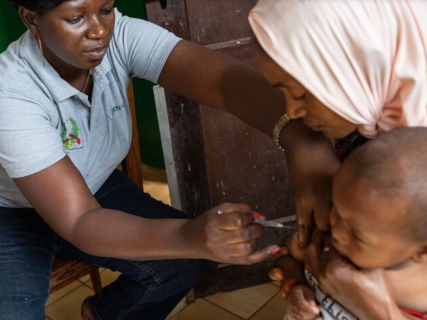

The United Nations Children's Fund (UNICEF) has warned of the concerning proportion of children among the suspected cases of the first mpox outbreak detected in Guinea-Bissau.
Although the seven confirmed infections so far correspond to adults, half of the 46 suspected cases are under 15 years old, and health authorities fear that the weakness of the surveillance system is allowing unrecorded infections to escape.
Since the outbreak was declared on July 4 and until August 17, the country has confirmed seven diagnoses of mpox, all in adults. Six have been identified in the Autonomous Sector of Bissau and one in the Biombo region, with no deaths reported to date.
The situation of the suspected cases is particularly concerning due to the high number of minors affected. Of the 46 reported cases, 23 correspond to minors under 15 years old, and of those, 16 are between zero and four years old, an age group with a higher likelihood of suffering severe complications.
"This is the first time that mpox cases have been reported in Guinea-Bissau, which makes even a small outbreak an important public health event," said Sandra Martins, UNICEF's deputy representative in the country.
Martins has warned that the surveillance system remains "extremely fragile" and that there is a possibility that some infections are not being detected, particularly among the minors most exposed to developing severe cases.
Another factor that worries authorities is that the confirmed cases do not seem to be related to each other. According to UNICEF, this lack of connection could point to transmission chains that have not yet been identified and suggests that there may be more undiagnosed infected individuals.
The organization also emphasizes that significant gaps persist in community-level surveillance, especially in contact identification, sample processing, and systematic monitoring of the outbreak's evolution. The reopening of schools in September adds an additional element of concern regarding the possible increase in transmission among the child population.
In this scenario, UNICEF collaborates with the Ministry of Public Health, the World Health Organization (WHO), and other partners to strengthen the detection and contact tracing, improve infection prevention and control measures, and expand access to water, sanitation, and hygiene in health centers.
The agency's work also includes providing families with clear and timely information to curb the spread of the virus. UNICEF urges to seek medical service immediately upon symptoms such as skin rashes, fever, or swollen lymph nodes, as well as to maintain proper hand hygiene, avoid close contact with possible cases, and combat the stigma associated with the disease. "With early detection, care, and prevention, mpox can be managed and its spread can be reduced," added Martins.
More resources are needed to contain the outbreak
Although the national response has already been launched, UNICEF estimates that it needs more than $130,000 to finance specific interventions deemed key against the outbreak. The organization calls for flexible emergency funds to mobilize these resources and protect the most vulnerable communities.
The most urgent challenge will be to increase the capacity to locate new cases and follow the chains of contagion before the outbreak expands, especially with the imminent return of children to classrooms.