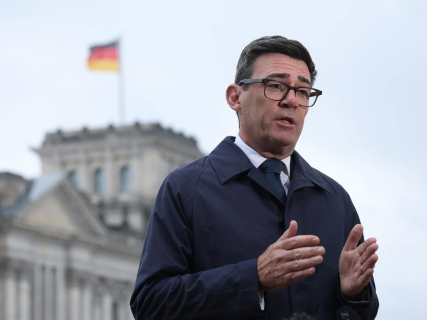

The British Prime Minister, Andy Burnham, assured this Sunday that "there was Russian interference" in the referendum held in 2016 in which the exit of the United Kingdom from the European Union was approved.
"He asked about the issue at Downing Street: was there Russian interference in the 2016 referendum? I was given a clear answer: yes, there was," Burnham pointed out during an interview on the podcast The Rest is Politics.
To date, successive British governments, especially the conservative executives, had maintained that there was no Russian interference in the 2016 consultation. Burnham did not specify who conveyed that answer to him at Downing Street, but his statement represents a significant change of stance.
A report from the British Parliament's Intelligence and Security Committee, released in 2020, had already criticized the Government and the intelligence services for not adequately investigating the possible interference from Moscow. The document reproached policymakers for not having thoroughly analyzed Russian activities despite the evidence of attempts to influence British politics through state-funded media and social media accounts.
The head of the Government has called for greater vigilance against attempts by countries considered hostile to influence internal politics, especially in a context of rising far-right extremism. "It is important to speak openly about these things and I think it helps voters in Germany or France to understand that some of these policies are instigated by our enemies, like Russia," he emphasized.
"I think we have been very weak on this and we have not informed people enough about the extent to which there are those who try to affect the political process from abroad," the leader insisted.
Burnham detailed that he has discussed with the German Chancellor, Friedrich Merz, the risk posed by the rise of the far-right party Alternative for Germany (AfD), and indicated that Merz himself pointed to the links of this formation with Russia.
"I told Chancellor Merz that we have to support him in facing the threat and particularly the kind of policies that you have in front of you. He told me that AfD is clearly related to Russia, with funding, I believe," he recounted. In this regard, he warned that "it is clear that there is disinformation emanating from Russia in German politics."