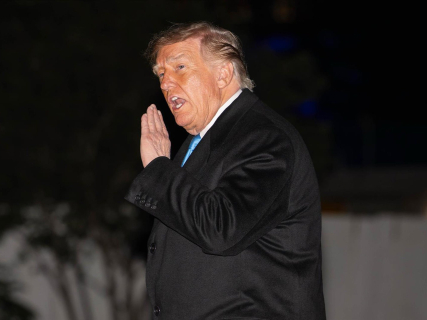
Trump rules out for now that Russia will use pneumonic plague as a biological weapon

Trump dismisses that the case of pneumonic plague in Irkutsk is linked to Russian biological weapons and Moscow assures that there is no risk of spread.

fotonoticia 20261007200559 1920

fotonoticia 20261007200559 1920

Add DEMÓCRATA to Google

Ask FREN

Published

1 minute

Most read

Elecciones 29N · Encuestas

La media de las encuestas

Media a 15 de noviembre de 2026 · 16 institutos

  • PP31,4 %
  • PSOE26,9 %
  • Vox19,0 %
  • Frente Amplio6,2 %
  • ERC2,5 %
01020304050ene 2024jul 2024ene 2025jul 2025ene 2026jul 2026

Media del último estudio de cada instituto en 30 días y su evolución semanal desde el 23J. Partidos con al menos un 2 %.

Todas las encuestas

Elecciones generales del 29 de noviembre · Demócrata

ELECCIONES 29N

¿Cuál es tu pronóstico? 29N

Reparte los 350 escaños del Congreso como creas que quedarán el 29 de noviembre. Puedes cambiar tu pronóstico hasta que cierren los colegios.

0 de 350 escaños

PP
PSOE
Vox
Frente Amplio
ERC
Junts
EH Bildu
PNV
Más partidos
Podemos
BNG
SALF
CC
UPN
Adelante
Aliança
Otros

Protegido por reCAPTCHA de Google: privacidad y condiciones

Pronóstico de DemócrataParticipación abierta, no es una encuesta

The President of the United States, Donald Trump, has rejected for the moment that the possible case of pneumonic plague being investigated by Russian health authorities in the Irkutsk region is related to an alleged biological weapons program in Russia.

"We believe it has nothing to do with it, but we will find out," Trump stated this Wednesday during a press conference at the White House, where he recalled that Russian authorities have already indicated that there is no threat of spread, whatever the result of the investigation.

"From what the Russians say, the situation is under control. We hope it is so," he indicated.

Russian authorities have communicated to the World Health Organization (WHO) that they have not registered any cases of pulmonary plague in the Irkutsk oblast nor have they detected "high-risk pathogens" among the contacts of the researcher who died in a laboratory accident in Shélejov, Siberia, once the medical observation of all of them was concluded.