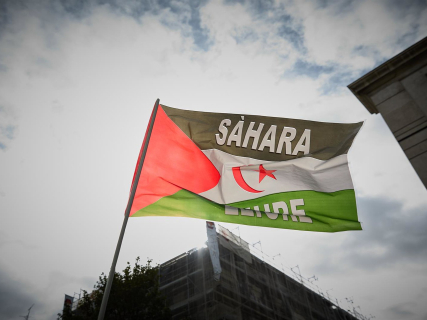

The Congress has approved this Thursday a bill that can change the legal relationship of tens of thousands of Sahrawis with Spain. The initiative establishes an exceptional route to obtain Spanish nationality for those born in Western Sahara when the territory was under Spanish administration and also contemplates a subsequent option for their direct descendants in the first degree.
But the vote does not mean that the affected Sahrawis are Spanish from this Thursday nor that they can already start submitting their applications. The Plenary has approved the text by 168 votes in favor, 31 against, and 145 abstentions and will now send it to the Senate to continue its processing.
What relationship did the Sahrawis have with Spain? Who will be able to apply for nationality? What happens with their children? When will they be able to apply? These are the main keys of a regulation that aims to respond to a historical relationship that dates back to the Spanish Sahara.
What has Congress exactly approved?
The Congress has approved the Bill on the granting of Spanish nationality to Sahrawis born under Spanish administration, originally promoted by Sumar.
The text considers that the "exceptional circumstances" provided in the Civil Code apply so that certain Sahrawis can obtain Spanish nationality through letter of nature, even if they do not have legal residence in Spain.
The difference is important. The future law does not automatically grant nationality to the entire Sahrawi people nor does it immediately make those who meet the requirements Spanish. It creates a specific procedure to apply for it and demonstrate that the conditions are met.
It is also not yet definitively approved. After passing Congress, the proposal now goes to the Senate. Therefore, the applications provided for in this regulation cannot yet be submitted.
Why does Spain want to facilitate nationality for them?
The answer lies in the history of Western Sahara and in the particular legal relationship that its population maintained with Spain.
Spain administered the territory since the late 19th century. In 1958, the Franco regime decided to convert its African possessions into provinces and the Law of April 19, 1961 regulated the so-called Province of Sahara, which came to be known as the 53rd province.
The text approved by Congress itself recalls that its inhabitants had representation in the Francoist Cortes, could have a Spanish DNI, study at Spanish universities, access public service, and even be part of the Army.
This does not allow for the assertion without nuances that all Sahrawis were Spanish citizens under the same legal conditions as those residing on the Peninsula. Precisely, the situation of their nationality after the Spanish withdrawal has generated administrative and judicial controversies for decades.
Spain communicated to the United Nations on February 26, 1976 that it was definitively ending its presence in the territory.
Months later, Royal Decree 2258/1976 was approved, which established that the natives of the Sahara who met certain conditions could opt for Spanish nationality for one year. The problem, as the Congress itself now cites jurisprudence from the Supreme Court, is that Spain had already abandoned the territory, making the effective exercise of that option difficult.
The current proposal aims to respond to that situation. Its statement of reasons explicitly speaks of the "deep connection of Western Sahara with Spain" and frames the measure within the legislation used to recognize special historical relationships with certain groups.
Who can apply for nationality?
The main criterion is very specific: Sahrawis born in the territory of Western Sahara before September 29, 1977 can apply for the letter of nature, even if they currently do not have legal residence in Spain.
However, it will not be enough to declare oneself Sahrawi.
The applicant must demonstrate that they meet those conditions. The law considers as evidence the Spanish DNI, even if it is expired; the receipt of registration in the census for the Western Sahara referendum authenticated by the United Nations; a birth certificate duly legalized or apostilled; or birth certificates, family books, and work documentation issued by the Spanish Administration in the former Sahara.
Other Spanish documents may also be jointly assessed, such as school certificates, driving licenses, documentation on pensions, or hospitalization and medical assistance certificates.
Furthermore, documentation regarding the absence of criminal records in the countries where the interested party has resided during the last five years must be provided or justification for the impossibility of obtaining it. Interior and Justice must issue the corresponding reports before resolving the request.
Will their descendants also be able to obtain it?
Yes, but there is an important nuance here: the regulation does not grant this possibility indiscriminately to all descendants of Sahrawis.
The option pathway contemplated in the proposal applies to direct descendants in the first degree of consanguinity, that is, to the children of those who have acquired Spanish nationality through the special procedure of carta de naturaleza established in this law.
They will have five years to exercise that option from the registration in the Civil Registry of the acquisition of nationality of any of their parents.
The regulation also introduces another modification of a more general scope in the Civil Code. Sahrawis will benefit from the reduced period of two years of legal residence in Spain to apply for nationality by residence, the same period provided for nationals from Ibero-American countries, Andorra, the Philippines, Equatorial Guinea, or Portugal and for Sephardim.
When will they be able to request it?
Not yet. Congress has approved the proposal, but it must continue its processing in the Senate. If the parliamentary procedure is ultimately completed and the regulation is published in the BOE with this wording, it will come into force four months after its publication.
From its entry into force, interested parties will have three years to submit the application, a period that Justice may extend for an additional year.
The application will be free of charge and the General Directorate of Legal Security and Public Faith will have one year to resolve it. If that period passes without an express resolution, it will be understood as denied by administrative silence.
The Government must also implement, within a maximum period of six months from the publication of the law in the BOE, a specific procedure within the existing software application to process these requests.
Which parties have voted in favor and which against?
The proposal has passed Congress with 168 votes in favor, 31 against, and 145 abstentions.
PSOE, Sumar, and the parliamentary partners of the Executive have allowed the text to move forward. PP and Junts have abstained and Vox has voted against.
The political journey of the initiative is relevant because the PSOE had initially shown its reluctance before reaching an agreement with Sumar that allowed for the modification of the text during its passage through the Justice Commission.
The socialists and Sumar present the initiative as a way to repair the historical relationship between Spain and the Sahrawi population. The PP agrees that access to nationality should be facilitated for the Sahrawis, but disagrees with the mechanism of the letter of nature and has defended other formulas linked to residency.
Vox, on the other hand, rejects the measure and has questioned whether nationality can be used as a historical repair. During the debate, it has maintained that Spanish nationality should not be "given away".
How many Sahrawis could become Spaniards?
This is one of the questions for which there is still no definitive figure.
The estimates handled around the processing place the potentially benefited universe at tens of thousands, but that does not mean that all those people will automatically obtain nationality.
Each interested party will have to apply for it, prove that they were born in the territory and within the established period, present the required documentation, and pass the administrative procedure.
To that first avenue, the possibility for the children of those who effectively obtain nationality will later be added.
Therefore, one thing is the potential number of people that the norm can reach, and another, different, how many new Spanish citizens it will actually generate.
What does Morocco have to do with it?
The initiative directly touches on one of the most sensitive issues in the relationship between Madrid and Rabat.
Morocco considers Western Sahara part of its territory, and Spain modified its position in 2022 by considering the Moroccan proposal for autonomy as the "most serious, realistic, and credible" basis for resolving the conflict.
The approval in Congress also occurs amid bilateral tension following the migration crisis in Ceuta at the end of July. This same Thursday, the Moroccan Ministry of Foreign Affairs has criticized certain "unfortunate initiatives" coming from Spanish institutions and has warned that a "strategic blindness" can lead to a relationship marked by "chronic distrust" and "recurring tensions".