
Intentions are one thing. Real conclusions, another. In Brussels, the former abound more. Something seemed to change until the start of the war in Iran, when the twenty-seven European leaders returned to their capitals after an informal meeting in February with a shared idea: to find the recipe for the continent's competitiveness to awaken from its slumber.
That was the objective. Reindustrialize, simplify, accelerate decisions. However, the escalation of tension in the Middle East has once again altered the order of priorities. Diplomats, strategists, and community officials expected a comfortable, almost technical summit, focused on monetary affairs. Reality, once again, has imposed another script.
Now, Europeans arrive this Thursday at the EUCO summit with the main mission of “responding” to a decision in which they have not participated and before which they also fail to articulate a unique position. As happened after the tensions in Greenland, the United States sets the pace and the European Union reacts, trapped between strategic prudence and its limited capacity for direct influence. “It is not our war,” several diplomats repeat in private.
Talking about competitiveness among missiles
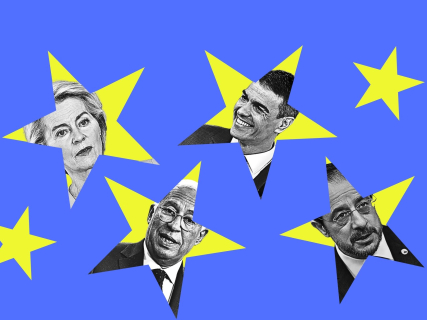
In the host's cabinet, the president of the European Council, they are fully aware that the crisis will invade the agenda. Antonio Costa tries to prevent the Union from once again placing itself in a merely reactive role. His intention is to push the discussion towards a more active, “proactive” position, in terms of de-escalation, according to close sources. It will not be easy: the fragmentation of interests among member states and the dependence on external actors limit the room for maneuver.
The Portuguese will also take advantage of this context to broaden the focus towards other unstable scenarios. Lebanon, Gaza and the West Bank will inevitably appear in the discussion, with the expectation of launching a message of institutional support for regional stability. However, even in this area, European consensus is usually built more on declarations than on concrete actions.
Concrete measures. Short deadlines. That was Costa's initial ambition to reactivate the single market. The European Commission was preparing its own strategy that now runs the risk of being relegated. Nevertheless, the structural debate is still there: simplifying regulations, reducing bureaucratic burdens, and improving the business environment.
Simplify the simplification
The conversations do not start from scratch. After a dozen omnibus packages, Brussels wants to deepen legislative simplification, identifying new obstacles that hinder competitiveness. The diagnosis is shared; the solutions, not so much. Differences persist between the countries of the north and the south, as well as between more industrialized economies and others more dependent on services.
But if there is one point that concentrates all eyes, that is energy. Everything indicates that the summit will get entangled in this matter. In recent days, price volatility and its impact on European industry have dominated every conversation in the community corridors. From informal meetings to diplomatic contacts, the energy issue has practically eclipsed any other debate.
Costa argues that the structural response involves accelerating decarbonization. Not only as a climate strategy, but as a tool for strategic autonomy. Europe imports 90% of the fossil fuels it consumes, a dependence that translates into vulnerability every time a geopolitical crisis occurs.
Energy at the center of the debate
In this context, Ursula von der Leyen will arrive with proposals aimed at strengthening the electrification of European economies, especially through investments in networks and infrastructure. The idea is clear: reduce external exposure and stabilize prices in the medium term. The problem is the short term, where governments continue to deal with high costs and social pressure.
After the informal retreat at Alden Biesen castle, leaders identified a basic consensus: Europe has a problem with the price of electricity. But from there, positions diverge. Some countries advocate for direct interventions in the market; others defend maintaining the current rules with specific adjustments.
“It is no secret that there are different positions”, admit sources close to Costa. This division complicates the adoption of solid conclusions and once again highlights the bloc's limitations to act quickly in times of crisis.
Caution, in any case, continues to dominate. Oil and gas prices have not reached 2022 levels, when the Russian invasion of Ukraine unleashed an unprecedented energy crisis. Forecasts suggest that, even in the worst-case scenario, current levels would remain below that peak. Even so, the uncertainty is enough to strain markets and political decisions.
The heterogeneity among Member States adds another layer of complexity. Not all countries suffer the energy impact in the same way, which makes it difficult to close common positions. Some governments push for urgent measures, while others prefer to avoid market distortions.
In this context, the letter sent by Von der Leyen to the leaders —opening the door to tax cuts, gas price caps or subsidies— has been interpreted as an attempt to offer flexibility without breaking the common framework.
Block Game
Another key front will be the emissions trading system. Italy directly asks to eliminate the ETS model, in operation since 2005. Germany maintains an ambiguous position, while Spain prepares to defend it firmly. This mechanism, which sets emission limits and allows trading pollution rights, has become one of the pillars of European climate policy.
The Commission had planned to reform it in the coming months to adjust its functioning, but the crisis has reopened a deeper debate on the European Green Deal as a whole. Some countries see the current context as an opportunity to slow down or redefine the energy transition.
For Spain, that is a red line. Pedro Sánchez's Government wants to make the defense of the green agenda one of the axes of the summit. In Moncloa they maintain that decarbonization is not only compatible with competitiveness, but reinforces it. Furthermore, they consider that the ETS system allows for better cushioning of external impacts.
As an argument, Spain points to its lower exposure to the energy crisis thanks to renewables. The commitment to clean energy is presented as a model to follow within the bloc. “The green agenda has to be at the center,” they repeat from the Executive.
Hence, the Spanish delegation maintains a defense “tooth and nail” of the acceleration of permits for renewable energies, insisting that it is the most ambitious instrument of European climate policy.
Despite the intensity of the debate, everything indicates that the issue of the design of the electricity market will not be formally reopened. “The Council is not there”, European sources point out, cooling expectations of immediate structural changes.
Rethink unity
In parallel, governments avoid anticipating the content of the proposals that Von der Leyen will present this Thursday. However, Sánchez hopes to take advantage of the summit to gather ideas that will feed the anti-crisis royal decree that his Executive will approve the following day.
Among the most optimistic, there is talk of a certain convergence. "We expect a high degree of unity", they assure. But recent experience invites caution: European unity is usually built more in language than in concrete decisions.
In any case, the Brussels meeting once again highlights a constant: the European Union continues to define itself largely by its capacity for reaction to external crises. This will be the second summit in just three months marked by an international conflict.
And, once again, the true challenge will not be to respond, but to demonstrate that it can anticipate, influence and act as a geopolitical power with its own voice in an increasingly uncertain global scenario.