
Without equality of opportunities, a full democracy is not possible. In fact, it is difficult to imagine a political action that does not have among its fundamental objectives the achievement of a right as basic as social equity. And it is even more difficult to speak of full democracy, if the seat of national sovereignty, the Congress of Deputies, does not guarantee universal accessibility.
The Congress Palace has been for decades a monument to exclusion. Its architecture, marked for those who do not know it, by an endless number of stairs, uneven levels, and poorly accessible routes, has functioned for too long as an invisible, but effective, barrier for thousands of citizens.
Therefore, the recent approval of the Universal Accessibility Plan of Congress is not just a civil works reform; it is a declaration of principles about what democracy means in the 21st century.
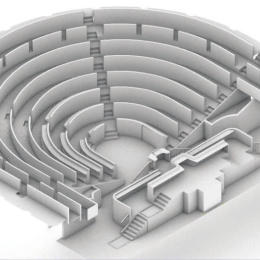
The most striking thing about this plan -and the most necessary, of course- is the intervention in the chamber. It was shocking that in the place where equality laws are drafted, a deputy (male) or deputy (female) in a wheelchair could not access the rostrum, or sit on the government bench with the same naturalness as their male and female colleagues.
Until now, accessibility depended on provisional solutions, on “patches” that evidenced a structural deficiency. With this project, accessibility will be a guaranteed right, aligning itself, as it could not be otherwise, with the spirit of the new article 49 of our Constitution, focused on strengthening the rights of people with disabilities.
Thus, the historic building of the Congress will now have specific signage, basic for the autonomy of people with sensory or cognitive disabilities, common areas and adapted services, from the restrooms to the elevators and corridors, and obstacles are removed that, until now, turned the route through the Congress of Deputies into a real obstacle course. Likewise, accessible spaces are enabled in the Floridablanca Courtyard.
This progress is not accidental. It is the result of years of work and demands from the Spanish Committee of Representatives of People with Disabilities (Cermi), and from so many activists who have pushed for years for normality to reach the Carrera de San Jerónimo. The fact that the plan has been advised and agreed upon with them, guarantees that the solutions are not mere aesthetic embellishments, but functional tools for inclusion.
"That this building is accessible is a step forward to guarantee the rights of citizens," has declared the President of Congress, Francina Armengol. From now on, Congress is a little less palace and much more home; a place where any citizen will be able to exercise their rights with the guarantee that the principle of equality is met.
about the signatory:
Emilio Sáez is a PSOE deputy for Albacete and spokesperson for the Commission for Comprehensive Disability Policies