
Until now, the situation experienced by athletes in this country has remained practically invisible. Many took for granted that the high-level athlete contributed to the Social Security, that the years of investment, effort and hours of work —with prohibitions, demands and obligations— implied being registered.
The big change arrived two and a half years ago. Upon seeing the sad look of many colleagues towards their own careers, I felt the need to act. Not only were chronic injuries what marked their time in the sport, but also the total absence of working life in their history.
The impact of losses like that of Blanca Fernández Ochoa, as well as other less visible ones, evidenced an urgent reality. It was then that I understood that, if we athletes ourselves didn't act, no one would.
When I started to promote the working group, I integrated the Blanca Fernández Ochoa Foundation —hand in hand with her sister, Lola Fernández Ochoa, promoter of initiatives focused on athletes' mental health—, the lawyer specialized in sports law María Laffitte, and UGT as a key union to guide the regulation of our working life.
I understood that, if the athletes themselves did not act, nobody would do it
The objective was to advance with rigor, without depending on media impulses, to achieve a structural and lasting change. Soon, figures from different sports joined, among them Fernando Romay, who contacted me upon learning about the movement, generating an unprecedented collective mobilization. In that process, we verified that disciplines such as cycling or basketball were already working to regulate their own labor conditions, without success, which reinforced the need for a joint approach, although adapted to different realities.
This is how we structured the work in three phases: the first, for those who, despite belonging to professional leagues and having contracts and income, could not contribute; the second, for athletes without an employer who only received scholarships and have never contributed; and the third, focused on the creation of a Statute of the Athlete that guarantees the obligation to contribute.

The latter especially affects current High-Level Athletes (HLA), who are forced to advance all at once, at the beginning of the year, their self-employment contribution. Subsequently, the Superior Sports Council returns that amount, financed with football's audiovisual rights. However, this economic item is not being used in its entirety: many athletes are unaware of its existence, others are too young to understand its importance and, in many cases, simply do not have the necessary money to advance that amount.
The question is obvious: which self-employed worker is obliged to pay all their annual contribution at the beginning of the year in a single payment? The athlete.
I have confirmed, more than ever, that union makes strength. For years, many athletes —especially those who enjoyed greater privileges— tried to resolve their situation individually. However, it has not been until the creation of the “Fair Retirement” movement that a true union around a common cause has occurred.
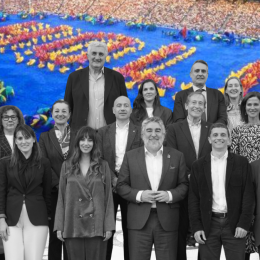
On October 1, 2024, we managed to hold a parliamentary session in the Congress of Deputies. It was hopeful to see how the different political groups supported our movement; some even ignored the situation of abandonment and helplessness that many athletes experience after their retirement.
On July 18, 2025, we took another step: the first phase went out for public consultation. Together with the CSD, a form was developed to identify professional league athletes with contracts. It is important to recognize the goodwill and involvement of the Superior Sports Council in this process, showing from the beginning a willingness to address an issue that had remained unattended for years. We knew that this would be the easiest phase to address, precisely because it affects those who, within the general problem, are the least unprotected.
With the impulse of UGT and the commitment of the athletes themselves, a first advance has been achieved: the public hearing of the Royal Decree to present allegations. An important step, but still insufficient.

We cannot speak of a historic change if the most affected continue to be the great forgotten ones: the athletes who have represented us in Olympic Games, world championships and European championships, the High-Level Athletes (DAN). Those who make an entire country vibrate, who inspire young people and represent the values of sport, cannot be left unprotected after their career.
If we are Spain brand and reason for collective pride, it is legitimate to ask how we have allowed its abandonment.
From here on, the question is no longer if the system should change, but when and with what determination. The solution involves clearly recognizing the activity of the high-level athlete as an employment activity, with rights and obligations comparable to any other worker. Contributing cannot continue to be an exception nor depend on the discipline or on the structure behind each sports career. It must be a guaranteed right.
But it is also essential to look beyond the competition. Retirement cannot be a leap into the void. It is necessary to establish real transition mechanisms: access to training, professional guidance, and support that allows athletes to build a second life with dignity. These mechanisms are already in place, but they will remain insufficient if the athlete does not see their effort recognized in an essential aspect: their working life. It cannot be that the only trace of high performance in their career are the accumulated injuries.
Because the problem does not end when the lights go out; in many cases, that's where it begins.
This is not a sectoral debate, it is a matter of justice. A country that boasts about its athletes cannot afford to turn its back on them when they stop competing. Because then the message that is sent is as clear as it is unfair: while you compete, you are a symbol; when you finish, you are invisible.
And what is even more serious: many families are now beginning to learn about the situation of the first athletes who dedicated themselves exclusively to high-level sport and who today face retirement. A stage in which they discover that they cannot retire under dignified conditions, because those years do not count as worked or because the resulting pension does not allow them to live with dignity, despite having been role models for an entire country.
And that, simply, is not acceptable.
ABOUT THE AUTHOR:
Almudena Cid is the only gymnast in the world who has reached four consecutive Olympic finals (Atlanta 1996, Sydney 2000, Athens 2004 and Beijing 2008). After her retirement, she has developed a multifaceted career as an actress, writer, and sports commentator. In this last stage, she has promoted the demand for fair pensions for elite athletes.