
The Regional Government of Extremadura is looking for 169 new directors for its educational centers. The Ministry of Education has opened a selection process to fill vacant positions in schools, high schools, and official language schools. But, beyond this administrative need, the move reveals a question that emerges in the negotiation process of the Government of Extremadura, and it is whether Vox will have enough personnel for intermediate management positions, especially since they have never had government experience.
If there is a ground where a good part of the real power is played in the autonomous Administration -popular sources tell Demócrata-, it is not only in the ministries, but in that network of general directorates, technical secretariats and middle management that sustain the day-to-day management. And it is there where one of the stumbling blocks of the conversations between the Popular Party and Vox to consolidate the Government of Extremadura presided over by María Guardiola could emerge.
Last week, when everything seemed on track for a pre-agreement, negotiations stopped. There was no breakdown, not even a cooling off. Rather, a strategic pause in a climate of good understanding, with the commitment to resume conversations in the following days. However, after that waiting period, deeper issues emerge than the mere distribution of powers.
A administration nourished of socialist functionaries
Consulted popular sources point to one of those knots: the internal structure of the Administration. If Vox aspires to take on weighty ministries such as Agriculture, this party will have to face an administrative apparatus molded during decades of socialist governments. It is not a minor detail. In the words of a socialist source from Badajoz, the Ministry of Agriculture has traditionally been “a fishing ground” for workers that successive boards have been making civil servants, which has configured an ecosystem where profiles close to the PSOE predominate.
The challenge is not only ideological, but operational. From the Popular Party's circle, they warn that it is the most extensive ministry of the entire Junta. And, furthermore, one of the most exposed: “the men in black from Brussels pass through here”, they slip, in reference to the European Union's supervision mechanisms on the execution of funds and agricultural policies. A terrain where the positions of Vox, led by Santiago Abascal, do not always coincide with community guidelines.
"We are going to surprise"
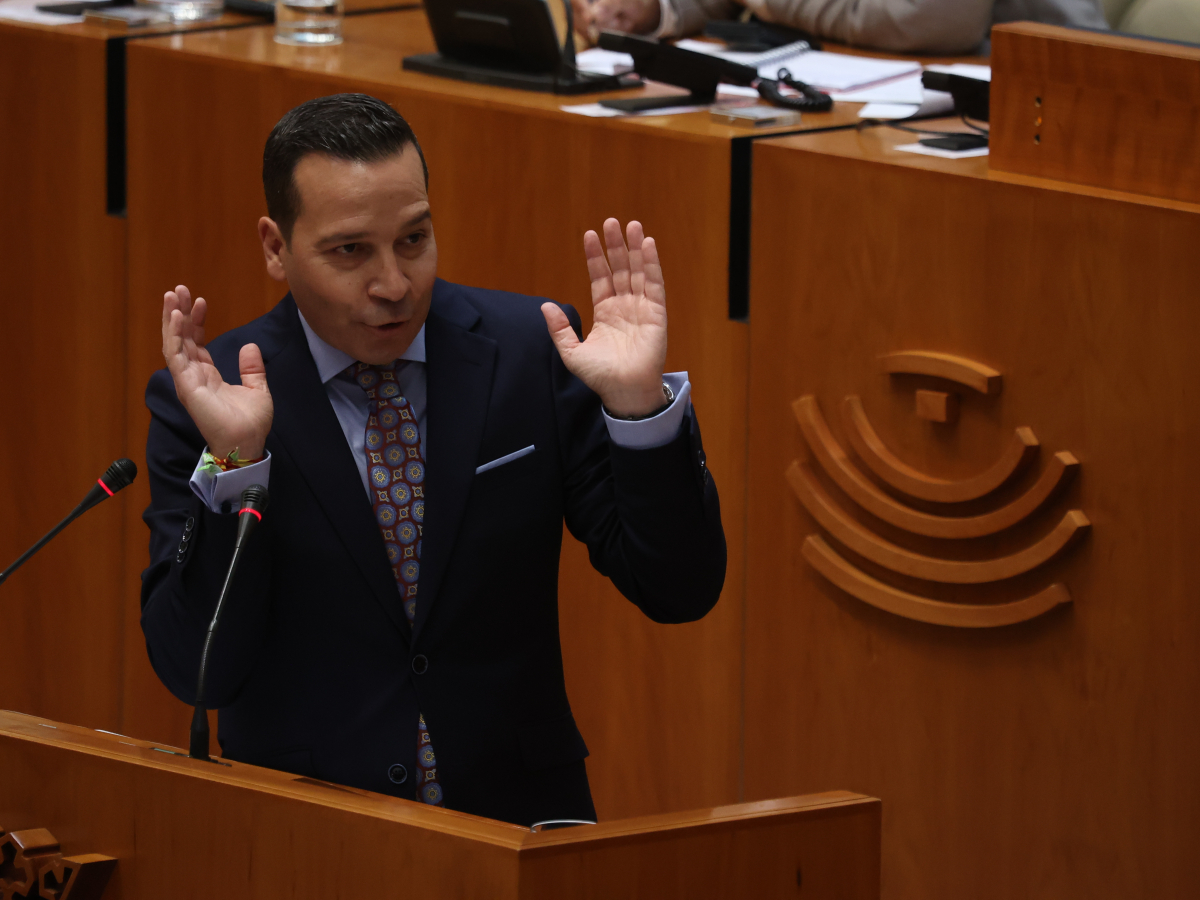
In Vox, however, they downplay the concern. They maintain that they have no problem in nurturing those intermediate levels: they assure they have profiles “well-trained, prepared, and with experience”, many of them outside the electoral focus of last December 21. “The qualification of our people will surprise”, they point out.
The party also recognizes the worth of the current counselor, Mercedes Morán Álvarez. But that does not dilute its interest: Agriculture continues to be a coveted piece. Not only for its budgetary weight, but for its capacity for influence in the rural world, key in the Extremaduran electoral map. For Vox, it is a strategic department, both economically and symbolically, from which to project its discourse in defense of the countryside against policies they consider harmful.
The importance of taxation
However, the negotiation does not exclusively revolve around this portfolio. The consulted sources emphasize that the real struggle is also fought on the budgetary ground: what budget items exist, what margin there is to reorient them and, above all, in what timeframes Vox's programmatic demands can materialize. Among them, taxation occupies a central place, with special attention to taxes such as Inheritance and Donations and their eventual development or reform.
In that context, the Minister of the Presidency, Abel Bautista, already hinted last week that the conversations were progressing “on the right track”. He cited as examples of understanding forest management in Tierra de Barros, housing policies, the continuity of the Almaraz nuclear power plant and certain fiscal aspects. Areas in which, he acknowledged, work has already begun with specific figures and budget items.
“We will give information about the agreement, when there is an agreement,” he/she settled then, recalling that it will be the president herself who will announce it when the time comes.
After Holy Week
That moment, however, remains without a date. The political calendar adds pressure, but also margin. With the horizon of May 3 as the legal limit and the unexpected early election in Andalusia altering the board, the pieces move with caution. The early Andalusian call suggests that the PP trusts its expectations in that community, as the various polls indicate, while introducing an unknown about the behavior of Vox, whose results might not replicate the dynamics seen in territories like Extremadura or Aragon.
In that crossroads of times -between institutional urgency and strategic opportunity-, negotiations remain open. Without fanfare, but with the increasingly widespread feeling that the agreement is not far off, although it is not imminent either, of course, never before the return of Holy Week.