The Supreme Court has resumed this Monday the trial of the masks case against the former Minister of Transport, José Luis Ábalos, his former advisor Koldo García and the businessman Víctor de Aldama, which investigates alleged irregularities in the purchase contracts for sanitary material during the pandemic.
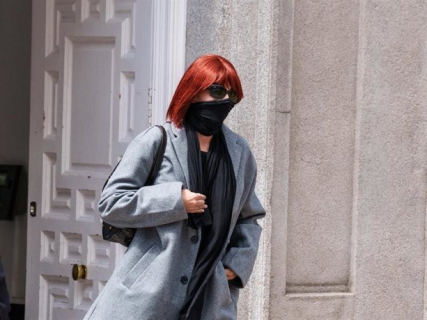
Among the most relevant testimonies of today's session was that of Patricia Uriz, ex-wife of Koldo García, who has admitted to having received cash from the PSOE to cover expenses, although, as she insisted, always with "justification".
Uriz, however, has opted for not answering the Prosecutor's Office nor the popular prosecution, as she herself is being investigated for money laundering in the Audiencia Nacional. Her statement has been limited to the questions asked by her own defense.
During the investigation, she had already admitted that she went to the socialist headquarters on Madrid's Ferraz street to collect cash corresponding to expenses advanced by her then-husband and by Ábalos himself.
However, this Monday he has refused to acknowledge the messages intercepted by the Civil Guard, in which they allegedly used code terms such as "chistorras", "suns" or "lettuces" to refer to different amounts of money.
And his statement has gone from the "chistorras" to the villa of La Alcaidesa (Cadiz) which according to the Prosecutor's Office served as consideration to former minister José Luis Ábalos in exchange for a license in the hydrocarbon sector to a partner of Víctor de Aldama.
The witness explained that "Ábalos wanted to go on vacation with his then-wife" and that she was in charge of making the arrangements as part of her job. "When we found one, I sent photos to Koldo. I went and made the contract because I understood that the minister could not and it was made in my name," she pointed out. However, she distanced herself from the decision to pay 1,800 by transfer and 8,000 euros in cash.
Ineco assures that they had no "indications" about irregularities in the work of Jéssica Rodríguez
The day has also been marked by the silence of several key witnesses. Businessmen Claudio Rivas and Javier Serrano, linked to Víctor de Aldama, have exercised their right not to testify as they are also being investigated in the Audiencia Nacional.
According to the Anti-Corruption Prosecutor's Office, Aldama would have articulated a network in which Rivas assumed expenses related to the purchase of the aforementioned chalet in Cádiz, allegedly intended for Ábalos's use as part of the investigated bribes.
In parallel, other statements have tried to disassociate various actors. From Ineco, its former manager Josefa Pérez García has assured that there were no "indications" of irregularities in the work of Jéssica Rodríguez, Ábalos's ex-partner, while other witnesses have denied direct relationships or participation in operations linked to the purchase of sanitary material during the pandemic.
The "first link" of the plot disassociates his company from the purchase of masks
The round of statements has continued with Israel Pilar Ortiz, a businessman also investigated in the National Court, who appears before the Supreme Court as a witness and considered as "the first link" by the investigators in the plot.
As he explained, the photograph that was taken with José Luis Ábalos at a technological event was circumstantial and without a close personal relationship, attributing it to the coincidence at the event and to family ties with the PSOE.
Regarding his relationship with Koldo García, he has defined it as "cordial" and limited in time, assuring that they saw each other "four or five times". Likewise, he has denied any involvement of his company in the purchase of masks, although he has acknowledged that the businessman Víctor de Aldama contacted him during the pandemic to convey to him the critical situation of Spain in sanitary material and ask for his help through his contacts.
For his part, another of the witnesses, Manuel Salles Carceller, also under investigation, has assured that he does not know Aldama. Regarding Koldo García, he has admitted that he had him contracted in one of his companies for three or four months, without providing more details about that employment relationship.
The statements of both are framed within a day marked by the attempts by those investigated to distance themselves from the alleged plot, in a process that continues to accumulate cross-examinations and divergent versions about the facts.