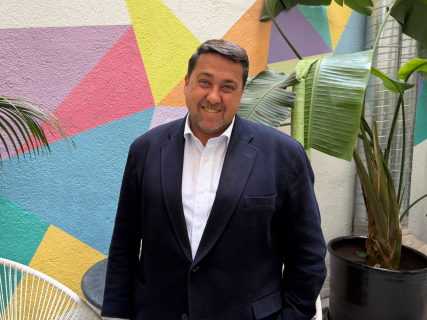

QUESTION-. Good morning, Mr. Batalla. Thank you very much for coming to our home, to Demócrata, your home, from now on your home. What do you think if, before talking about so much current affairs as events overwhelm us, you first tell us what SEDIGAS is
RESPONSE-. Sedigas is the Spanish Gas Association, an organization with more than 50 years of experience that comprehensively represents the entire value chain of the gas sector. Under its umbrella, nearly 200 companies are grouped, developing activities ranging from transport, regasification, and distribution —regulated activities— to commercialization in liberalized markets.
But beyond its organizational dimension, Sedigas is today a key player in the transformation of the energy model. In recent years, we have incorporated new business profiles linked to the development of renewable gases, which reflects the sector's evolution towards decarbonized solutions. In this sense, Sedigas not only represents a consolidated industry, but also a sector in full transformation, with a clear vocation to actively contribute to the energy transition.
Q-. Well, this sector represents 0.5% of GDP; more than 150,000 people work for it and, furthermore, in the last decade, you have invested around 7,000 million euros. Is this so? Are we wrong with any data?
R-. Indeed, the gas sector represents approximately 0.5% of GDP and generates employment for more than 150,000 people, with an accumulated investment of billions of euros in the last decade. However, I believe that the true value of the sector is not understood solely from a macroeconomic perspective.
Its impact is especially significant at a microeconomic level. We are talking about more than 30,000 companies that are part of a powerful auxiliary industry: installers, maintainers, engineering firms, manufacturers… an entire ecosystem that generates stable, qualified, and territorially distributed employment.
Furthermore, it is an innovation-intensive sector. In a context of energy transition, gas —and especially renewable gases— is positioned as a key technological vector. We are investing in R&D&i, in digitalization, in new energy solutions. That is to say, we not only contribute to the current economy, but we are building the energy model of the future.
Q-. Well, I see that you have already focused on the importance of this sector, highlighting the three key vectors for that sought-after decarbonization, and with that I want you to explain to us, how we have gone from the relevance of the basic electrical grid, priority, to the basic gas grid (clip)
R-. The energy transition cannot be approached as an exclusive process, but rather an inclusive one. Electrification is, without a doubt, a fundamental pillar, but today it represents approximately 22% of final energy consumption. The great challenge is how to decarbonize the rest.
And that's where renewable molecules come into play. Natural gas, in the short and medium term, provides flexibility and backup to the system. And, in parallel, renewable gases —such as biomethane or renewable hydrogen— will be decisive for advancing in the decarbonization of sectors where electrification is not viable, neither technically nor economically.
Spain has an extraordinary opportunity to position itself as a European hub for these renewable gases. We have resources, industrial knowledge, and, above all, infrastructures that place us in a position of competitive advantage.
P-. You speak to us of three main energy vectors for decarbonization, and of course, for the development of these energies, as you already anticipate, a technology and some infrastructures are necessary. And, of course, the question is whether this sector can guarantee the security of these energies, of which, by the way, there is much talk outside of Spain. (clip)
R-. The gas infrastructures are one of Spain's great strategic assets. We have one of the most robust and meshed systems in Europe, with a high capacity for storage, regasification, and transport.
This is not a minor element. These infrastructures have demonstrated their value in moments of maximum tension, such as the energy crisis of 2022, where Spain was able to guarantee supply without interruptions, unlike other European countries, thanks to a high diversification of supplies. Last year, we had a gas supply portfolio originating from 16 different countries.
But their importance goes beyond the short term. They are infrastructures prepared to integrate renewable gases, which makes them a fundamental lever for the energy transition. Preserving them, adapting them, and valuing them is key to ensuring an orderly, efficient, and economically sustainable transition.
P-. And, do you think that all this technological development that Spain has, that in the specialized sectors is very prestigious, that, in effect, we are very cutting-edge, do you think that people on the street know this?
R-. Probably not in its full dimension. And it is important to convey it. Because when we talk about energy security, we talk about something very tangible: that homes have heating, that industries can operate with total reliability and efficiency, that basic services function.
In Spain we have experienced complex situations —the 2022 crisis, extreme meteorological phenomena like Filomena or the DANA— and the gas system has responded with absolute normality. Even in situations of tension in the electrical system, such as the electrical zero that occurred exactly one year ago, gas has been key for the recovery of supply.
This demonstrates that we have a resilient, reliable, and essential system for the functioning of the country. And that is a message that we must be able to convey with greater clarity and forcefulness.
fakfnafknakfalf
Q-. Without gas, can't the light be turned on?
R-. Without any doubt. They are not competing vectors, but complementary ones. In fact, allow me to point out that natural gas consumption in Spain exceeds electricity consumption, which highlights its essential nature. Gas demand in 2025 reached 331 TWh compared to 256 TWh for electricity. And the generation from gas combined cycles contributed 17% of the total electricity.
Furthermore, there are industrial sectors —especially those that require high temperatures— where electrification is not a viable solution. For these cases, renewable gases are the only technically and economically efficient alternative.
Therefore, if we want a realistic and pragmatic energy transition, we must integrate both vectors, taking advantage of their advantages and guaranteeing the security and competitiveness of the national productive system.
Q-. Before starting this interview, you and I have spoken about the CNMC's circular proposals, related to the remuneration methodologies for the regulated activities of Transport, Regasification and Distribution of natural gas for the period 2027–2032. But before delving into this matter, Demócrata would like you to give us more notes about those three major vectors of the sector; that is, the promotion of renewable gas, of biomethane, for which an agreement has recently been signed with Asaja or, of green hydrogen, and of that Iberian corridor, with France and Portugal, about which many of our readers are asking.
A-. Biomethane represents an extraordinary strategic opportunity for Spain. Our country has a very powerful agricultural and livestock sector, which generates a large amount of organic waste.
These waste products, which today pose an environmental challenge, can be converted into an energy and circular solution. Through anaerobic digestion processes, it is possible to transform them into biomethane, a renewable gas fully compatible with existing gas infrastructures.
Our estimates indicate that we could cover up to 50% of the current demand for fossil and imported natural gas with national biomethane production. This implies reducing external dependence, strengthening our strategic autonomy, generating employment in rural areas, boosting the circular economy and advancing in decarbonization.
Q-. Only with biomethane?
R-. Renewable hydrogen is another of the great levers of the future. Spain has renewable resources that allow producing hydrogen at potentially differentiated and competitive costs compared to the countries in our environment.
The development of the Iberian Corridor —the connection with France and the rest of Europe— represents a key opportunity in this regard. Not only will it allow to supply internal demand, but also to export clean energy to countries with greater energy needs, such as Germany and other countries in central and northern Europe.
It is a strategic project at a European level, which is advancing in its development phase and which can consolidate Spain as a central actor in the new hydrogen economy.
Q-. To have those good infrastructures with which the sector has been equipped, some investments are needed, but a climate is also needed, an atmosphere that helps those investments
R-. For any economic segment working with innovation and development, this climate is important. In the case of renewable gases, allow me to emphasize that, for example, in the case of biomethane, we are dealing with a mature, safe, and proven energy. At a European level, there are already more than 1,700 biomethane plants operating. And then there are leading countries, such as France, Italy, Denmark, United Kingdom, which have turned a problem, such as the correct management of waste, into an opportunity to produce renewable gases. Therefore, technological development is necessary, undoubtedly, but this technology already exists and is within our reach. In our case, we are also seeing how we are growing in the number of biomethane plants. At this moment we have 24 operational biomethane plants. In the last year, we have doubled the number of plants. But we have enormous potential. The RDL of measures to mitigate the effects of the conflict in the Middle East has highlighted the relevance of renewable gases and, in particular, biomethane.
Q-. And, in the case of hydrogen?
R-. In the case of hydrogen, we are taking decisive steps. We have to scale up the projects, we have to be able to generate those opportunities. And this is important for Europe. And of the EU's strategic projects, that of the Iberian Peninsula is one of them, because Spain and Portugal have conditions that are unbeatable, in addition to their magnificent infrastructures.
dakfnalkfnaklsfanf
Q-. In what situation is the Iberian Corridor?
R-. At a European level, it is with European fund financing and, it is in the preliminary engineering analysis phase. It requires the entire phase of steps to be operational in 2030. But solid progress is being made and it is recognized as one of the main corridors at a European level in the hydrogen economy.
Q-. If you agree, before addressing the circular proposals of the CNMC with respect to the future horizon of the sector, proposals, which you have evaluated, but where you make some notes about it. For example, the effect of inflation, and how this inflation has not affected all sectors homogeneously.
A-. To understand what the situation is. On the one hand, there is a gas sector that comprises regulated activities, liberalized activities. Regulated activities are those that are remunerated through gas tolls, transport, regasification and, distribution networks. This remuneration is set and reviewed every six years. And now we are at that review moment, hence the importance, because we are defining the rules of the game for the next six years, which will be crucial for the sector as a whole. That said, we come from a regulatory period, where three effects have occurred. On the one hand, a sharp fall in the remunerations of regulated activities -a fall exceeding 2,000 million euros, which has affected the profitability and the economic-financial situation of companies- and, meanwhile, in parallel, there has been, as a consequence of the pandemic, the breakdown of global supply chains, the energy crisis of 2022 and, therefore, a sharp increase in costs in terms of CPI and. an increase in industrial costs. In terms of the industrial price index, we have suffered an accumulated increase of over 40% and, in terms of CPI, of 20%. Increases that were not included in the proposal made for the year 2021. This is a reflection that we have shared with the regulatory body, the CNMC.
Q-. And, what is the proposal that you make as a sector?
R-. Investment needs stability and predictability. We are at a key moment, in which the rules of the next regulatory period 2027–2032 are being defined.
We come from a cycle in which there has been a significant reduction in remunerations —exceeding 2,000 million euros—, in parallel with a very notable increase in total costs, both due to inflation and due to the rising cost of financing conditions.
Therefore, it is necessary to adjust the remuneration framework to guarantee a reasonable profitability that allows maintaining and adapting critical infrastructures. And all this is feasible without compromising the competitiveness of our productive fabric.
Q-. Are tolls included in fair profitability?
R-. Well, the gas tolls, for which these regulated infrastructures are remunerated, apart from having a tangential weight on the final price of natural gas, what is more important, is that we are well below the European average. Industrial tolls are 70% below the European average, and domestic ones, close to 40% of the European average. In conclusion, we can provide ourselves with a regulatory and reasonable framework, without eroding competitiveness and guaranteeing the viability and future of these critical infrastructures.
Q-. But those tolls are going to tax the consumer more
R-. Tolls in Spain are well below the European average: up to 70% in the industrial case and close to 40% in the domestic one. This shows that there is room to guarantee the sustainability of the system without transferring significant impacts to the consumer.
The objective is not to increase costs, but to ensure that the system is viable and can continue providing service with guarantees, especially in times of crisis.
aknfafnafnafja
Q-. In addition to the inflation effect, of the tolls, the CNMC's proposal incorporates aspects related to incentives and penalties. And well, meanwhile, you have to invest to maintain and develop those infrastructures
R-. Of course. Regarding renewable gases, it is true that we have potential and infrastructures that serve us to channel those renewable gases, but we also have to invest in digitalization. The gas sector is making a commitment to digitalization, due to cybersecurity issues. And it is the case, for example, of replacing the analog meter park, with the digital meter park, which allow the consumer service improvements and with more security measures… And, that, in effect, requires investments that were not foreseen six years ago.
The same happens with biomethane, and with the need to adapt the infrastructure for these renewable gases. And this is where the remuneration methodology incorporates these elements as incentives for remuneration. And yes, I can tell you in advance that, from our conversations, some will require some small adjustment, in the sense of adapting to the realities of the sector. But yes, we are in line with the recognition of the role of infrastructures and, of other elements that were not on the table years ago, when the remuneration model was reviewed.
Q-. Do you know the result of the latest Economic Freedom Index for the year 2025, according to which, Spain is among the worst countries in the OECD, occupying position 31 out of 38 countries. Do these balances harm the sector?
R-. Beyond this index, regulatory stability is crucial. And, also give the opportune signals for a sector that is crucial, that will continue to be so and, that has a pulling and investing capacity that is very relevant for the economy as a whole.
Q-. Let's imagine that the CNMC adopts the proposals of the gas sector, and we understand that with that the remuneration model no longer moves. But, you also depend on other external agents and other territorial administrations, for example, for some procedures. Should the CNMC be brought into agreement with these other agents? Should actions be aligned?
R-. One of the main ones is the need for investment in digitalization, cybersecurity and infrastructure adaptation. We are talking, for example, about the replacement of millions of meters, or the adaptation of networks for renewable gases.
Furthermore, it is fundamental to improve administrative coordination. The energy transition does not depend only on the regulator, but also on the agility in project processing, on regulatory clarity and on demand development.
Q-. Is there any country model for Spain?
R-.We value the attitude of the CNMC and its willingness to dialogue at a key moment like this. This type of interlocution is fundamental to build a solid, coherent regulatory model aligned with the challenges of the energy system and the general interests of the country.
From the sector, we are participating with a constructive attitude, putting forward rigorous technical proposals aimed at strengthening the economic sustainability of the system and guaranteeing the quality and security of supply for households and our industry. And, we trust that this process will allow progress towards a more balanced, stable, and long-term vision framework, effectively incorporating the knowledge and experience of the sector
Q-. With so much geopolitical instability, with a conflict that we don't know how or when it might end, can Spaniards be at least calm about the gas supply?
R-. We have to send a message of calm and prudence. Spain has infrastructures that allow us to source from multiple origins. We saw that in 2022. In 2022, other European economies suffered the effect of the invasion of Ukraine, because they had a dependence on Russian gas. In the Spanish case, our gasification plants allow us to source from any global market. We have security of supply because we have diversification of sources. As I mentioned before, we have an infrastructure with a large storage and regasification capacity. And that is what gives us a unique character at a European level. We have been able, over the last decades, to turn a reduced capacity with the rest of Europe into a virtue and be able to create our own model and system, and above all with enormous diversification.
ashfakjfhafjhasfjh
Q-. But you will admit that we are facing a complex situation
R-. The gas sector can convey a message of tranquility based on facts. We have a diversified, flexible system with access capacity to multiple international markets.
Unlike other European countries, we do not depend on a single supplier. This allows us to better manage global volatility and guarantee supply even in complex scenarios.
Q-. Do we buy gas from the United States?
R-. Yes, we buy gas from the United States, but also from 15 more countries. That is our strength. We participate in global markets, thanks to our infrastructures, and not all countries have it. Germany, the energy crisis of 2022, caught it without any regasification plant. In our case, our gas system is enormously flexible to respond to our needs
Q-. Can Trump cut off our gas?
R-. Those who buy and sell gas are the companies, not the administration
P-. Apropos of RDL 7/2026, the Government has determined that underground storage capacity be at zero charge. That is good news
R-. It is good news. I believe that the RDL or the Spanish Government's commitment has been one of the most decisive commitments in the EU, addressing how to mitigate the effects of price increases on consumers, especially the value-added tax. But, what is more important. Beyond this, the RDL gives structural signals for the future. And I believe that this can be seen in some issues such as the study of renewable gases, the explicit recognition of hydrogen as a strategic gas. We are responding to our current structural needs, but already advancing in the decarbonization of sustainable gases.
Q-. Are some fiscal measures perhaps a little short in time?
R-. We are contributing with the administration, with the third vice president, with the Government to that monitoring of needs at each moment. But we are far from 2022. However, we have to see how the conflict evolves and what impact it will have, and have the required public-private measures prepared. These measures have a deadline until summer, but obviously there is time to review them.
alkfalfalkfalfkalf
P-. The energy transition offers many labor possibilities, and also quality in employment
R-. And, not only the ecological transition. Before we talked about digitalization. It is foreseen that -we are already in the last phase-, a replacement of all meters, as I mentioned before, analog at the domestic level. There are more than five million meters. That is an opportunity for job creation. Before you asked me, what is SEDIGAS. Well, SEDIGAS also trains people. We are preparing all the necessary work so that all that job creation can be completed, in something as relevant as digitalization. And, that is a very clear example of all the opportunities that the energy transition or digitalization shields us with.
P-. And, in Spain is there enough talent, we don't have to go abroad
R-. We are a benchmark. But, what's more, as I tell you, we have an opportunity to create jobs, and in the case of renewable gases, to create those jobs in rural areas, where empty Spain is.
Q-. What do you think of the idea of some EU countries, including Spain, wanting to tax energy companies more, as a result of the performance of this new geopolitical context?
R-. Our sector is committed to that energy transformation process. And that requires a stable and predictable regulatory framework, and above all, the capacity and attractiveness that Europe has to attract investments in that transition process cannot be reduced.
So, as a consequence of this announcement, of these conversations that are on the table, well, obviously, a calm reflection is required, so, when we have the details, we will talk. But, the important thing is that the private sector is committed to investments, so, let's not limit European attractiveness. In any case, may the measures finally adopted have a coordinated approach at a European level, so as not to break with the Single Market.
Q-. If it seems good to you, I summon you to a next interview, so that we talk about training and about that quarry of talent that can find a place in this sector within its labor market
R-. Fantastic. It's a fascinating topic. Thank you very much. We cannot forget that the energy transition does not consist solely of replacing technologies, but in building a balanced system that combines decarbonization, competitiveness, and security of supply.
And, Spain has a unique opportunity to lead this process. We have resources, infrastructure, and talent. But we need a stable regulatory framework, a strategic vision, and the ability to integrate all available solutions.
Because, ultimately, the success of the transition will depend on our capacity to be pragmatic, efficient and ambitious at the same time.