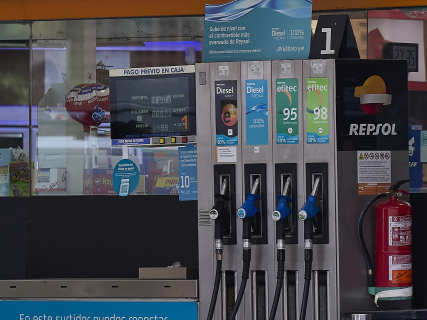

Since last Monday, March 2, according to FACUA, the rise in the price of diesel already represents an average of 40.4 cents, no less than 27.8%. As for the price of gasoline 95, the average increase since that Monday reaches 19.9 cents, 13.2%. That is, the increase in the cost of fuels at the gas station even anticipated the increase in the price of oil.
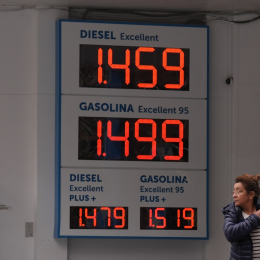
Last Tuesday, they also point out in FACUA, and despite the drop in oil, gas stations raised the price of diesel by another 8.4 cents per liter. Ergo, between March 2 and today, diesel, on average, has gone from costing 1.456 euros per liter to 1.860. And gasoline 95 has risen from 1.502 to 1.701 euros per liter.
Given this, many consumers ask themselves a very logical question: why does the price of gasoline go up, if the oil they are selling me was bought months ago, long before the price increase caused by the attacks by the United States and Israel on Iran? And there is an answer. Whether it's convincing is another matter.
“Rockets and feathers”
To this question, the economist Juan Luis Jiménez has answered via X. His answer begins with a question: “Do you have the feeling that when the price of crude oil barrel, gasoline and diesel increase their price immediately at gas stations, but when it drops it doesn't do so as quickly? Well, it's true, and it's already happening in Spain, with an explanation: the lack of competition.”
In times of uncertainty in the oil markets, such as the current one due to the war in Middle East, Jiménez continues, “the “rockets and feathers” models (rockets and feathers) explain a behavior of retail (and wholesale) companies that negatively affects consumers”.
Featured story
Price of gasoline: these are the cheapest gas stations in Spain in the midst of the oil crisis
2 minutes
The idea is simple: “Given increases in the cost of raw material, the retail price rises immediately, even if the oil sold today was bought months ago. But when that same cost drops, the retail price takes much longer to update and drop.”
The main reason, he reiterates, “is that the lack of competition among service stations, and throughout the supply chain, leads us to pay more for gasoline and diesel, especially at these times, aggravating inflation risks in the country”.
And what can be done? According to the economist, little: “We continue to depend on oil, the market has reduced competition and we act on expectations (anticipating increases, many are already going to refuel, further aggravating the price increase). But I am sure of what should not be done: to again subsidize fuel consumption, as the Government did in 2022. Because, remember, on that occasion oil companies increased prices due to the subsidy, keeping more than 850 million public euros”.
Do you have the feeling that when the price of crude oil, gasoline, and diesel barrels goes up, their price increases immediately at gas stations, but when it goes down, it doesn't do so as quickly?
— Juan Luis Jiménez (@JuanLuis_JG) March 6, 2026
Well, it's true, and it's already happening in Spain, with an explanation: the lack of competition.
Thread⬇️ pic.twitter.com/imrtuPuIiM
The price of 100% renewable fuel rises
It is inevitable that a multitude of doubts arise, such as the one concerning Adolfo Díaz-Bautista, professor of Roman Law at the University of Malaga who, also through X, asked this question to Repsol: “If Repsol's Diesel Nexa is of vegetable origin and does not come from petroleum, why has it risen to almost €2/liter since the Iran war?”
And this was the answer they gave him from the company: “Despite the fact that Nexa 100% renewable origin Diesel is produced from organic raw materials, its price, like that of the rest of fuels, is linked to the international energy markets”.
If Repsol's Nexa Diesel is of vegetable origin and does not come from petroleum, why has it risen to almost €2/liter since the Iran war? https://t.co/VMyXvV080Y
— Adolfo Díaz-Bautista ⚖️ (@ADiazBautista) March 9, 2026