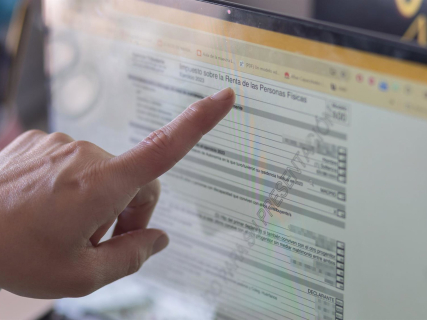

The campaign will extend until June 30 and maintains the usual structure of the IRPF. The difference this year is in the level of control.
Tax advisors agree on one idea: the Tax Agency will demand greater precision in the declaration, with more data cross-referencing and more revisions if it detects inconsistencies.
This has a direct consequence. Errors, even if small, can delay refunds or lead to checks.
Deductions in the spotlight
One of the main focuses will be deductions. Especially:
- Those related to energy efficiency
- Self-consumption installations
- Systems that replace fossil fuels
- Purchase of electric vehicles
These deductions remain in force, but the Tax Agency will review that they are applied correctly. There will also be surveillance over regional deductions, where there are differences between communities and a greater margin of error. An incorrect application can imply subsequent regularizations.
Large fortunes: more taxes and more control
Another relevant novelty affects high savings income. For assets exceeding 300,000 euros, the state rate rises from 14% to 15%.
This impacts:
- Dividends
- Interest
- Gains from the sale of shares or funds
- Cryptocurrencies
- Real estate
The change implies more control over higher volume financial operations.
Self-employed: the area with most surveillance
The self-employed group is again one of the main focuses. The Tax Agency will especially review:
- The consistency of declared expenses
- The use of 5% of expenses of difficult justification
- The limits of the modules regime
Also will be key the regularization of contributions after the new system for real income. For the first time, many self-employed workers will have to adjust in this campaign the quotas corresponding to previous fiscal years.
In addition, Treasury will cross-reference data with Social Security to verify that contributions match the declared income.
The risk that many do not see: delays in refunds
An important point that many taxpayers are unaware of. The Tax Agency can delay refunds until December 31 without paying interest if it detects possible inconsistencies.
And in practice, those deadlines can be extended if the declaration goes into review. This makes accuracy a key factor, even when the result is a refund.
What errors can cost you dearly
The most common failures in this campaign will be in:
- Incorrectly applying a deduction
- Declaring expenses without sufficient justification
- Not correctly adjusting income or returns
- Errors in regional deductions
The problem is not only the penalty. It can also mean losing part of the refund or delaying it for months.
A different context: more data, less margin of error
Digitalization has changed the scenario. The Treasury increasingly has more prior information:
- Bank details
- Financial movements
- Information from other administrations
This reduces the margin for errors or inconsistencies and increases the probability that any discrepancy will be detected.