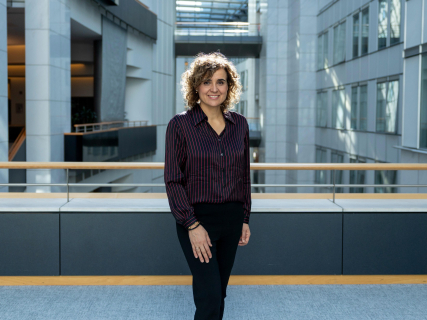

On a shelf, the portfolio that accompanied her during her time leading the Ministry of Health in the government of the popular Mariano Rajoy presides over her office on the tenth floor of the European Parliament. From her window, part of the neuralgic center of community politics can be observed at those hours. Assistants, lobbyists, journalists, and deputies take Luxembourg Square and its gardens around to take advantage during lunchtime of the sun's rays that are scarce in the city.
The bulk of parliamentary activity takes place during the weeks of activity in the different committees. Meetings with groups that come to the community capital in search of answers, votes on new legislative files, and the preparations for this week's plenary session dominate the MEPs' agenda. During one of the breaks in the day's schedule, Dolors Montserrat (1973) receives Demócrata in her office, where decisions are made that end up transforming the political and legislative action of the European Union. The office of the secretary general of the first European political family.
It does so in a week in which international politics has dominated all discussions in the country. The US president, Donald Trump, threatened to break commercial relations with Spain after the Government's refusal to use the military bases of Rota in the open conflict. A challenge to which Brussels responded with a practically resounding closing of ranks in defense of stability in trade between both powers. During the conversation, the popular politician also reflects on the challenges of the European pharmaceutical sector through the recently approved reform, as well as on the priorities of her parliamentary group.
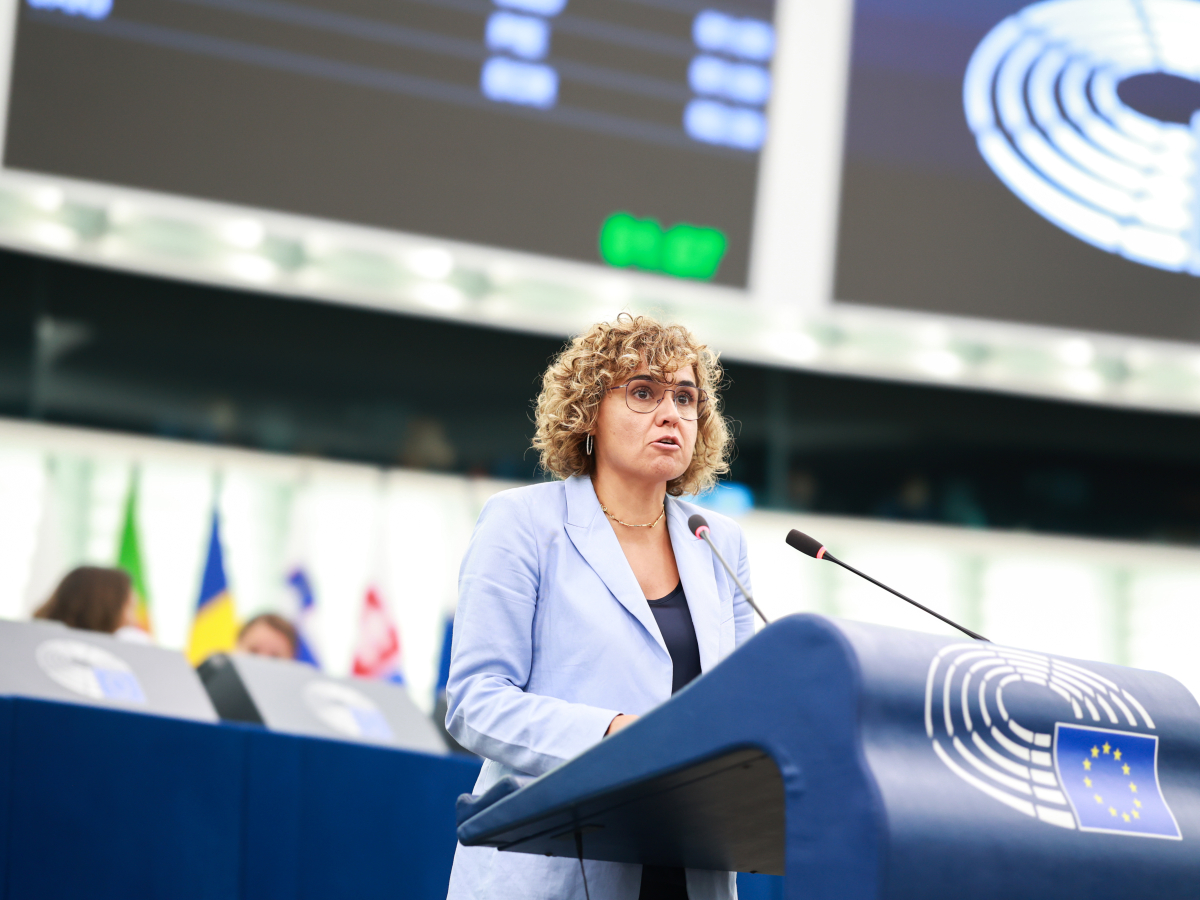
Question: It will be almost a year as secretary general of the European People's Party. What assessment do you make of this period?
Answer. The balance is very positive. First, because the European People's Party, unlike the last legislature, has much more power, much more influence, and much more visibility.
In the last legislature, 2019-2024, we were the first force in the European Parliament, but it is true that in the Council we had five prime ministers. In contrast, now we can say that we have thirteen prime ministers and that we govern as vice-presidents of government in four more countries.
Unlike the last legislature —in which we presided over the Commission and the Parliament— now the third institutional leg, which is the Council, also has a lot of influence from the European People's Party.
Q: How does that leadership materialize at a legislative level?
R: This legislature we have been able, above all, to close the innovation and competitiveness gap with the United States and with China. Also to strengthen our security and defense, which does not mean investing in war, but investing in our security, in our peace and in defending our democracy.
Besides, to be competitive we need to lower energy costs and have a single energy market. We have led that nuclear energy be considered a transitional and clean energy and not close nuclear power plants, because that what it does is increase costs, as is happening in Spain with the socialist Government.
Dolors Montserrat: ““The pharmacy office is the first gateway to health in Europe”
Within this competitiveness there is also another important aspect. The left in the past legislature and in the previous ones had accustomed us to a bureaucratic and fiscal suffocation, in addition to a certain sectarianism in the fight against climate change with the imposition of the Green Pact, which has led to the deindustrialization of Europe.
Q: Here they enter into controversy with the defenders of the climate agenda that characterized the Union in recent years
R: We believe in the fight against climate change, but by reactivating the industrialization of Europe and protecting our industry, with less bureaucracy and more facilities.
If we return to reindustrialization and competitiveness, we give the best social policy that we can offer to our young people: quality employment in Europe.
And furthermore, by not criminalizing industrial sectors nor the primary sector, we support agriculture, industry, and fishing. We have demonstrated that we have been able to maintain the CAP budget without cuts, with the same level we had.
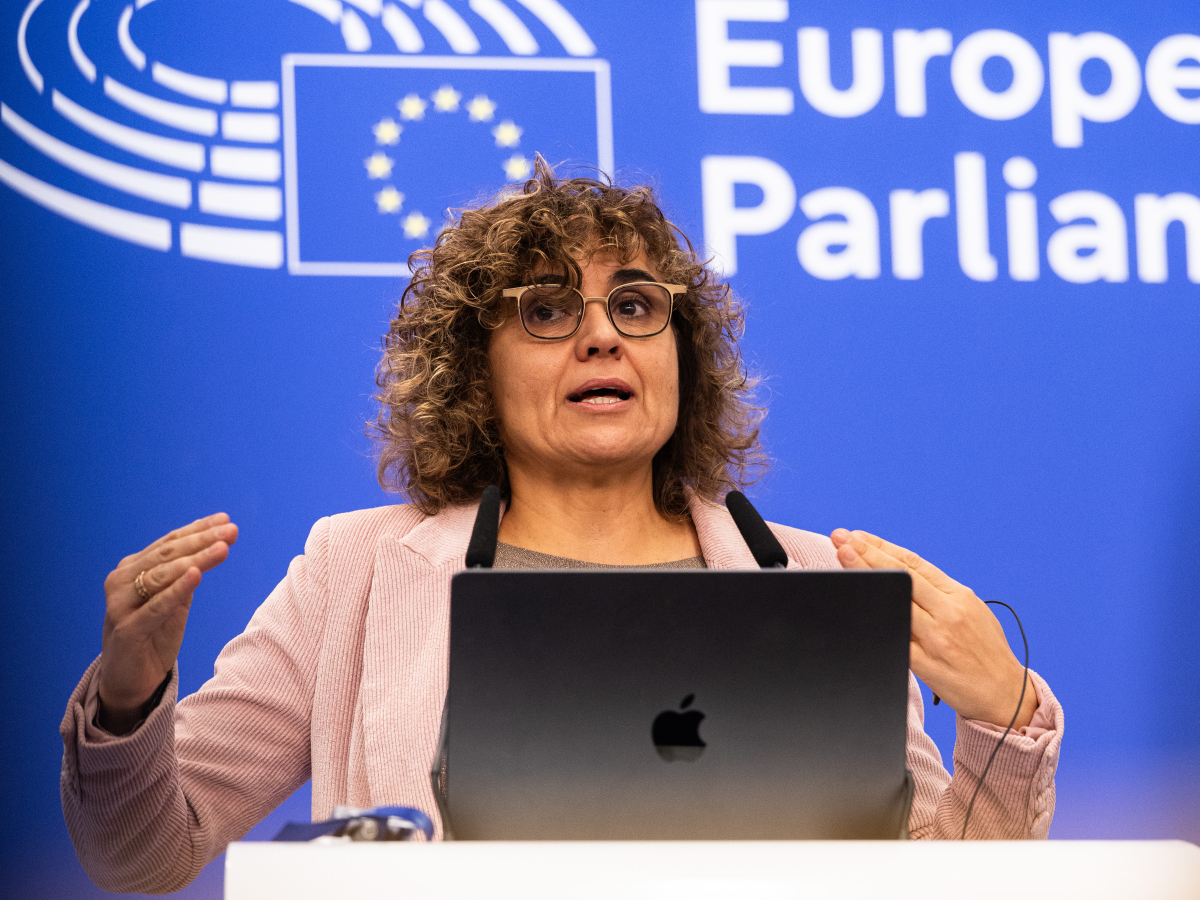
Q: You were talking about leading debates. The Spanish Popular Party has promoted legislative files such as the pharmaceutical reform or the Mercosur safeguards. What assessment do you make of the work of the Spanish delegation?
R: Having said these five topics that I mentioned to you before, for example the pharmaceutical package —of which I have been rapporteur— places the citizen at the center, that is, the patient at the center of the Union's health and pharmaceutical policy.
This means guaranteeing access to the best medicines for citizens. And having new medicines for rare diseases, because there are more and more and we have to provide a response to families.
Besides, we have a great battle against antimicrobial resistance. We always have to use antibiotics with medical prescription. It is a silent pandemic.
Dolors Montserrat:“Investing in defense is not investing in war, it is investing in peace and democracy”
Q: What was your greatest fear during the negotiations?
R: We could find that in the year 2050 one of the first causes of death is antimicrobial resistance. When in the past century one of the great advances were antibiotics and vaccines, they have to continue being so.
For us there are three pillars: guarantee the sustainability of our public health systems —one of Europe's great successes—, ensure access to the best treatments for all patients and continue leading research and innovation to have the best medicines.
This we have achieved in record time and I feel very proud to have been the rapporteur. Giving hope to patients, especially to pediatric patients with cancer or rare diseases, is something very important.
Now I hope that the countries put into motion what we have agreed in Europe.
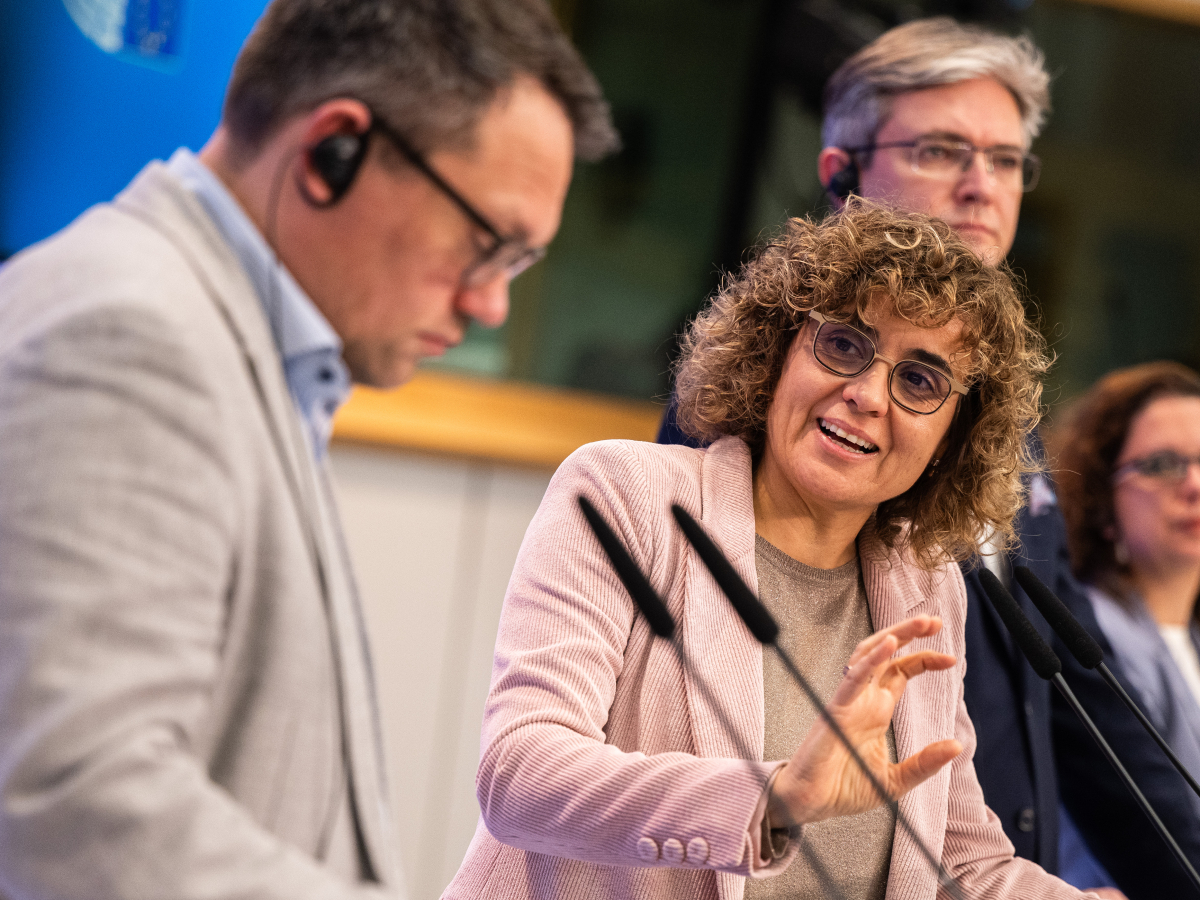
Question. As secretary general, she is responsible for deploying the international agenda of the European People's Party. What is her relationship with the current US administration?
Answer: We are very clear that we have to take care of the transatlantic relationship between the United States and Europe. We have to do intelligent diplomacy.
American citizenship and European citizenship have always been allies. Therefore, it is the obligation of the European People's Party, as the majority force in the three institutions, to maintain these relations with the United States and with American society, as well as with the administration that American citizens have chosen.
We are aware of that which unites us. The European People's Party maintains a good relationship with all American administrations, because they are our allies.
Dolors Montserrat: “We have turned Europe into a reliable partner for the world”
Sometimes with differences, of course. First we are going to defend European interests, but we are clear that we have to work on these transatlantic relations. In the negotiation of the tariff agreement, we did not get up from the table and worked with diplomacy and intelligence to achieve the best possible agreement.
We are anti-tariffs and defenders of trade agreements. We have ensured that the European Union has the best possible agreement compared to other countries. Europe has also become a reliable partner for many other countries, such as Canada or India.
Q: There is the feeling that the European Union errs on the side of being conciliatory with Trump.
A: I always say that in times of crisis the European Union demonstrates its capacity for transformation. We saw it with COVID and we have seen it with Ukraine.
In the case of Ukraine, Ukrainians are dying to defend the principles and values of the European Union: democracy, the rule of law, and freedom. We have been the space that has helped Ukraine the most: in humanitarian aid, in reconstruction, in opening the door to its accession, and also in security and defense.
Featured story
How would the EU respond to a trade war between Spain and the US: "We are prepared to act"
4 minutes
What we have also learned is that Europe has to invest more in its own security and defense. This does not mean investing in war, but investing in peace and in the protection of our democracies.
Question. President Feijóo maintained contact with Marco Rubio last week. What commitments did he acquire?
Answer. What has been published by President Feijóo himself. They spoke about Ukraine, they spoke about the security and defense of Europe.
He reminded him of the commitment of the European People's Party as a reliable partner in the world.
Q: In this debate about the relationship with the United States, the question of European autonomy also appears, including media autonomy.
R: Freedom of the media is fundamental. The three institutions have to have the capacity to communicate better and to be closer to the citizenry. Many times the citizenry sees Brussels as something distant. But almost 80% of the decisions that affect a Spanish citizen are made in Europe.
From the moment a person gets up and turns on the light, that light is regulated in Europe. Therefore, we have to have the capacity to reach the citizenry to explain what we do here in Europe and how we solve people's real problems.
Q. You have mentioned the migration pact before.
R. It is very important. The first message is that who enters Europe will not be decided by the mafias who use the human drama of migration. Who decides who enters Europe is Europe.
We want a legal, orderly immigration linked to employment, respecting our traditions, cultures and European values. Whoever comes to commit crimes or violate our values will not be welcome.
Dolors Montserrat:“The European People's Party leads the reforms that citizens need”
We have seen that in 2025, for example on Europe's southern border —Italy, Greece or Cyprus— irregular migration has been reduced. All these countries are governed by parties of the European People's Party. However, right now the only door that remains open is Spain, where the Sánchez Government is not asking Frontex or Europol for help to control the borders.
Q: Speaking of Italy. What is your relationship with Prime Minister Giorgia Meloni and what does the PP aspire to in that relationship with its political family?
R: We have a great relationship with Antonio Tajani, who is vice-president of the Italian Government and belongs to our political family, Forza Italia.
With him we are perfectly aligned on many policies, especially on the migratory pact.
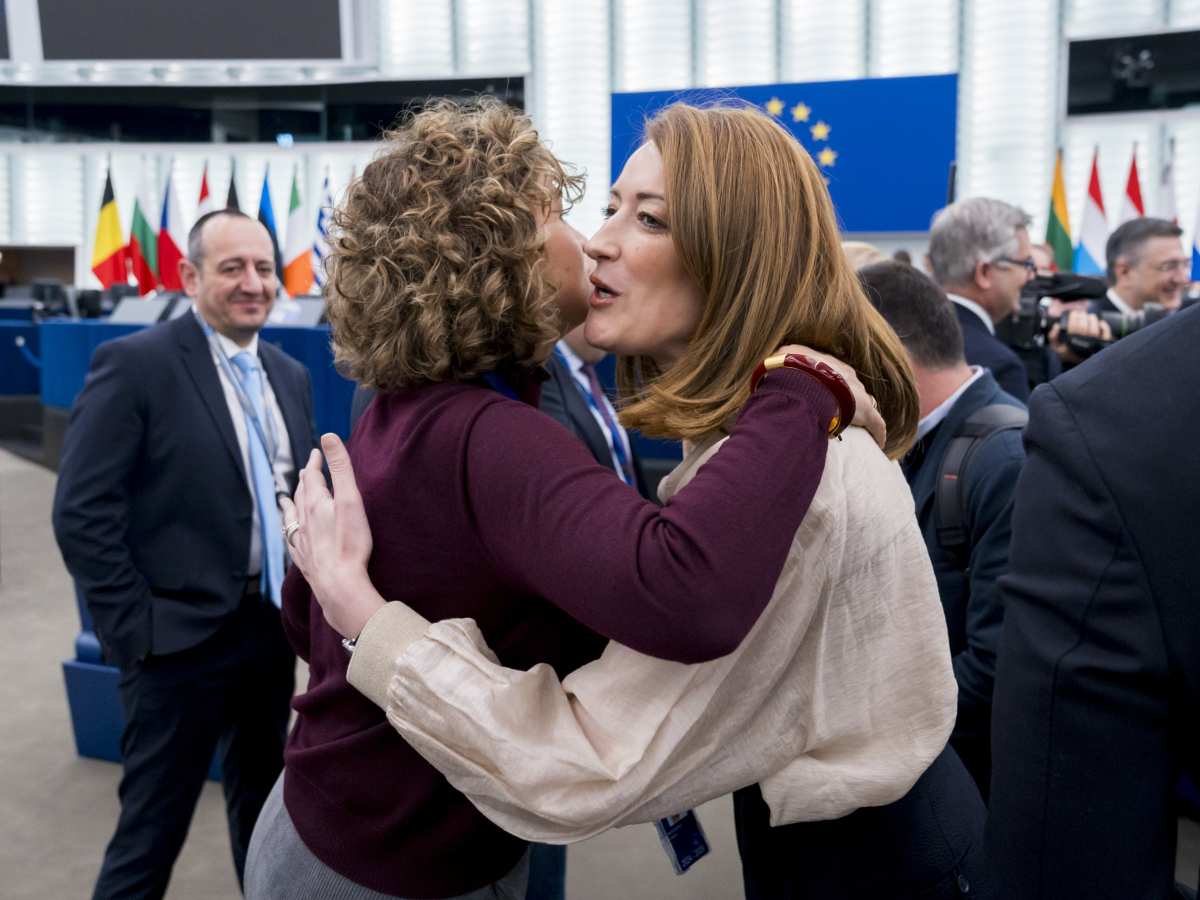
Question: Will Roberta Metsola repeat as president of the European Parliament? In a few months, negotiations for the renewal of the main institutional positions will begin.
Answer: That has to be decided by Roberta Metsola herself and the European People's Party. But I do want to say that she has been a great president.
Not only our political family is happy with its institutional management. The European Parliament has become a very fast machine when it comes to legislating. In complex moments what is needed is for institutions to legislate quickly. Other forces are endorsing its work. We would be happy if it runs for another re-election.
Q: Would you be willing to keep a socialist in the European Council in exchange for Metsola in the Parliament?
R:The discussions are starting and we will see how the negotiations evolve. But the European People's Party leads the Commission, the Parliament and has a strong presence in the Council. We are satisfied because we are leading the reforms that Europeans need.
Q: I wanted to finish by talking about medicines and the agreement signed between the EU and India. How do you expect it to affect the pharmaceutical sector?
R: Europe leads the pharmaceutical sector and we want to continue doing so. That's why we have to invest in research, innovation, and protect patents.
Without innovation we will not have new medicines.
What we have done is protect patents, but also guarantee that when a patent ends, generics immediately enter to ensure access and sustainability of public health systems.
Additionally, we want to strengthen the production of medicines in Europe to avoid shortages, something we saw during COVID with basic products like paracetamol.
Q: What other advances does the pharmaceutical package introduce?
A: We have given more importance to pharmacies, especially in rural areas, where they are often the first point of access to a healthcare professional.
We have also introduced improvements in medicine leaflets. From now on, the boxes will have a QR code that will allow consulting the leaflet in the 24 languages of the European Union. This is very useful, for example, for Erasmus students or citizens who travel. The leaflet will continue to exist on paper to avoid the digital divide, but the QR will facilitate access in any language.
Q: You have also referred to antimicrobial resistance.
R: It is one of the issues that concern me most. Every year 40,000 people die in Europe from antimicrobial resistance.
That's why we have established the mandatory prescription of antibiotics and clear warnings on the boxes to prevent their misuse.
We cannot accustom the population to taking antibiotics without medical prescription. Fighting antimicrobial resistance is fundamental to prevent it from becoming a great silent pandemic.
The conversation continues now with the questionnaire finished. At that moment, Montserrat points to one of the debates that, in her opinion, will conclude in the coming months in Brussels and that will end up having a direct impact on the daily lives of citizens: the revision of air passenger rights.
Before heading to her next meeting, she also comments on the tensions that exist between the different European institutions regarding the scope of the obligations that airlines must assume with their users. There is barely time to delve deeper. The agenda in Brussels does not stop and the next appointment awaits on the other side of the hallway. Montserrat stands up, and before leaving, she offers a final reflection on the legislative work that lies ahead: “Europe has to be closer to its citizens.”