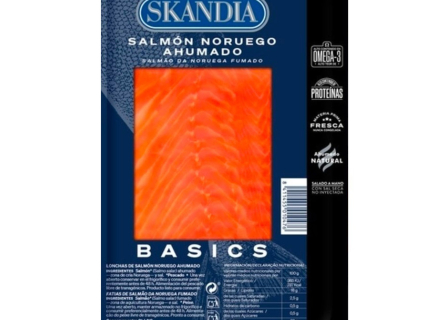

The Spanish Agency for Food Safety and Nutrition (AESAN) has communicated a health alert after the detection of the presence of "Listeria monocytogenes" in a batch of smoked salmon of the Skandia brand produced in Spain.
The notice affects the product called "Norwegian smoked salmon", of the Skandia brand, presented in a plastic blister pack, identified with lot number 361214 and with an expiration date 13/04/2026.
The notification has been forwarded to the competent authorities of the autonomous communities through the Coordinated System for Rapid Information Exchange (SCIRI), with the aim of verifying that the implicated batch is withdrawn from all points of sale.
The AESAN urges those who have at home units included in this alert not to consume them under any circumstances. If product from the affected lot had been ingested and symptoms compatible with listeriosis appeared, such as vomiting, diarrhea, or fever, the recommendation is to go as soon as possible to a health center.
In the case of pregnant women, the Agency advises reviewing the specific consumption recommendations during gestation prepared by AESAN, where essential food hygiene guidelines for this group are collected and a list of foods that should be avoided during pregnancy due to their association with certain biological risks, among them "Listeria monocytogenes". Furthermore, the need to maximize cleanliness in the kitchen to prevent cross-contamination with other foods is emphasized.
What is the listeriosis?
According to AESAN on its "website", listeriosis is a foodborne infection caused by the bacterium "Listeria monocytogenes", capable of forming biopelículas or biofilms on numerous surfaces used in the food industry. This biofilm confers greater resistance to the bacterium for its elimination, so that it can remain even after the usual cleaning and disinfection processes.
The main route of contagion in humans is the ingestion of contaminated food, especially those ready for consumption, that are kept refrigerated and have a prolonged shelf life, such as smoked fishery products, certain meat products subjected to heat treatment, and soft cheeses.
The foods most frequently associated with listeriosis are precisely those ready-to-eat refrigerated with a long shelf life. These include cooked sausages or pâtés; smoked fish; dairy products such as soft cheeses, raw milk and ice creams made with raw milk, in addition to prepared salads, fresh vegetables and fruits.
In healthy people, the infection usually goes unnoticed or manifests with mild digestive discomfort, fever, and muscle aches. However, in vulnerable groups, such as immunocompromised individuals, the elderly, children, and pregnant women, severe conditions may appear, including meningitis, sepsis, spontaneous abortion, fetal death, or premature birth. Although listeriosis is not very common, AESAN reminds that in severe cases it presents a high mortality rate, around 30%.
Lastly, the Agency points out that the incubation period usually ranges between 1 and 2 weeks, although it can vary from a few days up to 3 months. This wide interval makes it difficult in many cases to precisely identify the food that originated the infection.