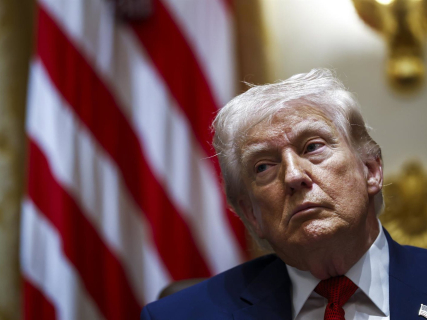

The war in Iran, triggered by the surprise offensive launched by the United States and Israel on February 28, now completes its first month in a scenario in which President Donald Trump has modified his strategy. The president proposes reactivating negotiations to reach an agreement that puts an end to hostilities, while raising the tone of his threats against Tehran if it does not accept a pact, while Israel maintains and even accelerates its military campaign and has promised to intensify attacks given the possibility of an understanding behind its back.
The military operation, initially designed by Washington to last between four and five weeks, enters its first month with a shift in the American stance. The White House has put on the table a series of initiatives aimed at lowering tension and beginning to outline a possible exit from the conflict. An example of this change was the automatic extension of the 48-hour ultimatum that Trump had given to attack Iranian power plants if the Islamic Republic did not reopen the Strait of Hormuz, which became five days, a step prior to the announcement that his Administration was holding "very solid conversations" with Iran to try to stop the war.
"They have a lot of interest in reaching an agreement. We would also like to achieve it," he declared before reporters before boarding the presidential plane bound for the state of Tennessee. As he has been repeating, any pact must be "good" and imply that "there are no more wars, nor more nuclear weapons."
In the following days, Iran flatly denied the existence of contacts with the United States and attributed the reports about an imminent agreement to an attempt by Trump to influence crude oil prices, at a time when the market was soaring at the beginning of the week.
Despite the initial confusion about whether there really were contacts and about the content of a supposed offer from Washington, statements and leaks began to appear that pointed to the involvement of countries like Pakistan, Oman or Turkey, usual mediators between Washington and Tehran, in a scheme of indirect conversations.
After a call from Pakistani Prime Minister, Shehbaz Sharif, to Iranian President, Masud Pezeshkian, in which he committed to playing a "constructive role" to achieve peace, Islamabad formally offered to "host" "significant talks" and ended up confirming days later "indirect talks" between the United States and Iran, with Pakistani mediation and with Islamabad in charge of "delivering the messages".
In this framework, both Pakistan and the United States have admitted the existence of a 15-point proposal presented to Iran to stop the war. Broadly speaking, the proposal includes the lifting of international sanctions against Tehran in exchange for it dismantling its nuclear facilities and limiting its ballistic missile arsenal.
The U.S. special envoy, Steve Witkoff, was the one who made public this 15-point proposal, which "constitutes the framework for a peace agreement", stressing that the initiative has generated "strong and positive conversations". As a result, Trump decided to extend his ultimatum until April 6, granting ten additional days to the diplomatic path, while countries in the region, European powers, and China demand a de-escalation and the normalization of transit in the Strait of Hormuz.
In parallel, Washington accompanies messages of de-escalation with military warnings, insisting that Iran must agree to end the war before it is "too late." "I don't know if we can do it. I don't know if we are willing to do it. They should have done it four weeks ago or two years ago," Trump came to state.
At the same time, the White House has reinforced the military dimension of its strategy with announcements such as the deployment of paratrooper units in the area in the midst of an offensive, a move that suggests a possible intensification of the war and fuels Tehran's distrust, which has already seen how two previous diplomatic processes with the United States were cut short by surprise attacks.
Iran rejects the initial proposal and sets its own demands
In parallel, Iran has reduced to a minimum its comments on indirect contacts and, according to various reports citing high-ranking officials familiar with the talks, has rejected Washington's initial offer, which it considers "excessive", and has formulated its own conditions to accept the end of the conflict.
Among the points raised by Tehran are the total cessation of attacks and the creation of objective guarantees to prevent the war from repeating itself, as well as the payment of compensations and reparations and the assumption of responsibilities. Furthermore, it demands that the ceasefire be applied to all open fronts.
Iran equally claims the recognition by all international actors of its authority over the Strait of Hormuz, against Trump's aspirations to control this strategic enclave for world trade, after he went so far as to suggest a joint management of the passage by Washington and Tehran.
Israel, for its part, maintains its own military agenda against Iran and the differences with the American strategy are growing after the Minister of Defense, Israel Katz, anticipated that Tel Aviv "will intensify" and "will expand" its attacks on Iranian territory.
Furthermore, it continues to threaten to keep eliminating high-ranking Iranian officials, after the assassination of the commander of the Revolutionary Guard Navy, Alireza Tangsiri, whom it holds responsible for operations to block maritime traffic in Hormuz. Israel has attacked Iranian nuclear facilities, in open contradiction with the suspension of bombings on Iran's power plants announced by Trump.