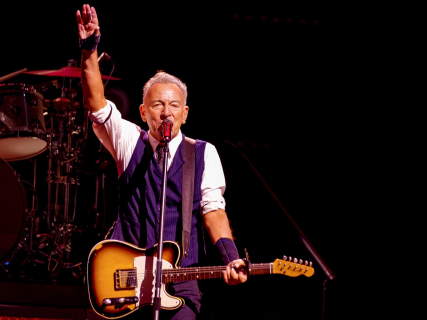

Bruce Springsteen has become one of the most prominent voices of the latest day of protests by the No Kings movement, which has mobilized thousands of people in the United States against the policies of President Donald Trump, especially on immigration matters and for the war in Iran.
Springsteen leading the protests in Minneapolis
The American musician participated in the mobilization held in Minneapolis, one of the epicenters of the protest, where he launched a harsh message against the government's actions.
During his intervention, Springsteen denounced that “federal troops brought death and terror to the streets”, in reference to the migratory operations, and defended the citizen response as an example of resistance.
The artist also performed his song Streets of Minneapolis, composed as a criticism of the violence of the federal forces, reinforcing the symbolic character of his participation.
More than 3,300 protests across the country
The mobilization is part of the third edition of the “No Kings Day”, a day of protest that has gathered protesters in the 50 states of the country, with more than 3,300 calls.
Furthermore, the marches have had international replica in countries like Mexico, Canada and in several European capitals, among them Madrid, Rome and London, evidencing the global dimension of the rejection of Trump's policies.
Criticisms of the war in Iran and of the migratory policy
The protesters have focused their demands on two main axes: the opposition to the military offensive in Iran —qualified as an "illegal war"— and the denunciation of the methods of the Immigration and Customs Enforcement (ICE).
According to the organizers, the conflict in the Middle East is having direct consequences on the U.S. economy, with an increase in fuel prices and inflation, while immigration policy has generated strong social rejection.
Minneapolis, symbol of indignation
The main protest took place in Minneapolis, where tens of thousands of people gathered in a city marked by controversy after the death of two American citizens in January in operations linked to ICE.
The event brought together prominent figures such as Senator Bernie Sanders, actress Jane Fonda and union representatives, among them Liz Schuler, president of the AFL-CIO. In New York, actor Robert De Niro also participated in another of the mobilizations.
A broad coalition against Trump
Behind these protests is the No Kings coalition, which groups together nearly 400 organizations, including Amnesty International, Indivisible or the American Civil Liberties Union (ACLU).
The movement seeks to consolidate itself as a broad front against what they consider an authoritarian drift of the current Government, in a context of growing political polarization in the United States.
Social protest in election year
The mobilizations are taking place at a key moment, with the country approaching the mid-term legislative elections, where the president's political wear and tear can play a decisive role.
The combination of pressure in the streets, rejection of the war, and economic discomfort places the No Kings movement as one of the main focuses of social contestation against the Executive.