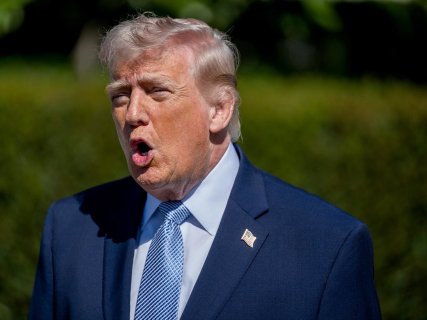
The threat of an immediate escalation in the Middle East hangs over this Tuesday as the deadline given by US President, Donald Trump, to Iran to end the war under his conditions and reopen the Strait of Hormuz to maritime traffic approaches. The ultimatum expires at 2 in the morning, Spanish peninsular time. From that moment, Washington could activate new military or strategic decisions if its demands are not met. The warning from the US president has been direct: if there is no agreement before the deadline expires, he will launch massive attacks against key Iranian infrastructures.
Among the targets mentioned in Trump's threat: energy facilities, transport infrastructure, and strategic Iranian logistics centers. Furthermore, Trump has publicly warned that Iran could be “eliminated in a single night,” in one of the most forceful messages launched by the president since the beginning of the conflict.
“Next Tuesday will be Energy Plants Day and Bridges Day, all in one,” Trump declared last Sunday, before assuring that there will be “nothing that resembles” the attack he will unleash if Tehran ignores his ultimatum.

Featured story
Iran presents its own plan to end the war: what does Tehran's proposal consist of?
3 minutes
What the United States demands to avoid the attack
The ultimatum pivots on two main conditions:
- Immediate ceasefire in the ongoing conflict
- Reopening of the Strait of Hormuz, key for global energy traffic
The control or blockade of this maritime passage —through which a substantial part of global oil circulates— is one of the main factors that have elevated international tension.
The response of Iran
From Tehran, authorities have warned that any American attack will trigger a “devastating” response, which is why the risk of a regional escalation soars and could materialize in attacks on American interests in the Middle East, extension of the conflict to allied countries and a direct impact on strategic trade routes
The markets, on alert: oil and stock markets facing the risk of open war
Geopolitical uncertainty has moved to the markets:
- Oil has registered strong increases amid fears of supply disruptions, especially if the Strait of Hormuz is affected
- International stock markets show increasing volatility, with declines in energy-sensitive sectors
- Investors are shifting capital towards safe-haven assets, such as gold or public debt
The energy market is especially sensitive: any alteration in the region could provoke an 'immediate price shock', with direct impact on inflation, transport, and industrial costs in Europe.
Negotiating pressure or prelude to an attack
The situation is extremely serious a few hours before the ultimatum expires and the uncertainty regarding the scenario moves between two interpretations, according to different analysts: we are facing a strategy of maximum pressure to force last-minute concessions, or else facing the real preparation of a military offensive already planned