The legislator of the Shiite militia party Hezbolá, Ali Fayyad, has declared this Thursday that the group rejects direct negotiations with Israel and that any progress must be conditioned on a previous ceasefire imposed by the Lebanese government.
Fayyad's statement comes after the Israeli Prime Minister, Benjamin Netanyahu, announced that he had ordered his cabinet to initiate direct talks with Lebanon to advance a peace agreement that includes the disarmament dee Hezbollah
Fayyad has stressed that the position of the Lebanese government should prioritize the withdrawal of Israeli troops from Lebanese territory and ensure the safe return of displaced persons to their homes, before undertaking any additional measures.
Military escalation and international pressure
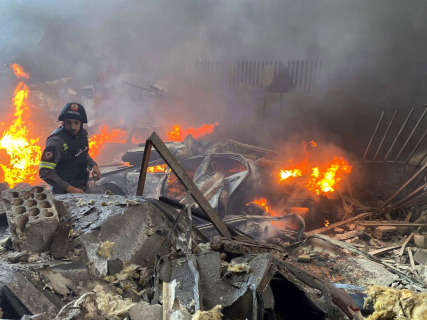
The clash of positions occurs on a day marked by the intensification of the conflict. According to the Lebanese Ministry of Health, the Israeli attacks on Wednesday left at least 303 dead, raising to nearly 1,900 the fatalities since March 2, with thousands wounded and wide areas devastated in its largest wave of attacks since the start of the war.
In this context, the Iranian supreme leader, Mojtaba Jamenei, has warned that the management of the Strait of Hormuz “will enter a new phase”, in what is interpreted as a strategic warning about one of the key points of global energy trade.
Diplomacy versus confrontation
Meanwhile, the international community insists on the diplomatic path. From the UN, Secretary-General António Guterres has backed the negotiations, while recalling that “there is no military solution” to the conflict.
However, the positions on the ground remain far apart. Israel maintains its military pressure on Hezbollah, which it considers a direct threat, while the Shiite group and its allies condition any dialogue on an immediate cessation of hostilities.
The result is a scenario of high uncertainty, in which negotiation attempts coexist with a military escalation that continues to increase the number of victims and the risk of a broader regional conflict.