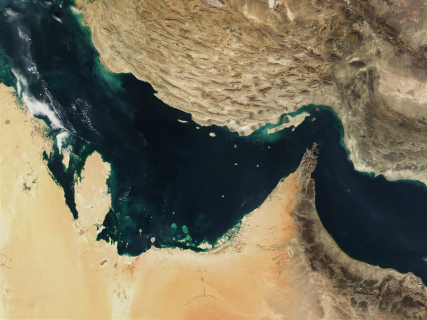

Hours after the announcement of a ceasefire between the United States and Iran, Tehran announced this Wednesday that it is closing again the Strait of Hormuz, one of the most important maritime routes in the world, as direct retaliation for the continuation of Israeli attacks on Lebanon.
Iran had already accused throughout today Israel of violating the ceasefire agreed with the United States through simultaneous attacks against Iranian and Lebanese territory, going so far as to threaten even to block the free navigation of ships through Hormuz, one of the key commitments of the ceasefire agreement announced in the early hours of this morning.
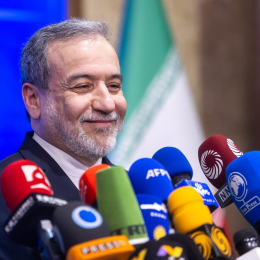
Trump says that Lebanon "is not included" in the agreement
The American president, Donald Trump, has affirmed that Lebanon “is not included” in the ceasefire agreement with Iran, despite the fact that Tehran indeed has introduced that scenario into the regional security equation.
In statements to the network PBS, Trump has explained that the Lebanese situation is “separate” from the Iranian one due to the presence of the Shiite militia Hezbollah, which had resumed attacks against Israel in retaliation for previous bombings on Iran.
Around 90 people have lost their lives and more than 700 have been injured this Wednesday in Lebanon following the latest series of bombings carried out by Israel, according to Lebanese authorities. These attacks occur after the Israeli Army claimed to have executed its "largest attack" against alleged targets of the Shiite party-militia Hezbollah since the beginning of the offensive against the country. For its part, according to Reuters agency, Hezbollah has reaffirmed its "right to respond" to Israel's attacks against Lebanon.
The pro-Iranian Shiite group says that the Israeli offensive will only strengthen the determination to resist and confront the "enemy",
The Lebanese Minister of Health, Rakan Nasereldín, has updated the toll to 89 dead and 722 injured in statements to the television channel LBCI News, although he has stressed that these are preliminary figures that could increase in the coming hours.
Israel says its objective is "to strike Hezbollah"
For its part, Israel's Ministry of Foreign Affairs has responded to the Lebanese authorities, assuring that the new offensive aims to strike the Shiite party-militia Hezbollah given the lack of action by the Lebanese leaders, in an attempt to legitimize the most intense campaign so far on Beirut and the south of the country.
“The president and the prime minister of Lebanon have no shame in attacking Israel for doing what they should have done: strike Hezbollah,” the Israeli Foreign Ministry has pointed out in a message in which it denounces that Beirut “does not offer apologies” for the thousands of attacks against Israel but “comes with demands.”
“It's time to start acting against Hezbollah. With deeds, not with words. And if you are unable to do so, at least don't stand in the way”.
Along these lines, Foreign Affairs has stressed that Lebanon did not proceed with the disarmament of Hezbollah nor did it take measures to stop aggressions against Israeli territory. “They lied when they claimed they had demilitarized the area up to the Litani. Now we must do it instead”, the Ministry has stated, thus presenting the continued attacks against Lebanon despite the agreement.
The reopening of Hormuz, determining condition for the ceasefire
The reopening of the Strait of Hormuz has been placed at the center of the temporary ceasefire agreement between the United States and Iran, to the point of becoming one of the determining conditions for its entry into force. Washington had explicitly linked the military pause to the guarantee of free navigation in this strategic passage, through which a substantial part of the world's oil trade transits.
The agreement reached contemplates the suspension of attacks for two weeks by the US in exchange for Tehran ensuring unimpeded maritime transit in the area. In this context, the reopening of Hormuz did not act as an accessory element, but as the operational axis that sustained the truce and reduced immediate pressure on energy markets.
In the ceasefire is also included the commitment to move towards a negotiated solution in the short term and the involvement of international actors to guarantee its compliance.
However, security in Hormuz emerged as the most tangible and verifiable factor of the pact. Tehran's decision to close the strait again now calls into question an agreement that has not even been active for 24 hours.