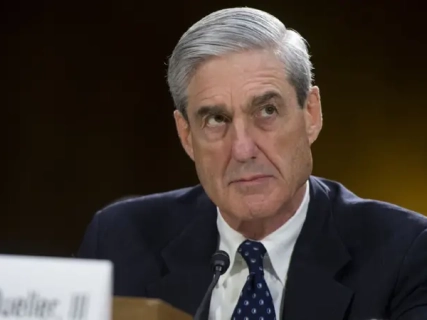

A central figure in U.S. security and politics
Robert S. Mueller was for decades one of the most respected names of the American security apparatus.
He led the FBI between 2001 and 2013, a period marked by the September 11 attacks and the transformation of the national security model in the United States. His leadership was key in the reorganization of the agency in a context of global threat and structural changes.
Before that, he had developed a long career as a federal prosecutor and head of the Department of Justice.
The prosecutor who investigated Trump
His name returned to the center of the political debate in 2017, when he was appointed special prosecutor to investigate the possible interference of Russia in the 2016 presidential elections and the links with Donald Trump's campaign.
For almost two years, Mueller's investigation dominated the political agenda in Washington.
The final report, published in 2019, concluded that Russia had intervened in the electoral process, but a criminal conspiracy between the Trump campaign and Moscow could not be proven although it left open the question of obstruction of justice
Trump: “I am glad that he is dead”
The death of Robert Mueller has also provoked immediate political reactions in the United States, and one of the most commented has been that of former President Donald Trump.
President Trump celebrates the passing of former FBI Director and Special Counsel Bob Mueller. pic.twitter.com/txFAs5XKNA
— Yashar Ali 🐘 (@yashar) March 21, 2026
In a message published on his social network, Trump stated: “Robert Mueller just died. Good, I'm glad he's dead. He can no longer harm innocent people.”
The political confrontation that marked the relationship between both for years clearly leaves its mark on the current president, with an investigation that kept the Trump presidency under pressure and that became one of the axes of political polarization in the United States.
A discreet profile in the epicenter of power
Unlike other high-profile figures, Mueller always maintained a sober style and away from the media spotlight.
He did not grant interviews, avoided unnecessary public statements, and projected an image of a classic official: technical, institutional, and reserved.
That way of acting reinforced its credibility at a time when trust in institutions was under pressure.
⸻
From the 9/11 attacks to the Trump era
His career summarizes two key decades of recent United States history.
• After 9/11, he led the FBI's adaptation to the fight against terrorism
• During Trump's presidency, he became the symbol of judicial independence against political power
In both cases, his role was linked to moments of maximum institutional tension.