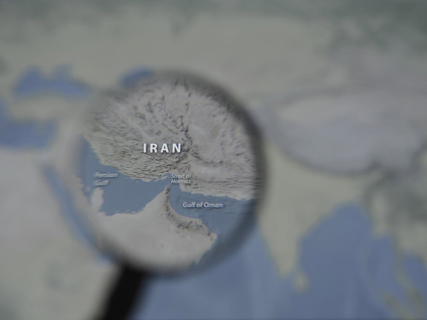

Amidst growing tension in the Middle East, Saudi Arabia has activated one of its main strategic tools: the east-west pipeline that connects its oil fields with the Red Sea, avoiding passage through the Strait of Hormuz.
According to information released in recent hours and based on data collected by Bloomberg, the infrastructure is already operating at its maximum capacity, around 7 million barrels per day. It is not a minor technical adjustment. It is a clear geopolitical signal.
The message is direct: if Hormuz becomes a point of blockade or conflict, Saudi Arabia has a real alternative to maintain the flow of oil to international markets.
Ormuz, the bottleneck that threatens the world
The Strait of Hormuz is one of the most sensitive points on the planet. Approximately one-fifth of the world's oil passes through it. Any interruption has an immediate impact on prices, supply chains, and global economic stability.
In recent weeks, the risk has increased. The escalation between Iran, Israel, and their allies has reactivated fears of a possible closure or attacks in the area. And that's where the Saudi decision comes into play.
Activating to the maximum the oil pipeline that bypasses Hormuz is a way to reduce dependence on a passage that today is at the center of military tension.
A movement that changes the energy balance
The infrastructure, known as the East-West pipeline, allows transporting crude from the Persian Gulf to the Red Sea, where it can be exported without needing to cross high-risk zones.
That it is now operating at full capacity implies several things at the same time: that Saudi Arabia anticipates more complex scenarios in the region, that it seeks to guarantee energy supply even in case of interruptions in Hormuz and also manages to send a message to the market that there is room for maneuver.