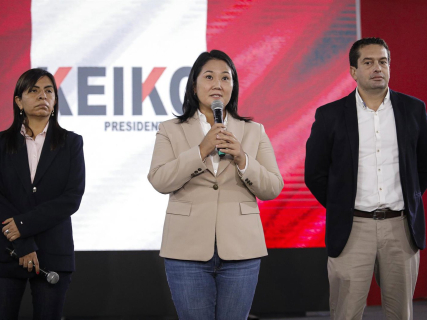

The candidate of Fuerza Popular (FP) and veteran candidate for the Presidency of Peru, Keiko Fujimori, leads the voting intention with 14.5% support for this Sunday's elections, according to the most recent polls released in the country.
Daughter of former president Alberto Fujimori, the leader of Fuerza Popular is shaping up as the best positioned in a contest marked by a strong dispersion of the vote, in which the electorate will have to choose among 35 candidates, an unprecedented scenario in the agitated political life of the Andean country.
The high number of candidates has caused the undecided to represent close to a third of the census. Around nine million citizens are still not clear who they will support at the polls this Sunday. The only sure thing is that no contender will reach an absolute majority, so the country is heading for a second round on June 7.
In second place of preference appears Carlos Álvarez, standard-bearer of the also conservative Country for All, known television presenter for his imitations in humor spaces, who has registered a notable advance until reaching 10.9% of the voting intention.
This momentum contrasts with the brake experienced by Rafael López Aliaga, former mayor of Lima and candidate for Renovación Popular, who remains at 9.9% support, after having surpassed 13% at some points, according to the latest study by the pollster Datum for the newspaper "El Comercio".
The other polls released in the last hours, before the electoral silence period foreseen by Peruvian regulations comes into effect this Monday, agree in clearly placing Fujimori in first position, followed by these two candidates, separated from each other by only a few tenths.
With this panorama, the next head of the Peruvian State will again govern without a majority in Parliament, a situation that repeats itself since 2016 and that anticipates obstacles to carry out his program.
On this occasion, it will have to face a bicameral Congress, since in these elections the Senate, suppressed in the 1990s, is reinstated. The new Chamber will be less atomized than in previous cycles due to the tightening of representation requirements, which could leave millions of voters without a voice.