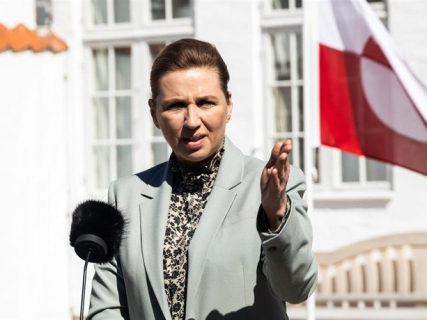

The Social Democratic Party of Denmark has won the legislative elections held this Tuesday in Denmark, according to exit polls, in elections marked by the surge in support for Prime Minister Mette Frederiksen after her confrontation with the American president, Donald Trump, over Greenland.
The social democratic party would have obtained between 19% and 21% of the votes, placing itself clearly ahead of its rivals, although without a sufficient majority to govern alone. Frederiksen will now be forced to negotiate support to remain in power.
The crisis of Greenland boosts Frederiksen
The early election, decided in February, sought to capitalize on the increase in popularity of the prime minister after her firm response to Trump's threats to take control of Greenland.
Although the victory is clear, the social democrats are heading towards their worst result since 1901, far from the 27.5% achieved in 2022. Even so, Frederiksen consolidates her position as one of the key figures of European social democracy.
The center is once again decisive
The polls indicate that the left-wing bloc will add between 83 and 86 seats, compared to the 75-78 of the right-wing bloc. In this scenario, the role of Lars Løkke Rasmussen, leader of The Moderates, will be decisive.
His party, with between 13 and 14 deputies, is positioned as arbiter of the legislature. Rasmussen has already made it clear that he will negotiate with all forces to facilitate the formation of a Government.
The right fragments
The conservative bloc arrives weakened. The Liberal Party, led by Troels Lund Poulsen, plummets to around 10%, in what could be its worst historical result.
For its part, the Liberal Alliance of Denmark emerges as the main force of the right, consolidating a change in internal leadership in the conservative bloc.
Open negotiations to form Government
Frederiksen, in power since 2019, now faces a complex scenario. After having governed both with the left and in an unprecedented center coalition, the prime minister avoids closing doors and opts for cross-cutting formulas.
With a fragmented Parliament and the center as key, Denmark is heading towards weeks of intense negotiations that will decide if Frederiksen manages to renew the mandate or if a new political stage opens in the Nordic country.