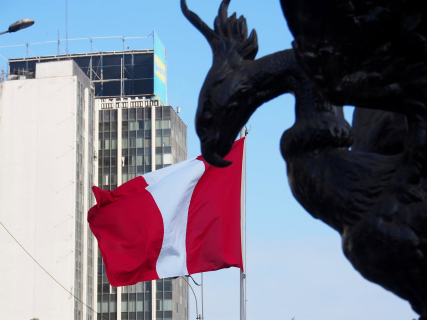

A few days before the Peruvian presidential elections of April 12, 2026, the political landscape reflects a deep fragmentation and enormous uncertainty among voters. According to the most recent polls, published before the mandatory electoral silence comes into effect, three candidacies emerge strongly, although none with clear options to win in the first round, opening the door to a runoff on June 7.
Keiko Fujimori, daughter of Alberto Fujimori
At the forefront of preferences is Keiko Fujimori, leader of Fuerza Popular (FP) and a political figure known in Peru for decades for her role in the public scene and her family ties with former president Alberto Fujimori. With around 14.5% of voting intention, Fujimori leads the polls in a context dominated by electoral dispersion and a divided electorate.
Her/His candidacy capitalizes on part of the conservative vote and of those who seek order and continuity, although she/he also faces the rejection of a significant sector of citizens critical of the Fujimorist legacy.
Carlos Álvarez, flag-bearer of País para Todos
Behind Fujimori, the television presenter turned politician Carlos Álvarez, standard-bearer of Country for All, has experienced a notable advance in the polls, standing at around 10% support. Álvarez represents an alternative with a greater media profile than traditional politician, attracting voters disillusioned with classic parties and offering a pragmatic discourse that seeks to connect with broad sectors of the electorate.
Rafael López Aliaga, candidate of Renovación Popular
In third place is Rafael López Aliaga, former mayor of Lima and candidate of Renovación Popular, with around 9.9% of support. Although in previous moments of the campaign he managed to exceed 13%, the latest measurements show a slowdown in his support, a reflection of the volatility of the contest and the intense competition for conservative votes.
The high number of aspirants, 35 candidates in total, has had an evident impact on the clarity of the electoral map. Close to one third of the electorate declares itself undecided, according to surveys, which confirms the existence of a broad sector of voters without a defined preference a few days before the appointment with the polls.
This situation makes it foreseeable that no candidate will obtain the absolute majority necessary to be proclaimed president in the first round, which is why the country is almost certainly heading to a second round on June 7, with a very open scenario to define alliances and strategies.
Other candidates
The other candidates have also sought to position themselves in different areas of the political spectrum. Figures like Alfonso López Chau (Now Nation) and Jorge Nieto (Party of Good Government) have garnered some attention for their moderate profiles and public management proposals, while progressive forces like Juntos por el Perú, with Roberto Sánchez at the helm, seek to consolidate support linked to social and rights issues.
In addition to the presidential struggle, the new bicameral Congress —formed after the restitution of the Senate, suppressed since the 1990s— will also play a decisive role in the next political stage. Although it is expected that the restored chamber will be less fragmented than in previous processes, changes in representation requirements could exclude sectors that previously had parliamentary voice, modifying the correlation of political forces in Lima.