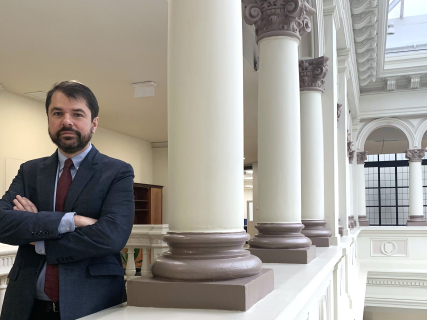

Q: What are the main conclusions of the study?
A: One of the main ideas is that SMEs are a key element for markets in Spain and that is why the CNMC has them as a priority. We try to identify what obstacles SMEs face and propose measures to overcome them.
We focus on three areas: the creation of companies, their growth, and access to public procurement. The objective is to eliminate every obstacle that reduces the possibilities for SMEs to develop their potential and grow. There are good international examples of companies that years ago were SMEs and today are world leaders.
Q: In what sense do your proposals go?
R: In fostering more administrative coordination and more market building, both at a Spanish level and at a European level. We advocate for a simplification of procedures whenever possible and we believe it is fundamental to carry out a comprehensive in-depth reform of public procurement to make it as accessible as possible.
"The first barrier of SMEs in public procurement is to find out that there is a tender"
Q: In public procurement, it is striking that the law was approved in 2017 with the objective of facilitating tenders for SMEs. What is it that has not worked?
R: Public procurement is very important, due to its economic weight, its relevance for public coffers and the functioning of public services and markets. It is fundamental that it functions competitively and efficiently. And SMEs are key for there to be more offers and to achieve the best possible results.
"When they bid for tenders, SMEs have success rates comparable to those of other EU countries. But fewer bid"
We have observed that SMEs, when they apply, have quite reasonable success rates, comparable to those they obtain in other European Union countries. SMEs are competitive and are capable of winning tenders, but we are lagging behind in their participation. They apply less than in other countries. We need to reflect on how we can make it easier for more of them to apply. This is what has concerned us.
Furthermore, now is a good time to propose reforms, because a reform of the procurement directives at a European level is being proposed and there may be a window of opportunity when it comes to applying these directives in Spain.
Q: The study emphasizes improving information. That is not a matter of reforms, but of the publicity of the tenders or of the functioning of the concentration platforms…
R: We emphasize the importance of transparency in terms of the quantity and quality of information. We also propose reforms to simplify tender documents and facilitate their understanding. We also propose specific training on public procurement to break that initial barrier of where to look for information.
Many SMEs do not access public procurement because they are not even aware nor do they follow up. Planning can also help with indicative calendars, or what are the procurement prospects of each administration on the platforms.
The first barrier that SMEs have is to find out that there is a tender, how one can apply, where one can access, and in that there is still work to be done.
Q: Excessive or disproportionate requirements that hinder the access of these companies are detected. Can measures be established to prevent it?
A: Many times these requirements are essential and are well-conceived to guarantee a certain quality or execution capacity, but in other cases they can be excessive. We recommend that they be the minimum essential. Let's not ask for an enormous capacity for something a small company can do.
"Opening procurement to more companies encourages better prices. The Administration should be the first interested party"
It is also interesting to divide contracts into smaller lots. Opening procurement to more companies encourages more offers and better prices. The Administration should be the first interested party in setting the necessary requirements, but not beyond.
Q: Is there not an obligation of division of lots in the law?
The law establishes as a general rule the division into lots, unless it is justified taking into account specific circumstances of the contract that are sufficiently motivated. Not dividing into lots should be the exception. What we recommend to administrations is that they apply it as much as possible.
Q: What are the most frequent excessive requirements?
R: They tend to be solvent and experienced. Profit and loss statements are requested from companies that SMEs sometimes cannot meet. Or have twenty years of experience. Only large companies have access. There is discrimination there. For a very large project it may make sense, but there are other contracts that do not require it. This often leads, in many cases, to the subcontracting of SMEs in tenders. That is why we recommend that the experience SMEs gain through subcontracting be recognized for subsequent tenders.
Q: Regarding the growth of SMEs, the CNMC emphasizes the so-called 'step effect'. What does it translate into? What are the barriers that can hinder that increase in size?
R: Many regulations increase requirements and demands when companies cross certain thresholds, such as having 50 employees, but others exist. Many are positive because they seek to reduce burdens for SMEs, but they can disincentivize growth by not wanting to assume greater burdens. Whenever possible, these obligations must be modulated so that they are not the same for a large company. And propose transitions so that the change is smoother. Not only taking into account a specific cut-off point but an average over recent years and also adaptation periods so that, upon exceeding the threshold, there is a series of years to develop the requirements.
P: If I'm not mistaken, they talk about accounting regulations and union representation.
R: And of auditing. There are many obligations of all kinds and in many cases it may make sense not to demand the same accounting requirements or information from a company with two employees than from another with thousands of employees, but if one imposes this step many companies will not see a step but a wall. They will stay still, they will not grow more and we will have an economy with smaller companies.
Q: Another of the things that the study points out is late payment, a recurring problem for SMEs. Does the CNMC defend the imposition of sanctions?
R: When the defaulter is not penalized, the company that is not collecting is penalized, and this chokes many companies, and in particular SMEs that have less financial muscle to withstand defaults. It is an important economic problem that companies with a lot of productivity and potential close due to third-party default problems.
"We propose to evaluate sanctions for repeat defaulters and to establish the collection of interest automatically"
It may be interesting to assess sanctions for those who repeatedly default and establish the automatic collection of interest. In situations of late payment, interest is not usually paid. Companies want to collect and accept any payment without claiming late payment interest. It may be positive to encourage companies to claim not only the payment, but also the interest. Right now it is uncommon and measures can be taken to automatically recognize that, if you pay late, you pay with interest.
Q: The CNMC also criticizes an excess of administrative burden and asks to extend responsible declarations. Does it hinder the activity of SMEs so much? In recent years, progress has been made, for example, in creating a company.
R: There have been many advances but progress can continue to be made to foster greater administrative coordination and limit the fragmentation of regulations between administrations. Many are inevitable but there are others that can be coordinated more if there is willingness. For example, Regime 20 has launched projects such as the ordinance on 'standard ordinances' for retail trade. A support tool for city councils that, if they do not have a specific reason, can approve their ordinance based on a model to coordinate with many other city councils and prevent companies from having to adapt to different regulations. Generally, SMEs have little administrative capacity, such that small barriers can be a significant disincentive.
We also advocate extending the application of the 'only once' principle so that the company does not have to deliver a document again or carry out a procedure with the Administration. There are many tools for coordination between administrations and allowing the consultation of documents among them, freeing companies from this burden.
Q: A proposal that is in the political debate is to facilitate or incentivize concentrations. Can it pose a risk for competition?
A: A positive approach would be to further integrate markets at a Spanish level and at a European level. Part of the concentration problem is linked to market size.
A national market limits the possibilities of growth and competitiveness of companies at an international level. It is easier for a company to have a dominant position in small national markets than at a European level. That companies grow is not negative in itself, but better if it is linked to large market sizes. The first step to building a market with larger companies is to integrate markets, which foster competition and a size of companies as large as they themselves are capable of growing.
Q: You allude in the study to the large number of financing mechanisms that exist. What is your diagnosis of the financing mechanisms that exist? Do you believe it is necessary to reinforce these instruments?
A: We do not do a concrete analysis of the financing, but we do talk about the public support mechanisms that exist, their design and quantity. We propose rationalizing the public support system and an information repository that facilitates its access. The number of instruments complicates the process for companies. Each institution has its own instruments, with different requirements, with different deadlines...
"We defend the principle of 'only once' so that the company does not have to deliver a document again"
Recently we did a study on aid for photovoltaic self-consumption, and we saw a lot of fragmentation in the aid, even at the same level of the Administration. This makes access difficult for those who have less management capacity and ultimately benefits the largest companies.
Regarding public aid, we are concerned that they are designed in a pro-competitive and efficient manner so that they do not unnecessarily distort the market, that the procedures are easy and are received promptly. When they are slow to be received it can be a disincentive for companies with less financing capacity.
Q: Have you identified the sectors where there are more competition problems or where problems for SMEs are greater?
A: In the case of SMEs, it is a cross-cutting study, where the recommendations affect a large number of sectors. At the CNMC, we already do a lot of sectoral analysis, because many of the barriers to the proper functioning of markets are in specific sector regulations. There are analyses of countless sectors with their recommendations. In recent years, for example, of the transport sector, such as intercity buses, ports, or driving schools. We have on recycling and waste management, or online advertising. Now we are working on electric vehicle charging infrastructures, cloud services, or land for housing.
Q: Is the focus of this latest study on housing on regulation and administrative procedures or on the behavior of companies in the sector?
R: It is an analysis focused on all the procedures and barriers that may exist for a rural land to be transformed into urbanized land on which to build housing. There are an infinity of requirements, norms, and interventions that can be improved to give a more agile and efficient response and accelerate the process. We are talking about deadlines of ten years or more from when the decision is made to urbanize the land until it is urbanized.
Q: Regarding the charging points, what catches your attention?
A: We analyze the challenges that there may be to develop this network in Spain and facilitate that there may be an extension of the electric vehicle.
We analyze problems that may exist in permits and licenses, in the installation of the point itself and those related to the connection to the electrical grid. Also issues related to the information and facilities that consumers receive about the availability of points or the interoperability of payment methods, for example.
Q: Following the Iran War, the Government has requested the CNMC to intensify market supervision of markets, especially in the distribution and commercialization of fuels, in which prices have skyrocketed since the first day the conflict began. What diagnosis do you make?
R: The CNMC effectively has powers in market supervision, including hydrocarbons, and we also collaborate closely with other institutions that also have powers in this area. We are closely following the sector, to monitor the situation and analyze what is happening, after this very strong shock that has occurred in energy starting two or three weeks ago, when the crisis and the war in Iran began.
"The CNMC monitors the hydrocarbon markets and, if a problem is identified, we have powers to act"
We believe that an important aspect, we are already taking initiatives in that regard, is transparency, and that is why the CNMC has recently published a new tool to inform consumers about the price of gasoline by product and by municipality in Spain, in such a way that consumers can have better information that helps them choose better, this will generate more competitive pressure and will help to contain the rise in prices. In any case, in our supervisory work, we are following the matter very closely.
Q: I understand from the answer that it is more a matter of information for consumer choice. If the increase is very sharp because there is a lack of competition, how can the CNMC act?
R: The transparency aspect is very important, because this way consumers can go to places where there are better offers and generate competitive pressure so that the most expensive supplies have to lower their prices. But also in the event that there are anti-competitive behaviors and they are identified, the CNMC has powers to act, and that is why markets are monitored and, if a problem is identified, there are powers to act.
Q: Are the instruments to act sufficient? Do you think more skills or resources are needed?
R: The CNMC generally has quite broad powers regarding the regulation and supervision of markets. We supervise anti-competitive conduct, control concentrations, and have the capacity to challenge regulations or administrative acts that are anti-competitive. We also make proposals and have advisory functions. The powers are quite broad.
It is true that in recent times they have endowed us with more powers and it is always good that it comes accompanied by the necessary resources. In case of market supervision, the CNMC has sufficient tools for its monitoring.