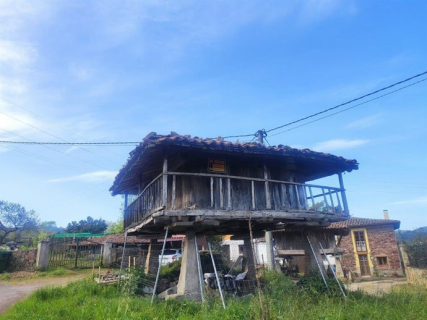
The Council of Ministers has approved this Tuesday the declaration of the hórreos of northern Spain as a representative manifestation of intangible cultural heritage, the highest level of state protection for this type of assets. The measure, promoted by the Ministry of Culture, is articulated through a royal decree that recognizes not only their architectural value, but also their social, historical, and symbolic dimension.
The decision affects the hórreos, paneras, and cabazos present in communities such as Galicia, Asturias, Cantabria, Castile and León, Basque Country and Navarre, where these traditional constructions continue to be part of the landscape and rural practices.
Protection beyond architecture
The declaration represents a change in approach regarding the protection existing until now. Although many hórreos already had protection as material assets, the Government takes a step further by recognizing the so-called “hórreo culture”.
This recognition implies protecting not only the physical structure, but also the traditional knowledge associated with its construction, the social uses that they have historically had, and its role as an element of collective identity in the rural environment.
Safeguard measures and generational transmission
The royal decree obliges public administrations to promote specific measures to guarantee the conservation and transmission of this heritage. Among them, initiatives aimed at stand out:
- preserve traditional construction techniques
- promote the use and maintenance of these structures
- prevent their abandonment or deterioration
- reinforce their transmission to new generations
The objective is to avoid that these elements remain reduced to vestiges of the past and ensure their continuity as part of a living culture.
A symbol of identity and rural memory
From the Ministry of Culture, it is highlighted that hórreos are much more than constructions intended for food storage. They are considered spaces linked to traditional ways of life and to the social organization of rural communities.
Their recognition as intangible cultural heritage places them in the category of assets that represent practices, knowledge, and values transmitted from generation to generation, reinforcing their role as a symbol of territorial identity.
what is intangible cultural heritage
Ministerial Order
Intangible cultural heritage encompasses traditions, expressions, knowledge, and techniques that communities recognize as part of their cultural heritage. Unlike tangible heritage, its protection does not focus solely on objects, but on the uses and meanings these have for society.
With this declaration, the Government incorporates hórreos into this protection framework, in line with international safeguarding policies promoted by organizations such as UNESCO.