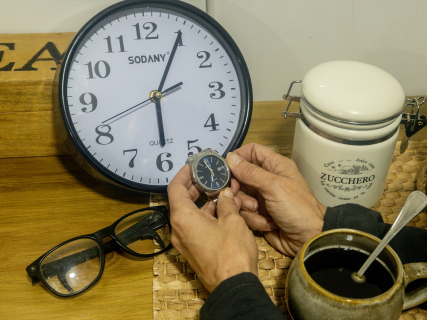

In the early hours of this Saturday to Sunday, Spain once again moves the clocks forward and enters daylight saving time. At 2:00 it will be 3:00 on the Peninsula (and at 1:00 it will be 2:00 in the Canary Islands), which will mean one less hour of sleep, but days with more light in the afternoon. This change has been applied regularly for more than 50 years and marks the beginning of a period in which dawn and dusk progressively later.
Majority in favor, but with growing debate
Daylight saving time continues to have citizen support: 66% of Spaniards prefer it over winter time, according to the CIS. However, this preference coexists with an increasingly critical perception of the time change itself.
In fact, 67% of the population is in favor of eliminating the alternation between both schedules, which shows that the debate is no longer so much about which schedule to choose, but whether or not to maintain the current system.
The experts bet on winter time
Contrary to the majority opinion, health specialists have a clear stance. Entities such as the Spanish Sleep Society (SES) and the Spanish Association of Pediatrics defend that winter time is more beneficial for the body, by adjusting better to the natural light cycle.
According to the SES, this schedule favors a more stable biological rhythm, improves cognitive performance and can contribute to reducing problems such as insomnia, obesity, depression or cardiovascular diseases.
The impact on the biological clock
The time change directly affects the circadian rhythm, the internal clock that regulates essential functions such as sleep, hormone release, or digestion.
Experts point out that adaptation can take up to five days, as the body needs to readjust to the new light schedules. Light is, in fact, the main factor that synchronizes this biological system.
Greater exposure to light at the end of the day delays the production of melatonin, the sleep hormone, which can cause insomnia, fatigue or feeling of tiredness, especially in certain groups.
Children and older people, the most affected
The impact is not the same for everyone. School-aged children and older people are the most vulnerable groups.
In the case of minors, it is recommended to sleep around 10 or 11 hours, but with daylight saving time in many areas it is still daytime when they should go to bed, which makes rest difficult. Furthermore, their circadian system is less mature, which complicates adaptation.
For their part, older people present lower capacity for adaptation to changes, which can affect their rest and their general state of health.
To facilitate the transition, specialists advise progressively advancing routines —such as meals, exercise, or bedtime— between 15 and 20 minutes in the previous days.
A debate linked to the time zone
The time change has also reopened the debate about the time zone in Spain. Currently, the country uses Central European Time, despite the fact that due to its geographical position, Western European Time would correspond to it, like Portugal.
This difference causes a greater mismatch between the official time and the solar cycle, something that many experts consider inappropriate for lifestyle habits and rest.
Europe fails to reach an agreement
Although the debate has been on the table for years, the European Union has not managed to reach a consensus on the end of daylight saving time. In 2019, the European Parliament approved eliminating it, but the Member States did not reach an agreement on which time to adopt permanently.
To modify the current system, the support of at least 15 countries representing 65% of the EU population is required, something that until now has not been achieved.
The Spanish Government has shown on several occasions its intention to abolish the change, arguing that its impact on energy saving is limited and its effects on health can be negative, but the final decision depends on the European framework.
A system inherited from the oil crisis
The origin of daylight saving time dates back to the 70s, when many European countries adopted it to reduce energy consumption during the oil crisis, adjusting daily activity to the hours of natural light.
Subsequently, in 2001, a European directive harmonized its application in all member states. However, over time, the argument of energy saving has lost weight, while the effects on health and well-being have gained relevance.
A change that will continue, at least, until 2031
In the absence of political agreement, the system remains. According to the European Commission's calendar, time changes will continue at least until 2031.
The next adjustment will take place on Sunday, October 25, when winter time will be returned to. Until then, Spain faces months with more hours of light in the afternoon, but also with an open debate that, for now, remains unresolved.