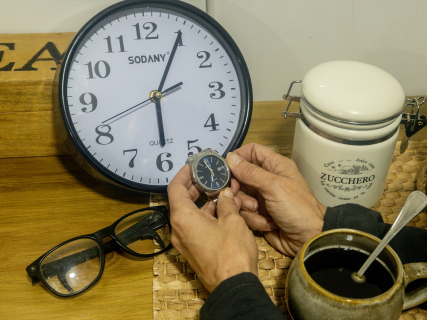

With the arrival of spring in Spain, the start of the countdown for the time change is marked, a process that, although already part of the annual routine, continues to be a topic of debate and confusion for many citizens. On March 29, in the early hours of the morning, clocks will be moved forward one hour, thus entering daylight saving time, a time zone that, according to various surveys, most Spaniards prefer. This time change, which occurs twice a year, will be repeated in October, when clocks will return to winter time. In the digital age, this adjustment is made automatically on many devices, but doubts still persist among citizens about how to proceed.
A questioned tradition
The big question remains whether it is time to move the clock forward or backward, a question that, despite being answered almost automatically by many, continues to be an unknown, especially among new generations, accustomed to their electronic devices making this adjustment for them. Thus, when Spain enters daylight saving time, the clock moves forward, making March 29 a 23-hour day, since at 2:00 AM it will move forward one hour, marking 3:00 AM.
This adjustment has been carried out with the aim of adapting the working days to the hours of natural light and, in principle, to promote energy saving. However, the time change has been under the spotlight of discussion in recent years, especially at a European level.
The debate on the elimination of time change
For the President of the Government, Pedro Sánchez, adjusting the time is no longer an imperative need. In fact, Spain was one of the countries that brought before the European Commission the proposal to abolish this time change, an initiative that, although supported by the majority of European parliamentarians, has generated another debate around whether, if abolished, one should opt for the summer time or for the winter time permanently.
This dichotomy is what seems to be holding back, for the moment, the making of a definitive decision. While a large majority of Spaniards leans towards the summer time, arguing that it favors a greater amount of light during the afternoons and improving the quality of life, the experts suggest that the winter time could be more beneficial for health and general well-being.
This debate about the time change, which directly affects millions of citizens in Europe, continues to generate division among the political, economic, and scientific interests. The uncertainty about the future of this practice seems to remain, while, for the moment, each time change continues its course, adding another layer of complexity to the political and social agenda of the member countries of the European Union.