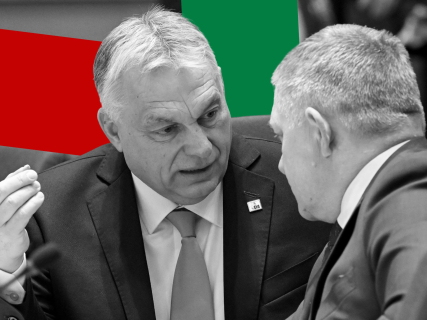

Politicians, officials, and analysts from all over the European continent are setting their eyes this Sunday on unique elections. After sixteen years of government of Prime Minister Viktor Orbán, Hungarians are called to the polls on a day that has more of a referendum on the European community project than of simple national elections. The electoral event transcends Hungary's borders and becomes a political thermometer for all of Europe. The latest published polls point to a possible political change in Budapest, but in Brussels they hold their breath until the count ends, aware that the result can alter key balances within the European Union.
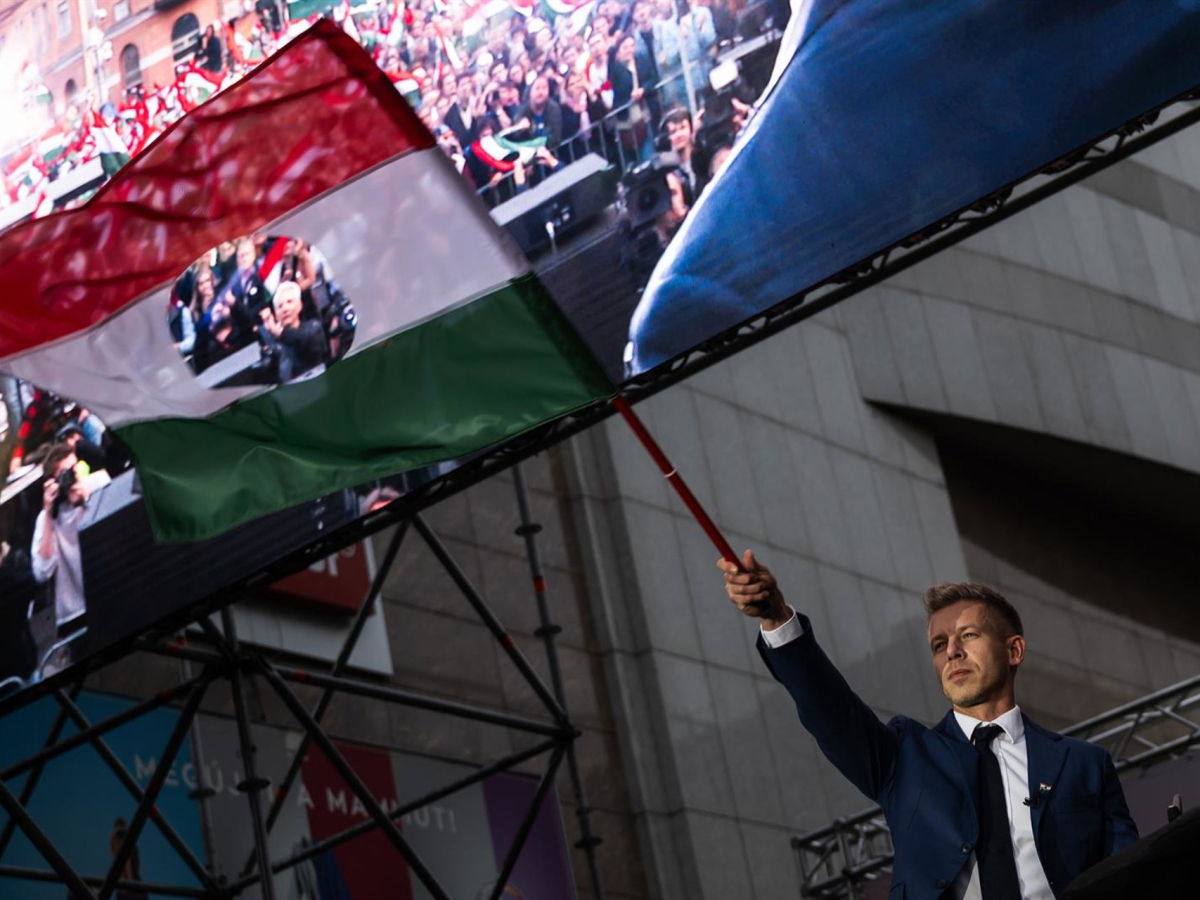
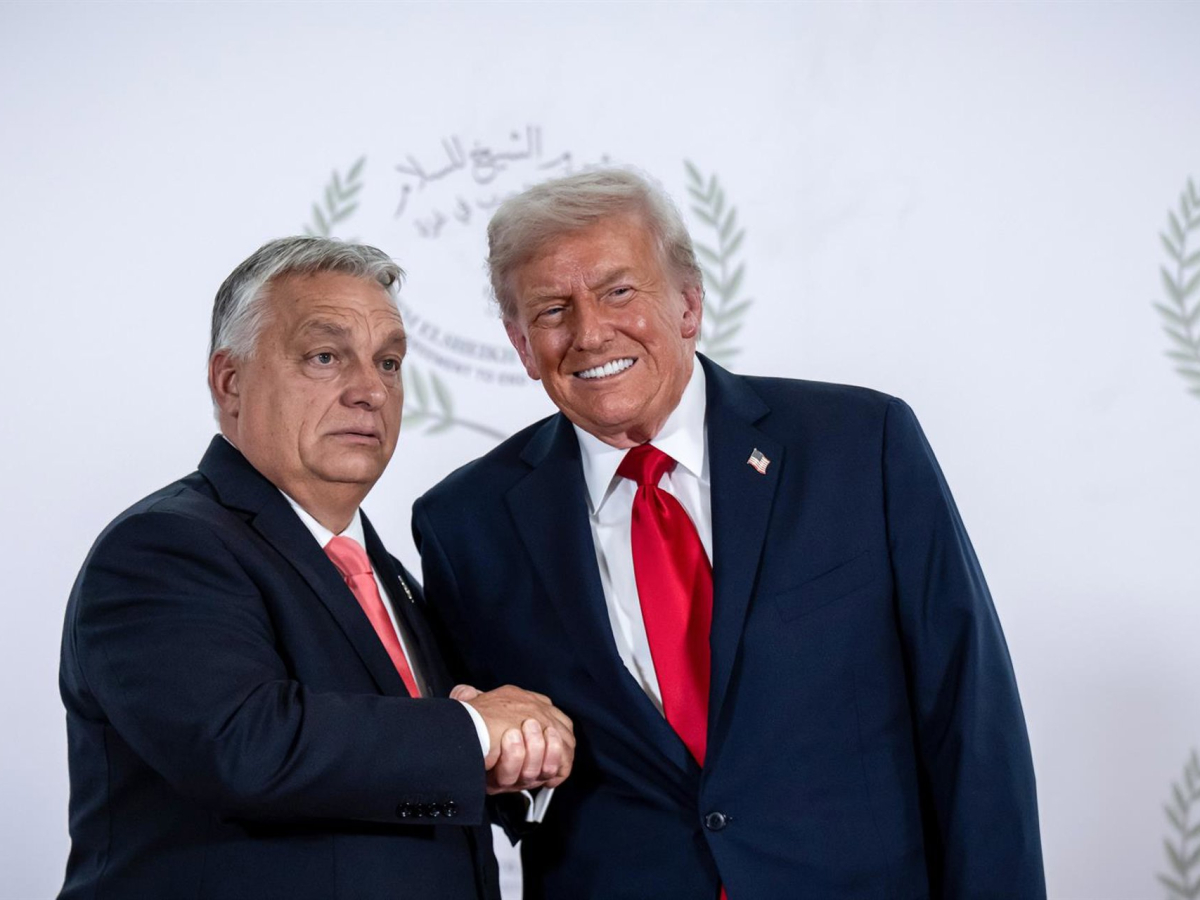
In the contest, two figures concentrate practically all political and media attention. On one side, the leader of Fidesz and current head of Government, Orbán, who has focused his electoral campaign on his constant criticisms of European institutions, which has consolidated him as the leader most distant from community consensus in recent years. To this is added a markedly conservative position in debates such as gender rights or immigration, all articulated under a strongly nationalist and sovereignist discourse. In front, the founder of TISZA, Péter Magyar, former member of the prime minister's political circle, who seeks to lead a unified opposition through an anti-corruption, regenerating, and pro-European message, although without abandoning an ideological position also conservative in some key aspects.
A rigged system?
Since his arrival to power in the year 2010, Orbán has carried out a profound transformation of the Hungarian political system with the aim of strengthening his position and that of his party. One of the most significant reforms was the reduction of the number of seats in Parliament, which went from 386 to 199, accompanied by a redesign of the electoral districts. This process, widely criticized by experts and international observers, had as its purpose to grant greater weight to rural areas, where Fidesz has more solid support, compared to denser urban areas with a greater inclination towards the opposition. As a direct consequence, the system allows the governing party to obtain greater parliamentary representation even with a smaller proportion of votes at the national level.
Furthermore, the reform of the electoral system introduced other elements that reinforce this structural advantage. The current mixed model combines single-member constituencies with proportional lists, but incorporates mechanisms that clearly benefit the winning party. Among them, the reallocation of the so-called “surplus votes” stands out, which in practice end up favoring the dominant party. This design implies that the opposition not only needs to win, but to do so with a significant advantage —greater than five points— to be able to translate that victory into an effective parliamentary majority.
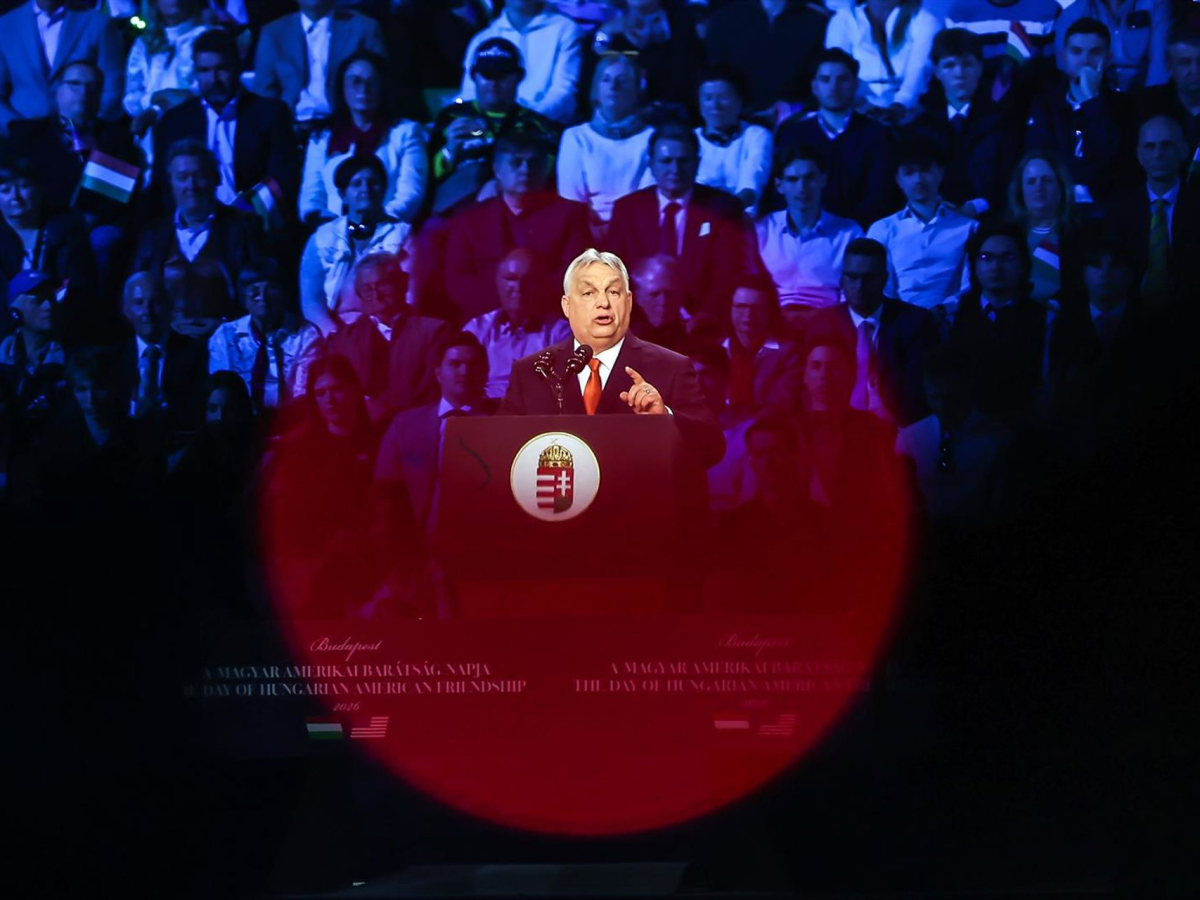
To this electoral architecture is added the institutional control that Orbán has consolidated for more than a decade. The prime minister has placed allies in key state bodies, such as the Constitutional Court, the Public Prosecutor's Office, the Central Bank, or the electoral authorities. Many of these positions have prolonged mandates, which in some cases reach ten or twelve years. This institutional framework implies that, even in the event of an electoral defeat, Fidesz would maintain considerable influence in the country's decision-making, limiting the room for maneuver of a potential alternative government.
The media ecosystem constitutes another of the fundamental pillars of this system. A significant part of the media is in the hands of businessmen close to the Government, which has generated a strong informational asymmetry. Without the need to resort to direct censorship mechanisms, this structure allows to amplify messages favorable to the Executive and reduce the visibility of the opposition, thus conditioning public debate and citizen perception.
The wear and tear of the Government
Along with the discourse against the “bureaucratic elites of Brussels”, a narrative that has been reinforced even by international allies, the other major axis of the campaign has been corruption. In recent years, various reports and complaints have revealed the existence of a network of oligarchs and businessmen close to power who have notably increased their wealth thanks to the awarding of public contracts. This phenomenon has fueled the perception of a clientelistic system in which state resources are distributed unequally, favoring circles close to the Government.
In this context, Péter Magyar has managed to capitalize on social discontent, using his past within the system to denounce its dysfunctions from within. His strategy has consisted of making the fight against corruption the central axis of his campaign, presenting himself as a figure capable of regenerating Hungarian political life and attracting both traditional opposition voters and disillusioned former Fidesz voters.
Featured story
Democracy does not fall, it wears out: The West begins to dangerously resemble what it criticized
7 minutes
To these political factors is added the economic wear and tear that the country has suffered in recent years. Hungary has registered one of the highest inflation rates in the European Union, with an accumulated price increase of over 40% since 2022. This phenomenon has had a direct impact on the daily lives of citizens, who have seen their purchasing power reduced. At the same time, economic growth has slowed down and foreign investment has been affected by political and economic uncertainty, which has contributed to eroding the image of stability that for years characterized the Orbán Government.
The current political scenario is also marked by the transformation of the opposition. After the failure of the opposition coalition in the 2022 elections, which ended deeply weakened, the emergence of TISZA has reconfigured the Hungarian political landscape. This new party has managed to consolidate itself as a dominant force within the opposition, bringing together voters of different ideological sensibilities —from the left to critical conservative sectors— and reducing the risk of fragmentation that had benefited Fidesz in the past.
If you blink you'll miss it
The National Assembly of Hungary plays a central role in this process. Not only is it responsible for electing the prime minister and controlling the government's actions, but it also has the capacity to modify the legislative framework and, in many cases, directly influence the functioning of other state institutions. The absolute majority stands at 100 seats, although Orbán has governed for years with a two-thirds supermajority, which has allowed him to carry out profound structural reforms, including the modification of the Constitution.
The electoral counting system adds an additional element of complexity. Hungary is divided into 106 single-member districts, where the most voted candidate obtains the seat, regardless of whether or not they reach an absolute majority. This model favors that small differences in votes translate into large differences in parliamentary representation. The remaining 93 seats are allocated through national proportional lists, using the D’Hondt system and with a minimum barrier of 5%.
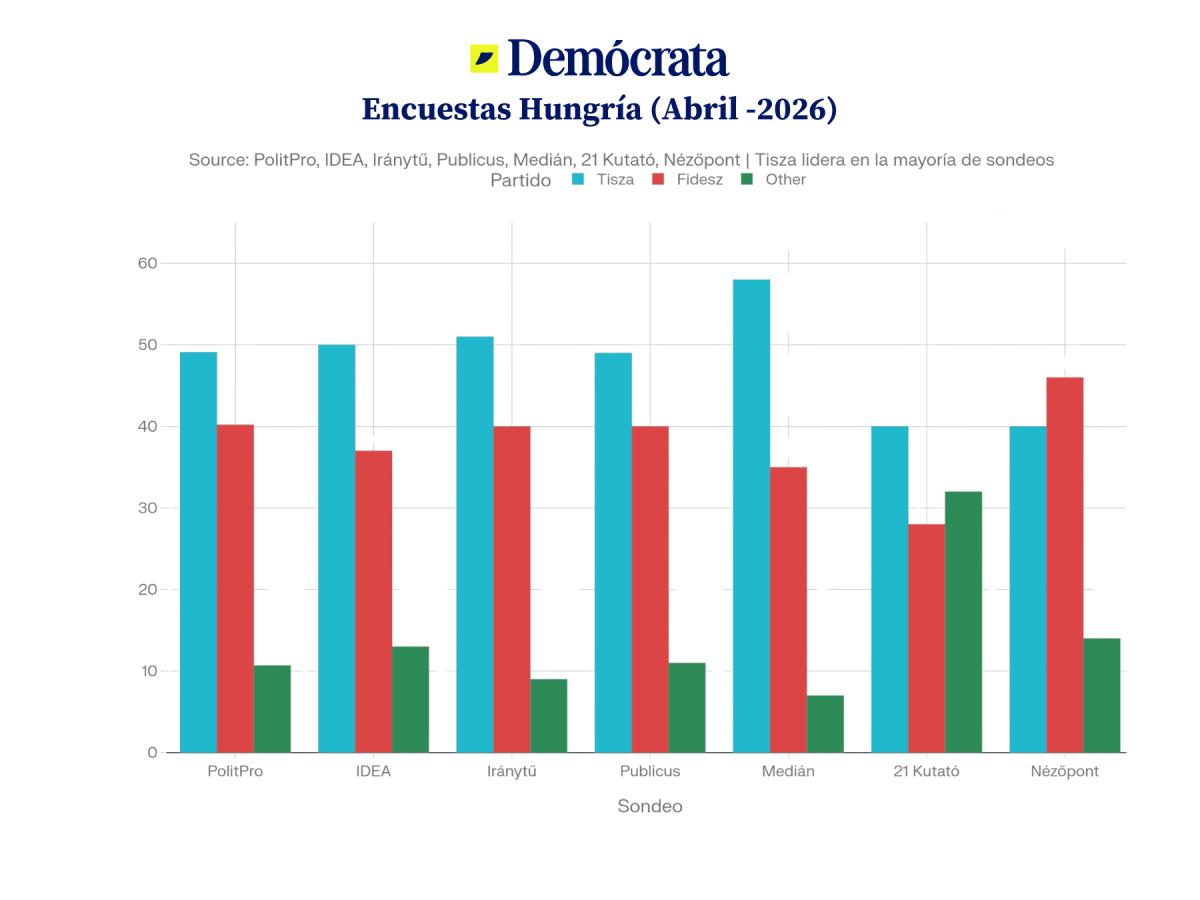
The latest polls paint a highly competitive scenario. The aggregated trend gives an advantage of approximately nine points to Magyar over Orbán. If these figures are confirmed, TISZA could reach around 104 deputies, surpassing the absolute majority, while Fidesz would remain with about 85 seats. However, the structure of the electoral system introduces a high degree of uncertainty, as a victory in votes does not necessarily guarantee a victory in seats.
The last bullet of Budapest?
Hungary faces elections that far transcend the national scope. It is not only about deciding who will govern during the coming years, but about determining the political, institutional, and European direction of the country. After more than a decade of hegemony, the model built by Viktor Orbán is subjected to its greatest test, in a context marked by economic wear and tear, accusations of corruption, and a renewed opposition.
However, the possible political change faces significant structural limitations. The design of the electoral system, the institutional control accumulated over years, and the configuration of media power mean that even a clear victory for the opposition does not guarantee an immediate transformation of the system.
Ultimately, the outcome of these elections will send a decisive message to the whole of Europe. If Orbán manages to stay in power, it will reinforce the viability of illiberal models within the European Union; if, on the contrary, the opposition manages to prevail, a period of uncertainty will open up, but also one of possible democratic rebalancing. In both cases, what is at stake is not only the future of Hungary, but the very evolution of the European project at a time of deep political and ideological tensions.