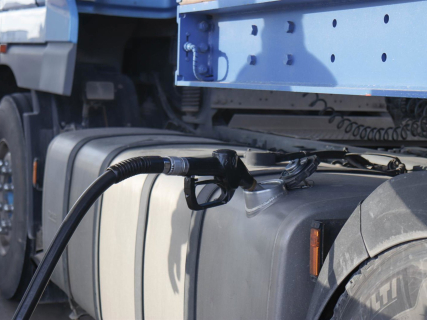
Fuel prices once again show an uneven evolution in Spain, with partial relief for gasoline drivers while diesel resumes its upward trend. This Tuesday, April 14, 2026, the market reflects a picture of contrasts: gasoline moderates in several cities, but diesel registers increases that revive pressure on transport and daily mobility.
The evolution of prices is explained by a combination of factors that continue to condition the global oil market. The Brent crude reference continues to be the main thermometer, influenced by international demand, OPEC's production decisions, and geopolitical tensions derived from the international context.
Added to this is the impact of the euro-dollar exchange rate and the Spanish tax structure, where taxes represent nearly half of the final price of fuel.
Madrid, Barcelona and Valencia: differences that mark consumption
In cities like Madrid, 95 E5 gasoline ranges between 1.37 and 1.75 euros per liter, while diesel moves in a higher range, between 1.67 and 2.09 euros. In Barcelona, gasoline prices are between 1.36 and 1.76 euros, with diesel reaching up to 2.05 euros in some stations.
In Valencia, the trend repeats: gasoline is around between 1.40 and 1.74 euros, while diesel fluctuates between 1.67 and 2 euros per liter, consolidating the gap between both fuels.
Diesel, under pressure in an unstable international context
The rising cost of diesel occurs in a context of high uncertainty in energy markets, where any tension in the Middle East or adjustments in global production are quickly passed on to final prices.
The result is greater volatility that especially affects freight transport and the sectors most dependent on diesel, which were already feeling the inflationary pressure of recent years.
Savings, increasingly linked to efficiency
In this scenario, experts insist that the savings margin for drivers comes more from behavior than from the price itself. Efficient driving, adequate vehicle maintenance, and fuel planning remain key to reducing expenditure.
In the medium term, the market also looks towards alternatives such as hybrid or electric vehicles, which reduce direct exposure to the fluctuations of oil and its derivatives.
The behavior of fuels in Spain reflects a broader reality: the price of energy remains deeply linked to international instability. Any change in global production or in geopolitical conflicts translates immediately at the pumps, keeping consumers in a scenario of constant uncertainty.