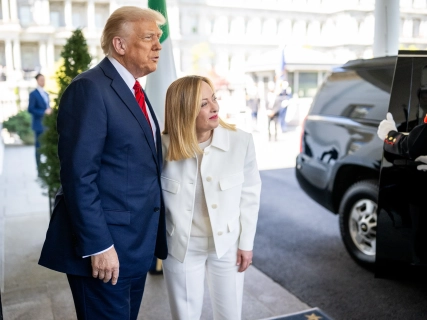

Europe does not usually wake up. Europe stretches. It consults a report, convenes a summit, drafts a communiqué in three languages and, if the situation gets very complicated, it commissions another report to explain why it wasn't so serious. Waking up -for real- implies something else: a jolt, cold sweat and that unpleasant feeling that you've been sleeping for years while someone has moved the furniture around.
That awakening, uncomfortable and inelegant, has a name: Donald Trump. For decades, Europe lived installed in a comfortable, almost therapeutic fiction: the idea that the international order was stable, predictable and, above all, managed by someone else. That someone was the United States. Europe, with its usual refinement, decided that its role was to accompany. Not to lead, not to discuss, not to inconvenience: to accompany.
It was a perfect choreography. Washington set the pace; Brussels fine-tuned the music. The famous Pax Americana functioned as an all-risk insurance that no one had read, but everyone took for granted. Security, trade, stability… all included. Europe contributed values, norms, and tons of rhetoric; the United States contributed real power.
And everyone delighted. Or so it seemed.
Featured story
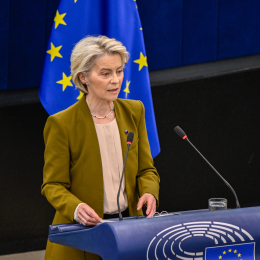
Von der Leyen’s break with the international order reignites tensions in Brussels
5 minutes
Because, in reality, that was not so much an alliance as an outsourcing with good manners. Europe delegated its security, a good part of its strategy and, over time, even its instinct. It got used to reacting instead of anticipating, to aligning itself instead of deciding. A sophisticated dependency, wrapped in noble discourses, as if giving something a good name automatically turned it into a good idea.
And then Trump arrived.
And decided -without tact, without complexes and, above all, without any interest in appearances- to stop pretending.
A new transatlantic relationship
No elegant multilateralism. No shared rhetoric. None of that diplomatic theater where everyone knows the script is false, but no one wants to be the first to admit it. Trump entered the scene, grabbed the scenery and threw it out the window.
Suddenly, alliances were business. NATO seemed like a premium subscription with risk of cancellation. And the transatlantic relationship stopped sounding like a historical commitment to start looking like a contract with fine print. Europe, naturally, panicked.
First, stupefaction and incredulity. That phase in which one reviews the documents hoping to find an administrative error that explains reality. Then, anxiety and fear: what if this was serious? what if the umbrella was not permanent? what if history had not ended, as some had proclaimed with premature enthusiasm? And what if NATO was not a sacrament but a revisable contract? And what if the Pax Americana was not eternal but, horror, optional? And finally, the most European reaction of all: smiling while the ground disappears under one's feet.
There shone with their own light -or with a docility worthy of study- figures like Ursula von derLeyen and Kaja Kallas, elevating strategic followership to an almost performative art form. The diplomacy of preventive assent: agreeing even before knowing what with. Not so much out of conviction -let's be fair- as out of that almost existential fear of being left orphans of empire. Because that is the key that Europe never wanted to admit: it did not admire the emperor, it feared the void.
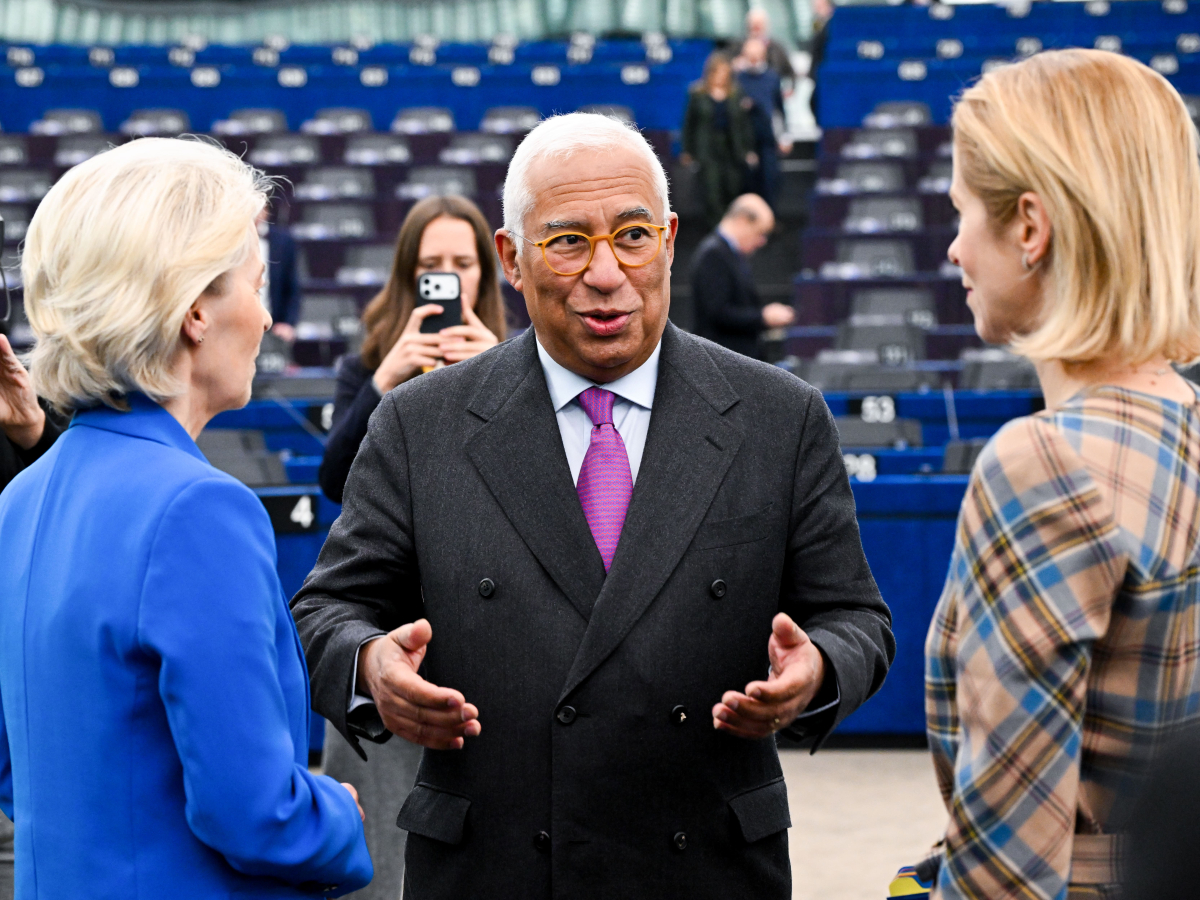
But it would be unfair to stop only at them. Because the real spectacle was not in the press conferences, but in the corridors. In the European Councils. In those bilateral meetings where leaders -brave in private, prudent in public- whispered what they did not dare to say aloud. “This cannot continue like this,” they murmured. “Europe needs autonomy,” they conceded. “We have our own interests,” they affirmed with a grave tone. And immediately afterwards they went before the microphones to offer perfectly mellifluous statements, calibrated to the millimeter so as not to bother anyone, especially Washington. An exquisite choreography: courage in intimacy, ambiguity in public, irrelevance in practice.
Europe thus perfected an art very much its own: saying much without saying anything while doing exactly what others expected.
The eyes outside of Europe
The expansion of NATO was presented as a strategic triumph without going into the uncomfortable detail of who defined the strategy. The war in Ukraine consolidated the pattern: automatic alignment, exemplary sanctions, financing without controllable limits, solemn speeches… and an almost surgical absence of debate about European interests beyond the Atlantic script.
Meanwhile, the rest of the world remained on pause. Latin America remained archived between decorative summits. The Maghreb became a logistical problem useful only when the problem arrives by dinghy. China and the BRICS were treated as fleeting anomalies instead of structural realities.
Europe, convinced that it maintained the international order, did not seem to realize that that order had already changed without warning.
United States fires
And then Trump, true to his style-a mix of a Roman emperor in a comical version and a charlatan used car salesman-, decided to raise the stakes. Not so much inventing a new policy as taking to the grotesque an drift that had already begun and that, predictably, will continue -perhaps with less stridency, but with the same underlying logic-.
Exorbitant tariffs, territorial threats —Greenland converted into a real estate asset—, flirtations with Russia, selective abandonment of commitments, bravado about Cuba or Panama and illegal acts like Venezuela, Gaza or Iran, all of this also backed by an environment of loyalists as convinced -and often as little given to doubt- as Trump himself. It was not just a personal eccentricity: it was also the noisy expression of a not at all marginal current in American public opinion, deeply skeptical of alliances and global costs. The result: a foreign policy that oscillated between improvisation and impulse, with statements worthy of a script written with several drinks. Geopolitics converted into a reality show and Europe, in the uncomfortable role of an extra.
The European reaction was, once again, impeccable… in the worst sense. First, seduction. Then, containment. And finally, bewilderment.
But even Europe has a limit when humiliation is publicized. And when the transatlantic relationship began to resemble a flea market negotiation with included threats, something began to break. Not all at once, of course. Here revolutions are discreet, administrative and, if possible, accompanied by a 200-page document.
But they started.
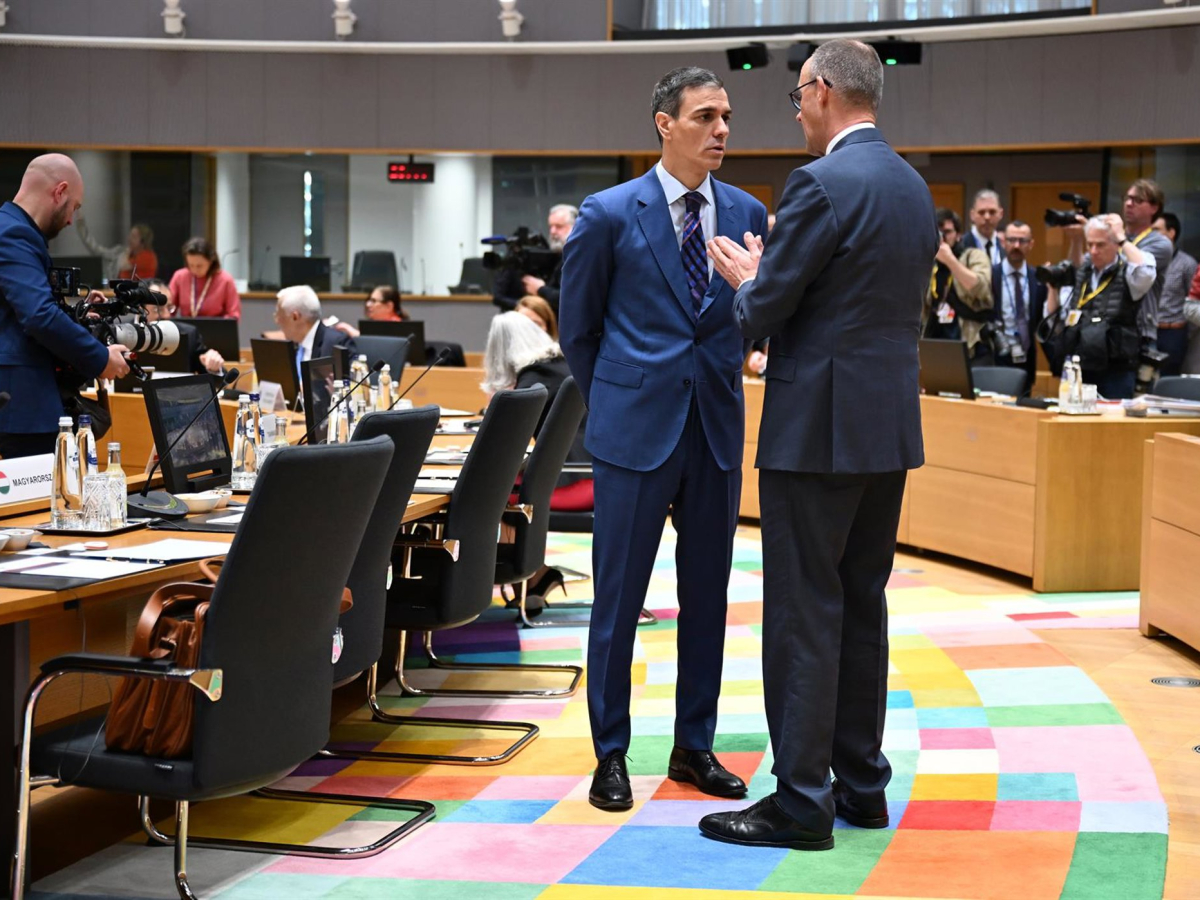
The words of Emmanuel Macron and Pedro Sánchez ceased to be rhetorical exercises to become something more uncomfortable: positioning. Even those most comfortable in the Atlantic photo, like Giorgia Meloni, began to modulate their discourse. And from Germany, Friedrich Merz let slip, with his usual caution, that perhaps the autopilot no longer guaranteed stability.
Turn in Europe
But the decisive change did not come from the great speeches, but from the most basic fear. The Baltic countries, Poland, the Nordics -the most Atlantic among the Atlantic ones- began to suspect that the umbrella could close without prior notice.
And then something almost revolutionary happened: Europe began to take itself seriously. Not as an idea. Not as a rhetorical project. But as an actor. The process has been uncomfortable, because it involved recognizing decades of dependence, lack of ambition, and a certain strategic laziness. It involved accepting that Europe had been playing a secondary role in a play it thought it was starring in.
And everything, paradoxically, thanks to Trump. Because Trump has not designed this change. Nor has he understood it. Nor probably does it interest him. But he has done something more effective: break the illusion of an eternal love.
He has acted like an arsonist who, by setting the forest on fire, obliges the neighbors to organize. To coordinate. To discover, with some surprise, that perhaps they should have bought fire extinguishers before.
And the most irritating -for the skeptics, for the cynics, for the comfortable- is that something has come out of all this. More union, not out of European enthusiasm, but out of pure survival instinct.
More strategic autonomy, still incipient, but already impossible to ignore. More real European politics, especially in investments and defense, where words are beginning -slowly-to translate into decisions.
None of this is brilliant. None of this is definitive. And everything can fall apart if Europe decides that the scare has already passed and returns to its comfort zone: that mix of elegant dependence and grandiloquent rhetoric.
But the change is there. And that, in Europe, is almost a revolution.
Thank you, Mr. Trump!
Therefore, yes, it's worth saying -even if it's hard-: Thank you, Mr. Trump! Not for his vision -that would be too generous-, not for his coherence, that would be directly fictitious, but for having done what no one in Brussels dared: turn off the music and turn on the lights. Because sometimes an erratic leadership, a megalomania without limits or filters and a dangerously simple understanding of the world is needed to provoke a complex reaction.
Trump has been that trigger. The scare that was missing. The crack in the facade. The mirror that Europe had been avoiding for decades.
And now Europe, still uncomfortable, still contradictory, begins to move. Without asking permission. Without waiting for instructions. Without pretending -at least not so much- that someone else is going to solve its problems.
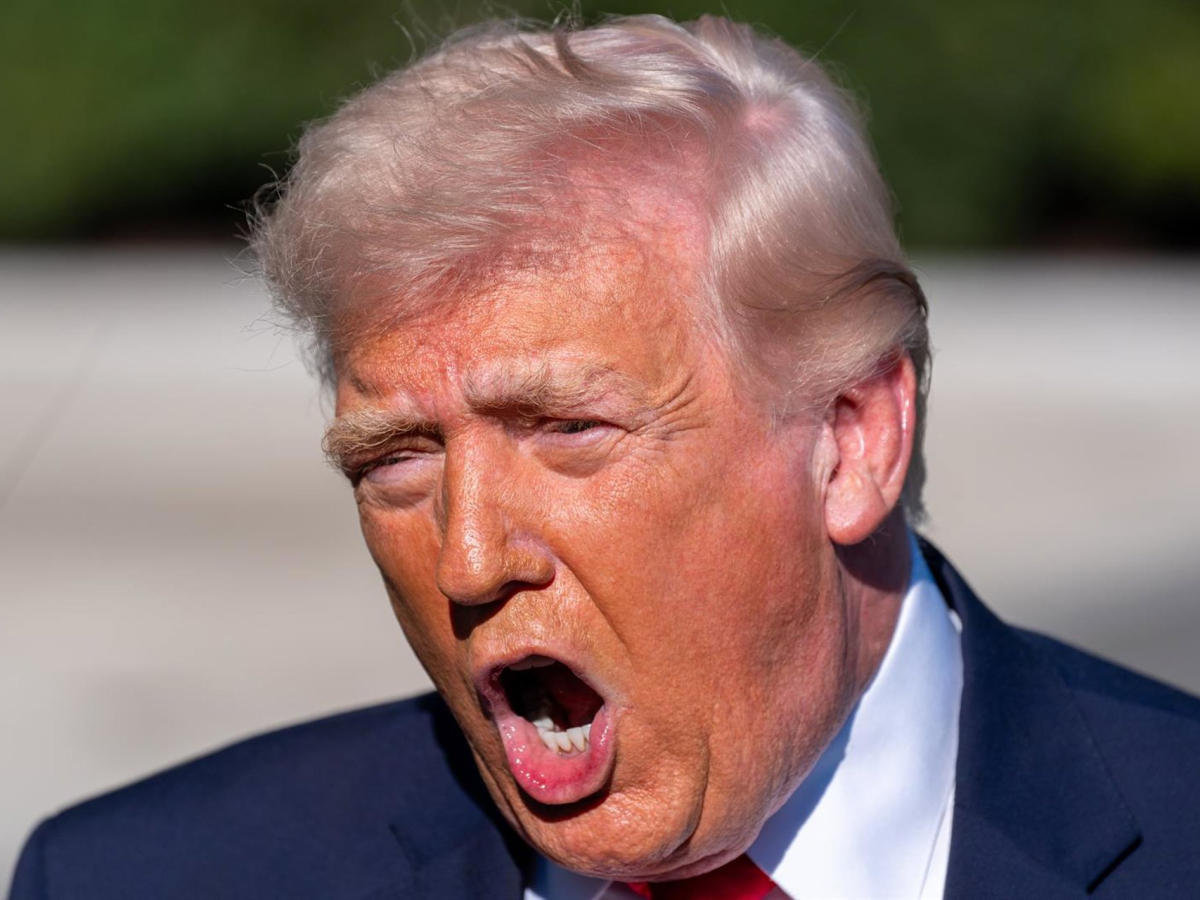
Late, yes. But in geopolitics, arriving late is still better than never arriving. And if for that it took the histrionics of Donald Trump, with all his repertoire of eccentricities, illegalities and excesses, then perhaps one must recognize -very reluctantly- an involuntary merit: that of having awakened Europe, even if it was with shouts. And that perhaps is the most delicious irony of all: that the greatest impulse towards its strategic emancipation has not come from its great visionaries, but from someone who probably never understood -nor wanted to understand- what Europe was for.
Therefore, yes: thank you, Mr. Trump. Because sometimes a fire is needed for someone to remember to install smoke detectors. And Europe, amidst the smoke, chaos, and tweets, has finally begun to build its own emergency exit.
Miracles of geopolitics.