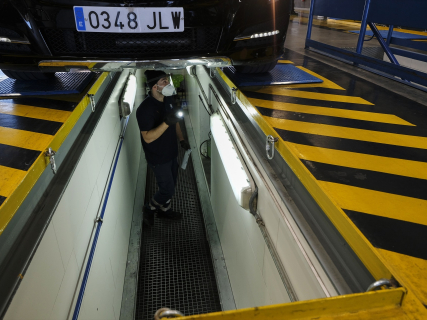

The Technical Vehicle Inspection (ITV) will once again be the focus of thousands of drivers due to the semiannual checks that some vehicles must undergo obligatorily according to current regulations. The obligation to attend every six months affects only certain categories of vehicles and not all private passenger cars.
The frequency of inspections is regulated by state regulations and depends on the type of vehicle, its age, and its professional use.
In the case of private passenger cars, the general deadlines remain the usual ones:
- Exempt up to 4 years.
- Every 2 years between 4 and 10 years.
- Annually from 10 years onwards.
However, other vehicles are obliged to pass the ITV twice a year.
Which vehicles must pass the ITV every six months
The semiannual periodicity mainly affects professional transport or public service vehicles.
Among the main cases are:
- Taxis and VTC vehicles of a certain age.
- Ambulances.
- School transport vehicles.
- Buses.
- Heavy goods vehicles.
- Some trailers and semi-trailers.
- Driving school vehicles.
The exact frequency depends on the age of each vehicle and the category in which it is registered.
For example, many vehicles intended for the transport of passengers or goods switch from annual inspections to semiannual checks once they exceed certain years of use.
More control over emissions and modifications
The ITV has also tightened surveillance on polluting emissions and unauthorized modifications in recent years.
Inspection stations check elements related to anti-pollution systems, filters, electronics, and mechanical tampering that may alter the vehicle's actual emissions.
Furthermore, vehicles with serious or very serious defects must undergo a new inspection once repaired. The objective is to reinforce both road safety and environmental control.
Driving without a valid ITV can lead to financial penalties and problems with insurance in case of an accident. The General Directorate of Traffic (DGT) also reminds that the obligation to pass the inspection corresponds to the vehicle owner, regardless of its use. The exact dates and frequencies are reflected in the technical data sheet and depend on the official classification of the vehicle.