
The Minister of Rural Environment and Agricultural Policy of the Principality of Asturias, Marcelino Marcos, has advocated during the closing of the Forum "Challenges and opportunities of rural Spain: Asturias" for "a broad vision of rural development, a vision that goes far beyond productive sectors and incorporates issues such as housing, connectivity, digitalization, public services, innovation, equal opportunities, and care for people".
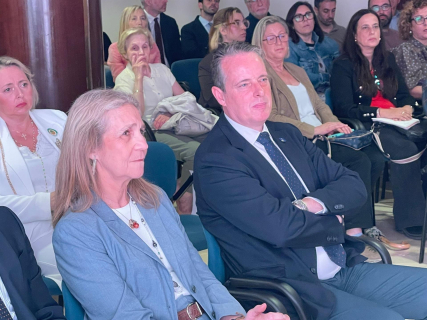
Marcos, who closed the meeting held in Oviedo alongside Infanta Doña Elena, has stressed that "the best rural policy is one that puts people at the center" and has emphasized that "for these opportunities to be consolidated, it is essential to guarantee that people can live in our villages with the same expectations and rights as anywhere else".
The regional official has emphasized that "the rural environment is not a space of the past, quite the contrary" but rather "it is a space of opportunities, a territory where innovative projects emerge, where business initiatives of great added value are generated, and where there is talent, adaptability, and the will to build the future".
In this regard, he has insisted that "talking about employment in the rural environment is talking about population retention, talking about entrepreneurship, generational succession, and economic development," while "talking about care is talking about quality of life, equal opportunities, and the real possibility of developing a life project in our villages."
He also highlighted that Asturias is "a community deeply linked to our rural environment, a territory where agricultural, livestock, forestry, and fishing activities are part of our collective identity, but also where we are fully aware of the demographic, social, and economic challenges we must face."
Marcos has detailed that the Government of Asturias is working to strengthen the competitiveness of agricultural and livestock farms, promote innovation and improve the profitability of economic activities linked to the territory, in addition to consolidating the services that make it possible to maintain population in rural areas.
The counselor has presented the Pact for the Rural Environment as the central tool of this policy, specifying that it is "a broad, participatory agreement, which brings together administrations, professional organizations, cooperatives, sector entities, rural development groups, the university, and economic and social agents". He explained that it has been developed through dialogue and consensus, incorporating more than 120 measures and that it seeks to have a shared vision of the future for the rural environment, looking beyond 2030.
Finally, he stressed that "the future of the rural environment cannot depend solely on one administration, it requires the involvement of society as a whole" and assured that "Asturias has the resources, talent, and capacity for cooperation necessary to successfully face the challenges we have to organize".