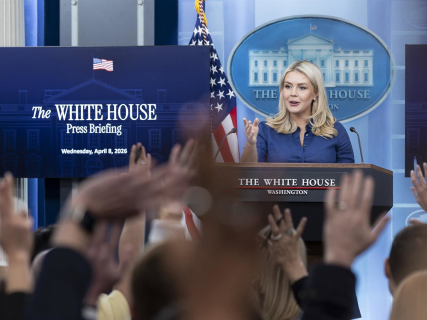
The White House has lowered expectations about a possible extension of the ceasefire with Iran and has denied that there is, for now, a formal request in that regard. Spokeswoman Karoline Leavitt assured this Wednesday in a press conference that the United States continues negotiating, but without having officially requested to extend the truce.
“It is not true at this moment; we continue to actively participate in the negotiations”, he stated, while admitting ongoing contacts for possible in-person meetings, although without concrete details. In that scenario, Washington maintains optimism, in line with Tuesday's press statements of US President Donald Trump.
Leavitt has also confirmed that Pakistan remains the only recognized mediation channel, and that any new meeting would follow the format of the conversations held in Islamabad, which ended without agreement after intense negotiations. "They are the only mediators in this negotiation," he said.
Israel intensifies its offensive in Lebanon
While negotiations advance without clear results, the situation on the ground continues to deteriorate. Israel has intensified this Wednesday its attacks in southern Lebanon, even as speculations grow about a possible ceasefire with the Shiite militia Hezbollah.
Lebanese health authorities have denounced an "atrocious crime" against health personnel, after a series of bombings against ambulances that were going to rescue wounded in the Nabatie area. According to the official toll, three paramedics have died, six have been injured and one remains missing.
The pattern of attacks, with several ambulances hit consecutively, has been described by Beirut as part of a “systematic” strategy. Since the beginning of this phase of the conflict, more than 2,150 people have died in Lebanon and more than 7,000 have been wounded, including hundreds of minors.
Iran threatens to close the Gulf
In this context of maximum tension, Iran has raised the tone this Wednesday and has warned that could block commercial traffic in the Persian Gulf, the Sea of Oman and the Red Sea if the United States maintains its naval pressure in the Strait of Hormuz.
General Alí Abdolahi, commander of the Central Headquarters Jatam al Anbiya, has assured that any attempt to prolong the blockade would constitute a violation of the current ceasefire. “We will not allow the continuity of any type of export or import in the region,” he affirmed.
The threat points directly to one of the key arteries of global energy trade and adds a new element of risk to a conflict that already has global repercussions.