
S&P Dow Jones Indices, responsible for managing the S&P 500 and the Dow Jones, has decided to keep the rules for inclusion in its main indices unchanged, including the S&P 500, which require a minimum of twelve months of stock market trading before entry, even with the imminent arrival of large artificial intelligence companies such as SpaceX, OpenAI, and Anthropic to the stock exchange.
"Following the review of the markets conducted by the S&P Index Committee and considering the responses received from various market participants, eligibility criteria, including financial viability analyses, tenure period, or minimum (free float), will not be modified for the S&P 500, S&P MidCap 400, or S&P SmallCap 600 indices," states a press release from the index management company.
Thus, although these firms are expected to reach very high valuations from their first day of trading, they will not be allowed accelerated access to the S&P selective indices, ruling out the creation of a fast track and obliging them to respect the one-year deadline set for all newly listed companies.
The firm has determined that market capitalization cannot be placed above factors such as financial strength, trading history, or investment capacity, with the aim of safeguarding the "fundamental principles of the index."
"While there may be advantages and disadvantages between strict adherence to these eligibility requirements and broad representativeness, the current methodology provides substantial market coverage and sector balance. Consequently, the indices can continue to meet their stated objectives while retaining their function as representative and investable benchmarks in the U.S. equity market," the note asserts.
This stance differs from that adopted by other index providers such as Nasdaq and FTSE Russell, which have opted to shorten the minimum market stay requirement to a few days so that companies like SpaceX can be quickly incorporated into benchmarks as closely followed as the Nasdaq 100 or the Russell 200.
Consequently, S&P Dow Jones Indices sets itself apart from its competitors, something that has generated confusion among some market experts. "I'm genuinely surprised," noted James Seyffart, ETF analyst at Bloomberg Intelligence, although he added that "S&P is the market leader and can go against the grain."
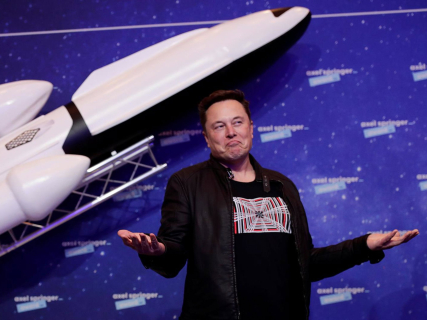
SpaceX, considered the first major company in the AI ecosystem to make the leap to the market in the coming days, has set a price of $135 for each of the more than 555 million shares it will offer in its imminent stock market debut, with which it aims to raise approximately $75 billion ($64.588 billion euros), configuring the largest initial public offering (IPO) in history and placing the valuation of the aerospace company founded by Elon Musk at $1.77 trillion ($1.53 trillion euros).
This market debut will mark the beginning of a wave of major technology IPOs planned for after the summer, among which the IPOs of Anthropic and OpenAI stand out.