

The European Union is taking increasingly more steps in its fight to protect minors in digital environments, an area that has become one of the main regulatory concerns of the community bloc. This very week, the European Commission announced that its new application designed to ensure age verification is already ready when accessing social networks and other digital services. However, some Member States believe that these initiatives must go further.
Among them stands out Emmanuel Macron, who has decided to promote a coordinated response at a European level. France seeks to lead a common approach that allows for the establishment of clearer and more homogeneous limits in all countries of the Union.
A common European strategy
With this objective, the French president has convened on Thursday afternoon a telematic meeting with several European leaders. The purpose of the meeting is for the Member States to share the national initiatives that they are already developing to limit the use of social networks by minors.
From the Élysée, it is stressed that the intention is for those countries that are more advanced in this matter to share their proposals to “adopt a common framework that establishes a digital age of majority”. This concept, increasingly present in the European public debate, seeks to set a minimum age from which citizens can autonomously access digital platforms.
Featured story
Goodbye to lying about age on the internet: Europe activates its definitive solution
5 minutes
Sources from the French Government explain that it is also intended “to extend the dynamic to those countries that are interested but not yet committed”, thus broadening the political consensus around this issue.
Germany, at the crossroads
In this context, the presence of the German chancellor Friedrich Merz is especially relevant for Paris. Although Germany still does not have a defined national framework in this matter, the French Executive perceives “positive signals” that could translate into legislative advances in the short term.

In addition, during the meeting, the status of the technical age verification solutions will also be addressed, including the proposal developed by Brussels. These types of tools are considered fundamental to ensure that the rules do not remain theoretical, but can be applied effectively.
Towards a European digital identity
One of the key elements of this strategy is the implementation of digital identity systems. According to community plans, by the end of this year all Member States must have deployed a solution that allows to connect applications and age verification systems securely and reliably.
From Macron's circle highlight that the president has insisted especially on the need to advance both at a European and national level in the creation of a “digital majority”, which not only establishes limits, but also reinforces the responsibility of technological platforms.

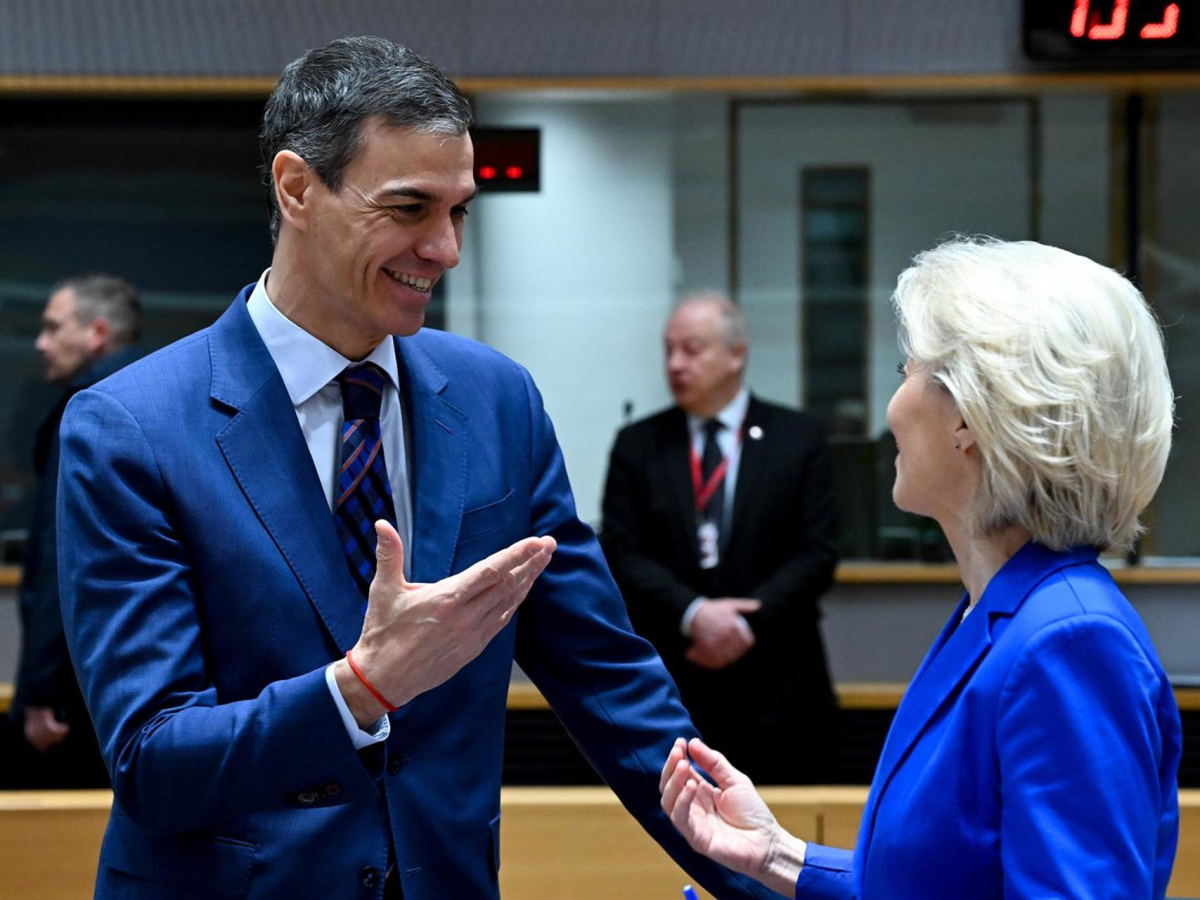
Several top-level European leaders will attend the meeting convened by France. Among them are the president of the European Commission, Ursula von der Leyen, the Italian prime minister Giorgia Meloni, and the president of the Spanish Government, Pedro Sánchez.
Also participating will be the Irish Prime Minister Simon Harris, the Slovenian Robert Golob, the Czech Petr Fiala, the Greek Kyriakos Mitsotakis, the President of Cyprus Nikos Christodoulides and representatives of the Polish Government. The diversity of participants reflects the growing European consensus around the need to act against the risks of the digital environment, according to the same consulted sources.
Moncloa makes a move
In the case of Spain, Pedro Sánchez announced last February his intention to ban the use of social media for minors under 16 years old. The president justified this measure with a forceful speech: “Our children are exposed to a space where they should never navigate alone: a space of addiction, abuse, violence, pornography, and manipulation. We are not going to tolerate it anymore; we are going to protect them from this digital wild west”. This stance places Spain in line with other European countries that advocate for a more restrictive approach.
Investigations and pressure on platforms
In parallel, Brussels continues deploying all the instruments foreseen in its regulations, especially through the Digital Services Act (DSA). In this framework, the European Commission has intensified its supervisory activity.
A recent example is the opening of a formal investigation against the social network Snapchat, with the aim of determining whether the platform is exposing minors to risks such as contact with sexual predators or the recruitment for criminal purposes.
Although Snapchat's terms of use establish a minimum age of 13, Brussels considers that the system of self-declaration presents significant weaknesses. In particular, it does not prevent minors under that age from accessing the service nor does it allow for adequate verification of whether users are under 17, something key to adapting the digital experience to their age.
Failures in age verification
The Commission has also pointed out that Snapchat might not be offering effective tools to report the presence of minors, which increases the risks of exposure to dangerous situations.
This case is not isolated. Since the entry into force of the DSA, Brussels has opened investigations against large platforms such as X, Shein or Google. The objective is to determine if these companies are complying with their obligations regarding privacy, security, and user protection, especially with regard to minors.
Featured story
Brussels investigates Snapchat for allowing access to pedophiles and drug use to minors
3 minutes
The community guidelines clearly establish that self-declaration is not a reliable method of age verification. Furthermore, they emphasize that minors should not be easily identifiable by adults nor recommended as contacts, and that default settings must offer the maximum level of protection.
These demands reflect a paradigm shift in European digital regulation. It moves from a reactive approach, based on intervention after problems, to a preventive one, which seeks to anticipate risks.
Responsibility of platforms and challenges in Spain
From Macron's circle, they positively value that, from 2025, community regulations allow Member States to advance in the adoption of digital majority rules and, above all, in the accountability of platforms. This implies requiring technology companies to verify the age of their users and to regulate access based on it.
The regulation, of mandatory compliance in the Twenty-Seven, also establishes mechanisms of accountability for digital operators. However, its application is not being uniform.

In España, for example, the implementation of these measures continues to face obstacles. The Government has not yet managed to grant the necessary powers for the Comisión Nacional de los Mercados y la Competencia (CNMC) to act as coordinator of digital markets. The lack of a sufficient parliamentary majority in the Congreso de los Diputados is delaying this process.
A European challenge in full evolution
The protection of minors on the internet has become one of the great regulatory challenges for European institutions. The rapid evolution of digital platforms, coupled with the increasing exposure of young people to potentially harmful content, forces governments to act with speed and coordination.
In this context, the initiative led by France seeks to consolidate a common European front that allows progress towards a more effective, homogeneous, and adapted regulation to the new times. The creation of a digital majority, the development of robust verification systems, and the demand for accountability from platforms are some of the pillars of this strategy.