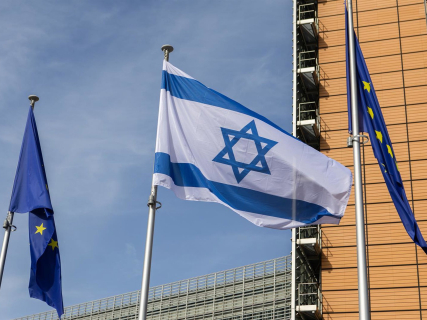
Spain, Ireland, and Slovenia have taken a coordinated step within the European Union by requesting that the Council of Foreign Affairs address as a priority the possible suspension of the association agreement between the EU and Israel, in response to the deterioration of the humanitarian situation and what they consider a breach of international obligations by the Israeli Government.
The initiative, which introduces a relevant political pressure element within the community agenda, explicitly proposes for the first time that "all options must remain on the table", including the immediate suspension of the agreement, one of the key instruments that regulates political and commercial relations between Brussels and Tel Aviv.
A change of tone in the European position
The movement of the three capitals reflects a hardening of discourse within the EU regarding Israel. In the document sent to European partners, the signatory governments maintain that the level of violence and the worsening of the humanitarian crisis —with more than one million displaced people, according to United Nations data— make it necessary to urgently review the framework of bilateral relations.
The text focuses on the recent actions of the Israeli Government, including military operations and territorial expansion plans, which the signatories describe as violations of international law. This assessment introduces a legal and political basis to justify a potential more forceful community response.
The association agreement, at the center of the debate
The association agreement between the European Union and Israel is the main instrument that articulates the economic, commercial, and political relations between both parties. Its review or suspension would mean a significant change in the European position, with both diplomatic and economic implications.
Until now, the EU has maintained a balanced position, combining specific criticisms with the continuity of institutional relations. However, the proposal by Spain, Ireland, and Slovenia opens the door to a deeper debate about the limits of that relationship in contexts of prolonged conflict and humanitarian crisis.